Meat and poultry
Steak nutrition, before and after the heat.
Weigh out 4 oz of raw steak and you are looking at 153 calories, with 25 g of protein inside them. In USDA’s database this is “Beef, top sirloin, steak, separable lean only, trimmed to 1/8" fat, choice, raw”. The method matters: USDA holds separate records for it, ranging between 135 and 188 calories for the same 100 g. The panel underneath takes any serving and any amount, and the vitamin and mineral table tracks what you pick.
Numbers come from USDA FoodData Central records 168635, 174763 and are worked out locally, with no sign-up.
Calories in steak, serving by serving
USDA puts 4 oz of raw steak at 153 calories and 100 g at 135. Other household measures follow, each with its weighed gram figure.
| Serving | Weight (g) | Calories | Protein (g) | Carbs (g) | Fat (g) |
|---|---|---|---|---|---|
| 4 oz | 113 | 153 | 25 | 0 | 5.2 |
| 1 lb | 454 | 612 | 99 | 0 | 21 |
| 100 g | 100 | 135 | 22 | 0 | 4.6 |
Protein in steak, measured
The protein count for 4 oz of raw steak is 25 g, equal to 50 percent of the Daily Value. Steak is about as protein-dense as food gets: 65 percent of its calories are protein, which is why it turns up in almost every high-protein plan.
Looked at as a share of calories: carbohydrate 0 percent, fat 32 percent, protein 68 percent.
Steak, method by method
Go from raw to grilled and 100 g of steak climbs from 135 to 188 calories. That 39 percent rise is down to moisture lost to the heat, so the same weight holds more food.
Each line compares 113 g of steak, prepared a different way.
| Preparation | Calories | Protein (g) | Fat (g) | What it involves |
|---|---|---|---|---|
| Raw steak | 153 | 25 | 5.2 | Nothing added |
| Grilled steak | 212 | 34 | 7.4 | Dry heat |
Buying, cooking and using steak
Steak is a thick slice of beef cut across the muscle grain. Shops sell it as ribeye, sirloin, fillet, or rump. Look for deep red flesh with fine flecks of white fat running through the lean parts. This marbling melts during heating, which keeps the beef moist and adds flavour. Avoid pale or wet meat.
High heat sears the exterior, creating a brown crust while keeping the centre tender. Overheating dries the muscle fibres, making the meat tough. The most common error is moving the beef around the pan constantly. Leave it undisturbed to develop a proper crust, and always let it rest before slicing.
Serve steak hot, sliced thinly across the grain. In British kitchens, classic accompaniments include thick chips, grilled mushrooms, and peppercorn sauce. For Asian presentations, pair the beef with soy, ginger, and spring onions. Cold leftovers work well in salads or sandwiched inside crusty bread with mustard.
Steak: the full nutrient profile
Top of the list for 4 oz of raw steak: vitamin B12 (56 percent of the Daily Value), selenium (52 percent of the Daily Value), niacin (52 percent of the Daily Value). The remaining nutrients are tabulated underneath and update live.
| Nutrient | Amount | % Daily Value |
|---|
How far steak goes in a day
On a 2,000 calorie day, 4 oz of raw steak is 8 percent of the budget and 50 percent of the protein Daily Value. Whether that is a lot depends on your own numbers rather than on 2,000: the TDEE calculator gives you what you burn, and the macro calculator turns a target into grams.
Steak recipes, with the numbers
The Calorie Counter Team wrote these. Under every recipe the numbers are added up from the USDA record for each ingredient and split across the servings.
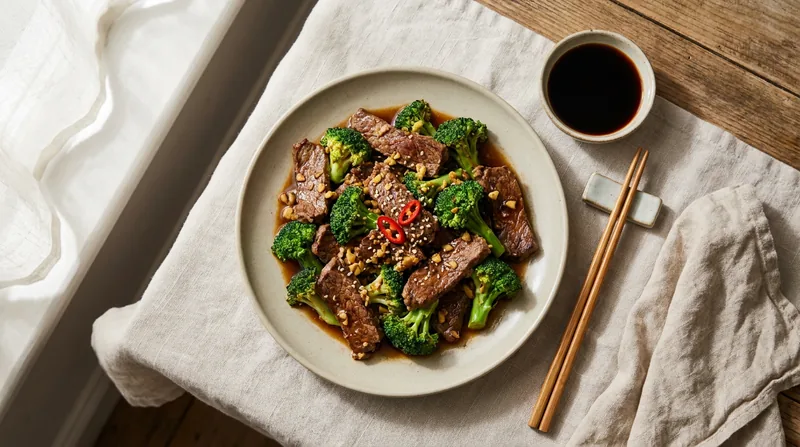
Dinner · Chinese
Beef Rump and Broccoli Stir-Fry
A quick weekday stir-fry of beef rump steak and broccoli with ginger, garlic, and soy sauce.
Ingredients
- Beef rump steak 300 g
- Broccoli florets 200 g
- Soy sauce 30 g
- Vegetable oil 15 g
- Garlic clove 6 g
- Ginger root 5 g
Method
- Slice the beef rump steak into strips 5 millimetres thick.
- Heat the vegetable oil in a frying pan over high heat.
- Add the beef strips and cook for two minutes.
- Add the broccoli florets, chopped garlic, and grated ginger.
- Stir the ingredients over high heat for three minutes.
- Pour in the soy sauce and cook for one further minute.
Figures are per serving and come from 6 USDA FoodData Central entries; cooking will shift them slightly.
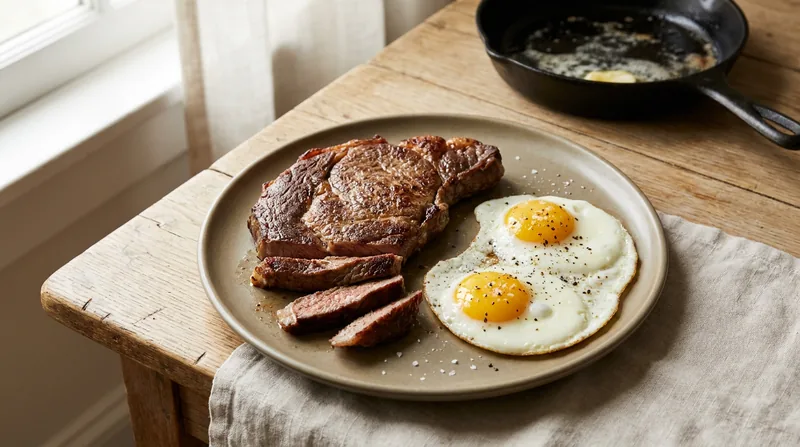
Breakfast · British
Pan-Seared Ribeye Steak and Eggs
A classic breakfast of pan-seared ribeye steak served with two fried eggs.
Ingredients
- Beef ribeye steak 250 g
- Unsalted butter 15 g
- Eggs 100 g
- Salt 2 g
- Black pepper 1 g
Method
- Season the beef ribeye steak with the salt and black pepper.
- Melt 10 grams of the unsalted butter in a frying pan over medium-high heat.
- Sear the steak for three minutes on each side.
- Remove the steak from the pan and let it rest.
- Melt the remaining 5 grams of unsalted butter in the same pan.
- Fry the eggs in the butter for three minutes.
Per serving, from 5 USDA FoodData Central records. Cooking changes weight and some nutrients; treat these as close rather than exact.
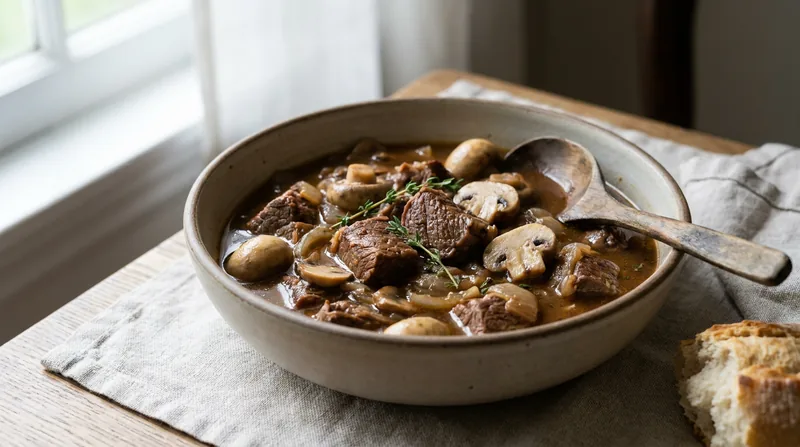
Lunch · British
Slow-Cooked Chuck Steak and Mushroom Stew
A slow-cooked Sunday lunch stew of beef chuck steak, white mushrooms, and onions in beef stock.
Ingredients
- Beef chuck steak 500 g
- White mushrooms 150 g
- Onion 110 g
- Beef stock 400 g
- Olive oil 14 g
- Wheat flour 20 g
- Salt 3 g
Method
- Cut the beef chuck steak into 3-centimetre cubes.
- Toss the beef cubes in the wheat flour and salt.
- Heat the olive oil in a saucepan over medium-high heat.
- Brown the beef cubes for five minutes, then remove them.
- Cook the sliced onion and sliced mushrooms for four minutes.
- Return the beef, add the beef stock, and simmer covered for 90 minutes.
Built from 7 USDA ingredient records. A cooked dish never matches its raw sum exactly, but it stays close.

Calorie Counter Team, food critic
One meal, costed: steak
Here is steak as part of a plate, with each component taken from its own USDA record and the total added up.
| Item | Serving | Calories | Protein (g) |
|---|---|---|---|
| Steak, grilled | 3 oz | 160 | 26 |
| Rice, cooked | 1 cup | 205 | 4.3 |
| Asparagus | 1 cup | 27 | 2.9 |
| Together | 392 | 33 |
Meat and poultry: where steak sits
Per 100 g, each in the form its own page leads with; the second column says which.
| Food | Form | Calories | Protein (g) | Carbs (g) | Fat (g) |
|---|---|---|---|---|---|
| Hot dog | Cooked | 322 | 12 | 2.7 | 29 |
| Ribeye steak | Raw | 241 | 19 | 0.2 | 18 |
| Chicken wing | Raw | 191 | 18 | 0 | 13 |
| Lamb | Raw | 143 | 21 | 0 | 5.9 |
| Steak | Raw | 135 | 22 | 0 | 4.6 |
| Pork chop | Raw | 127 | 22 | 0 | 3.7 |
| Chicken thigh | Raw | 121 | 20 | 0 | 4.1 |
Steak, asked and answered
How many calories does 4 oz of raw steak have?
4 oz of raw steak is 153 calories. That comes from the USDA record “Beef, top sirloin, steak, separable lean only, trimmed to 1/8" fat, choice, raw” (FDC 174763), which is 135 calories per 100 g.
Is there much protein in steak?
25 g in 4 oz of raw steak, or 22 g per 100 g. That is 50 percent of the 50 g Daily Value.
Does cooking change the calories in steak?
It does. The same 113 g is 153 calories raw and 212 grilled, with the other preparations listed here falling in between.
Is steak good for weight loss?
That depends on the rest of the day, not on steak. For planning: 4 oz of raw steak is 153 calories and 25 g of protein, 65 percent protein by energy, which is a favourable trade when calories are tight.
Why does steak become tough when cooked?
Steak toughens because heat causes the muscle proteins to shrink and squeeze out moisture. Cooking meat past the medium stage or using high heat on lean cuts without fat marbling will guarantee a dry, chewy texture.
Should steak be salted before cooking?
Yes, salt the meat well before cooking. Salting draws out moisture, dissolves, and is reabsorbed, which seasons the beef deeply and helps loosen muscle proteins. Apply the salt early, or right before the beef hits the pan.
Sources
- Beef, top sirloin, steak, separable lean only, trimmed to 1/8" fat, choice, raw — USDA FoodData Central, FDC ID 174763
- Beef, top sirloin, steak, separable lean only, trimmed to 0" fat, choice, cooked, broiled — USDA FoodData Central, FDC ID 168635
- Daily Values for nutrition labelling, 21 CFR 101.9
Stop doing this by hand.
You just looked up one food. CalorieCounter reads a whole plate from a photo, serving and preparation included. It is coming to the App Store for iPhone — leave your email and you get the link the day it is live.