Meat and poultry
Ribeye steak nutrition, and what the pan changes.
272 calories and 21 g of protein: that is 4 oz of raw ribeye steak. The record behind it is USDA’s “Beef, rib eye steak, boneless, lip off, separable lean and fat, trimmed to 0" fat, choice, raw”. How it reaches the plate decides the rest, with 100 g measured at 241 calories one way and 285 another. Use the selector that follows to match your own portion; the panel and the nutrient table track it.
Drawn from USDA FoodData Central, FDC 173403, 172165. No account, no upload, percentages against FDA Daily Values.
Ribeye steak calories by portion
At 241 calories per 100 g, 4 oz of raw ribeye steak comes to 272. The weights shown for each portion come straight from the USDA record.
| Serving | Weight (g) | Calories | Protein (g) | Carbs (g) | Fat (g) |
|---|---|---|---|---|---|
| 4 oz | 113 | 272 | 21 | 0.2 | 21 |
| 1 steak | 316 | 762 | 59 | 0.6 | 58 |
| 100 g | 100 | 241 | 19 | 0.2 | 18 |
Protein in ribeye steak, measured
The protein count for 4 oz of raw ribeye steak is 21 g, equal to 42 percent of the Daily Value. By calories ribeye steak is 31 percent protein, so it adds to your intake but will not anchor it.
Divide its calories by source and you get 31 percent from protein, 69 percent from fat and 0 percent from carbohydrate.
Ribeye steak, method by method
The cheapest way to eat ribeye steak, in calorie terms, is raw at 241 per 100 g. Grilled costs 285, which is 18 percent more, because of water leaving, which concentrates everything that remains.
Each line compares 113 g of ribeye steak, prepared a different way.
| Preparation | Calories | Protein (g) | Fat (g) | What it involves |
|---|---|---|---|---|
| Raw ribeye steak | 272 | 21 | 21 | Nothing added |
| Grilled ribeye steak | 322 | 27 | 24 | Dry heat |
Buying, cooking and using ribeye steak
This cut comes from the beef forequarter rib section. You can buy it boneless or bone-in, sometimes sold as a tomahawk. Look for a thick outer cap muscle, called the spinalis, wrapping around the central eye. Choose steaks with abundant white flecks of intramuscular fat distributed throughout the dark red lean meat.
High heat renders the abundant fat, which bastes the meat from within. Grilling can trigger flare-ups when melting fat drips onto hot coals. Cooks often make the mistake of undercooking the fat cap, leaving it tough. Cook it until the central fat pocket softens and the outer edges turn golden.
Because of the rich fat content, this cut pairs well with sharp, acidic sauces. In Western kitchens, serve it with fresh chimichurri or strong horseradish. In Japanese cooking, slice the beef thinly for quick searing and dip it in citrusy ponzu to balance the heavy, buttery texture.
Everything USDA measures in ribeye steak
Against the Daily Value, 4 oz of raw ribeye steak stands out for vitamin B12 (84 percent of the Daily Value), zinc (50 percent of the Daily Value), selenium (49 percent of the Daily Value). The table follows the selector above, so change the serving or the method and it updates.
| Nutrient | Amount | % Daily Value |
|---|
Ribeye steak against a daily budget
Budget-wise, 4 oz of raw ribeye steak costs 14 percent of a 2,000 calorie day and pays back 42 percent of the day’s protein. The TDEE calculator and macro calculator will tell you what those percentages look like against your own targets.
Three ways to cook ribeye steak
The Calorie Counter Team wrote these. Under every recipe the numbers are added up from the USDA record for each ingredient and split across the servings.
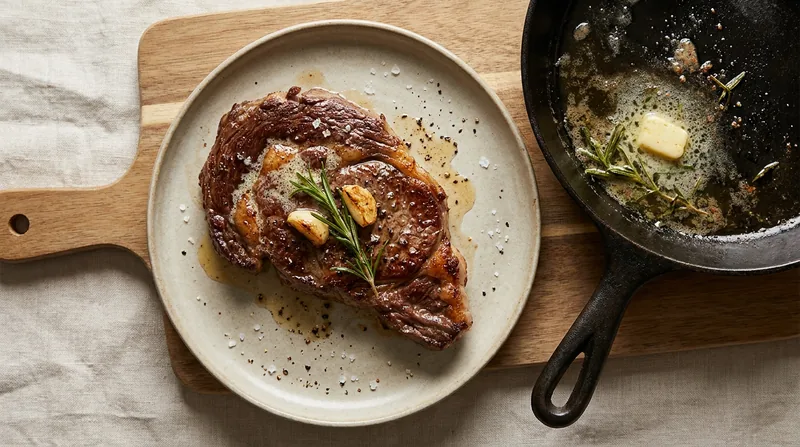
Dinner · British
Pan-Seared Ribeye Steak
A pan-seared ribeye steak basted with butter, garlic, and rosemary.
Ingredients
- Boneless ribeye steak 450 g
- Coarse salt 6 g
- Black pepper 3 g
- Unsalted butter 30 g
- Garlic cloves 10 g
- Fresh rosemary 4 g
Method
- Remove the steak from the refrigerator 30 minutes before cooking and pat it dry with paper towels.
- Season all sides of the meat evenly with the salt and black pepper.
- Heat a heavy cast-iron skillet over high heat until it smokes, then add the steak.
- Sear the steak for two minutes on each side without moving it.
- Reduce the heat to medium, add the butter, garlic, and rosemary, and spoon the melted butter over the steak for two minutes.
- Transfer the steak to a board and let it rest for five minutes before slicing.
Summed from 6 USDA records and divided by servings. Heat alters weight and a few nutrients, so read it as a close figure.
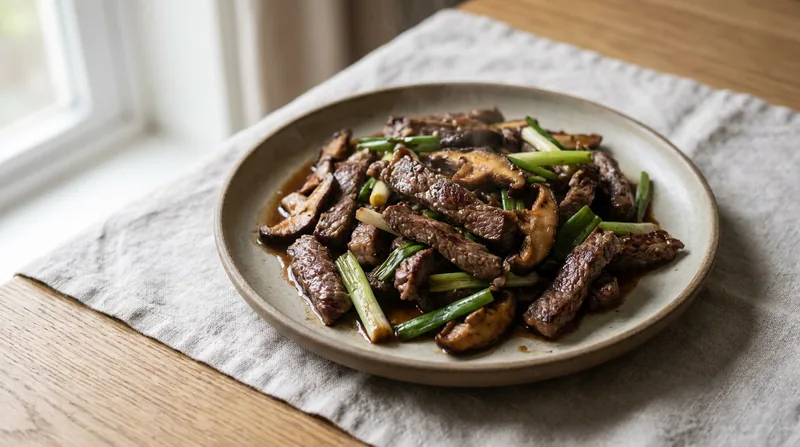
Lunch · Asian
Ribeye and Shiitake Stir-Fry
A fast stir-fry combining sliced ribeye steak and shiitake mushrooms in a seasoned pan.
Ingredients
- Ribeye steak 300 g
- Shiitake mushrooms 150 g
- Spring onions 40 g
- Soy sauce 15 g
- Sesame oil 10 g
- Garlic 5 g
Method
- Slice the ribeye steak into thin strips across the grain.
- Heat the sesame oil in a wok or large frying pan over high heat.
- Add the steak strips and garlic, frying them for two minutes until the beef browns.
- Add the shiitake mushrooms and sliced spring onions, cooking for a further three minutes.
- Pour in the soy sauce and stir-fry for one minute to coat all ingredients.
6 USDA records went into this total. It describes the ingredients as weighed, not the dish after cooking losses.
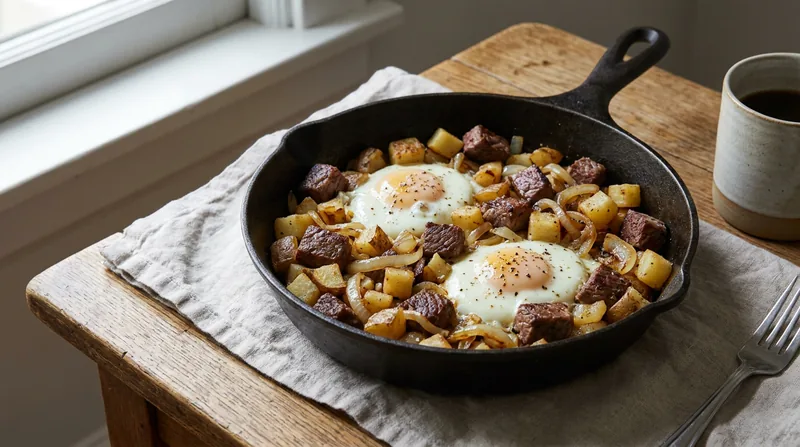
Breakfast · American
Ribeye and Potato Breakfast Hash
A pan-fried hash made with diced ribeye steak, potatoes, and onions, topped with eggs.
Ingredients
- Ribeye steak 250 g
- Russet potatoes 300 g
- Yellow onion 80 g
- Olive oil 20 g
- Salt 4 g
- Large eggs 100 g
Method
- Cut the potatoes and ribeye steak into one-centimetre cubes.
- Heat half of the olive oil in a non-stick frying pan and cook the potatoes and onions for ten minutes until soft.
- Push the vegetables to the side of the pan, add the remaining oil, and brown the steak cubes for three minutes.
- Mix the steak and potatoes together, season with salt, and make two wells in the mixture.
- Crack the eggs into the wells, cover the pan, and cook for four minutes until the egg whites set.
Figures are per serving and come from 6 USDA FoodData Central entries; cooking will shift them slightly.

Calorie Counter Team, food critic
Ribeye steak as part of a meal
One way to build a meal around ribeye steak, costed from the same records. Substitute freely; the method carries over.
| Item | Serving | Calories | Protein (g) |
|---|---|---|---|
| Ribeye steak, grilled | 3 oz | 242 | 20 |
| Couscous, cooked | 1 cup, cooked | 176 | 6 |
| Bell pepper | 1 medium | 31 | 1.2 |
| Together | 449 | 27 |
Ribeye steak against other meat and poultry
Same weight for every row, 100 g, so differences are not portion effects. The form column shows whether a row is raw, cooked or as sold.
| Food | Form | Calories | Protein (g) | Carbs (g) | Fat (g) |
|---|---|---|---|---|---|
| Hot dog | Cooked | 322 | 12 | 2.7 | 29 |
| Ribeye steak | Raw | 241 | 19 | 0.2 | 18 |
| Rotisserie chicken | Roasted | 239 | 27 | 0 | 14 |
| Ground beef | Raw | 215 | 19 | 0 | 15 |
| Chicken wing | Raw | 191 | 18 | 0 | 13 |
| Chicken breast | Raw | 120 | 23 | 0 | 2.6 |
| Turkey breast | Raw | 114 | 24 | 0.1 | 1.5 |
Ribeye steak: common questions
How many calories does 4 oz of raw ribeye steak have?
The USDA figure is 272 calories, or 241 per 100 g. It is taken from the record “Beef, rib eye steak, boneless, lip off, separable lean and fat, trimmed to 0" fat, choice, raw”, FDC 173403.
Is there much protein in ribeye steak?
21 g in 4 oz of raw ribeye steak, or 19 g per 100 g. That is 42 percent of the 50 g Daily Value.
Is ribeye steak higher in calories once it is prepared?
It does. The same 113 g is 272 calories raw and 322 grilled, with the other preparations listed here falling in between.
Does ribeye steak fit a calorie deficit?
It can fit any calorie target; no single food decides the outcome. What matters here is that 4 oz of raw ribeye steak costs 272 calories and returns 21 g of protein, so 31 percent of its energy is protein — which means it needs a protein-rich partner on the plate.
Should you cut off the large pocket of fat before cooking?
No, leave the fat intact during cooking. It melts and distributes flavour throughout the meat while keeping it moist. You can trim any unwanted pieces on your plate after the steak has rested.
Why does the outer strip of the ribeye cook faster than the centre?
The outer muscle, or spinalis, is separated from the eye by a seam of fat. This fat acts as an insulator, causing the different sections of the meat to cook at different speeds.
Sources
- Beef, rib eye steak, boneless, lip off, separable lean and fat, trimmed to 0" fat, choice, raw — USDA FoodData Central, FDC ID 173403
- Beef, rib eye steak, boneless, lip off, separable lean and fat, trimmed to 0" fat, choice, cooked, grilled — USDA FoodData Central, FDC ID 172165
- Daily Values for nutrition labelling, 21 CFR 101.9
Stop doing this by hand.
You just looked up one food. CalorieCounter reads a whole plate from a photo, serving and preparation included. It is coming to the App Store for iPhone — leave your email and you get the link the day it is live.