Vegetables
Pumpkin nutrition, by serving and by method.
30 calories and 1.2 g of protein: that is 1 cup of pumpkin. Specifically, this is the USDA record “Pumpkin, raw”. That figure is not fixed. Depending on how it is prepared, 100 g runs anywhere from 20 to 34 calories. Choose how much you are eating and the panel does the arithmetic from there.
Figures: USDA FoodData Central, records 168448, 168449, 168450. Calculated in your browser; nothing is uploaded.
How many calories does pumpkin have?
USDA puts 1 cup of pumpkin at 30 calories and 100 g at 26. Other household measures follow, each with its weighed gram figure.
| Serving | Weight (g) | Calories | Protein (g) | Carbs (g) | Fat (g) |
|---|---|---|---|---|---|
| 1 cup | 116 | 30 | 1.2 | 7.5 | 0.1 |
| 100 g | 100 | 26 | 1 | 6.5 | 0.1 |
Pumpkin and its protein content
Expect 1.2 g of protein from 1 cup of pumpkin, roughly 2 percent of a 50 g day. Protein is close to absent in pumpkin. Its calories come from carbohydrate instead.
By calories rather than by weight the split is 13 percent protein, 3 percent fat and 84 percent carbohydrate, so in practice it is mostly a carbohydrate rather than anything else.
Pumpkin calories by preparation
Canned pumpkin comes in at 34 calories per 100 g against 20 for boiled, a gap of 70 percent. What explains it is how it is processed.
The table holds the weight constant at 116 g, which leaves the preparation as the single variable.
| Preparation | Calories | Protein (g) | Fat (g) | What it involves |
|---|---|---|---|---|
| Boiled pumpkin | 23 | 0.8 | 0.1 | Water only |
| Raw pumpkin | 30 | 1.2 | 0.1 | Nothing added |
| Canned pumpkin | 39 | 1.3 | 0.3 | Packed |
What to know before you cook pumpkin
This winter squash comes whole, canned as puree, or in pre-cut wedges. Avoid giant carving pumpkins, which are watery and stringy. Choose culinary varieties like Queensland Blue or sweet French pumpkins. Look for a heavy specimen with dull, hard skin and an intact stem. Avoid soft spots near the base.
Roasting concentrates the flesh by evaporating water, turning the starch to sugar. Boiling makes the flesh sodden and dilutes the flavour. The most common error is undercooking, which leaves the texture unpleasantly stringy. Roast until a knife slips effortlessly through the dense flesh, which will caramelise around the edges.
British cooks roast it for Sunday lunches or blend it into spiced soups. In Italy, chefs use the sweet puree to fill pasta. It pairs naturally with warm spices like nutmeg, salty cheeses like feta, and bitter greens. The seeds are roasted for a crunchy snack.
Micronutrients in pumpkin
Measured against FDA Daily Values, the strongest lines for 1 cup of pumpkin are 55 percent of a day’s vitamin A. Adjust the panel at the top and these rows recalculate.
| Nutrient | Amount | % Daily Value |
|---|
Putting pumpkin into a day of eating
If you eat 2,000 calories a day, 1 cup of pumpkin accounts for 2 percent of them, and for 2 percent of the 50 g protein benchmark. To replace 2,000 with your real number, use the TDEE calculator; to turn that into targets, the macro calculator.
Pumpkin recipes, with the numbers
Three recipes from the Calorie Counter Team, each costed ingredient by ingredient against USDA records, so the per-serving figures are sums, not guesses.
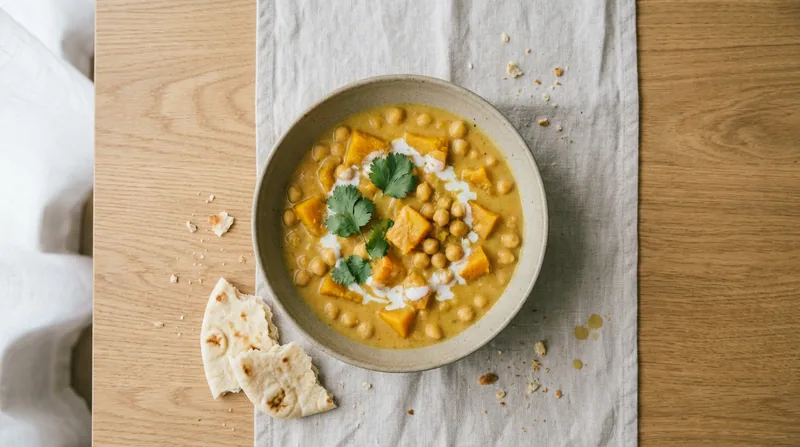
Dinner · Indian
Pumpkin and Chickpea Curry
A mild vegetable curry featuring diced pumpkin and chickpeas simmered in spiced coconut milk.
Ingredients
- pumpkin, peeled and diced 500 g
- canned chickpeas, drained 240 g
- coconut milk, canned 400 g
- vegetable oil 15 g
- curry powder 10 g
- salt 4 g
Method
- Heat the vegetable oil in a large saucepan over medium heat.
- Add the curry powder and fry for 1 minute until fragrant.
- Stir in the pumpkin, chickpeas, coconut milk, and salt.
- Simmer on low heat for 20 minutes until the pumpkin is tender.
Per serving, from 6 USDA FoodData Central records. Cooking changes weight and some nutrients; treat these as close rather than exact.
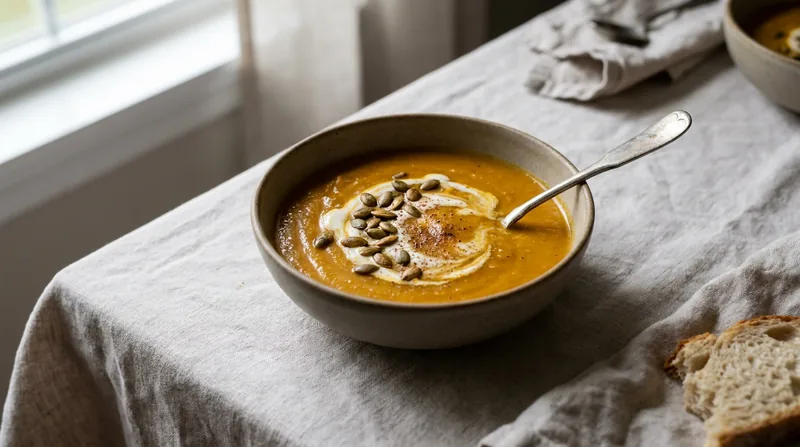
Lunch · British
Spiced Pumpkin Soup
A warm vegetable soup blended with mild spices and onion.
Ingredients
- Pumpkin flesh 800 g
- Onion 150 g
- Unsalted butter 30 g
- Vegetable broth 600 g
- Ground nutmeg 2 g
- Table salt 5 g
Method
- Peel the pumpkin and onion, then chop them into 2-centimetre pieces.
- Melt the butter in a large saucepan over medium heat.
- Add the onion and pumpkin, then cook for 10 minutes until they soften.
- Pour in the vegetable broth, nutmeg, and salt, then simmer for 20 minutes.
- Blend the mixture with a hand blender until it is smooth.
6 USDA records went into this total. It describes the ingredients as weighed, not the dish after cooking losses.
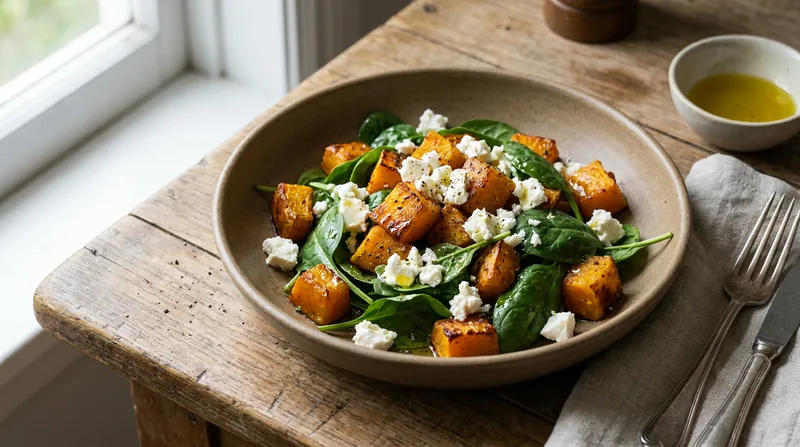
Side · Mediterranean
Roasted Pumpkin and Feta Salad
Roast pumpkin cubes tossed with spinach and crumbled feta cheese.
Ingredients
- Pumpkin flesh 600 g
- Olive oil 30 g
- Table salt 4 g
- Ground black pepper 2 g
- Feta cheese 100 g
- Baby spinach 100 g
Method
- Heat the oven to 200 degrees Celsius.
- Cut the pumpkin into 3-centimetre cubes and toss them with olive oil, salt, and black pepper.
- Spread the pumpkin cubes on a baking tray and roast for 30 minutes.
- Transfer the roasted pumpkin to a bowl and let it cool for 10 minutes.
- Add the baby spinach and crumble the feta cheese over the top before tossing.
6 USDA records went into this total. It describes the ingredients as weighed, not the dish after cooking losses.

Calorie Counter Team, food critic
Putting pumpkin on a plate
One way to build a meal around pumpkin, costed from the same records. Substitute freely; the method carries over.
| Item | Serving | Calories | Protein (g) |
|---|---|---|---|
| Pumpkin | 1 cup | 30 | 1.2 |
| Chicken breast, roasted | 1/2 breast | 142 | 27 |
| Bagel | 1 medium bagel | 289 | 11 |
| Together | 461 | 39 |
Pumpkin beside its neighbours
Same weight for every row, 100 g, so differences are not portion effects. The form column shows whether a row is raw, cooked or as sold.
| Food | Form | Calories | Protein (g) | Carbs (g) | Fat (g) |
|---|---|---|---|---|---|
| Onion | Raw | 40 | 1.1 | 9.3 | 0.1 |
| Okra | Raw | 33 | 1.9 | 7.5 | 0.2 |
| Pumpkin | Raw | 26 | 1 | 6.5 | 0.1 |
| Bell pepper | Raw | 26 | 1 | 6 | 0.3 |
| Cabbage | Raw | 25 | 1.3 | 5.8 | 0.1 |
| Cauliflower | Raw | 25 | 1.9 | 5 | 0.3 |
| Cucumber | Raw | 15 | 0.7 | 3.6 | 0.1 |
Common questions on pumpkin
How many calories are in 1 cup of pumpkin?
1 cup of pumpkin is 30 calories. That comes from the USDA record “Pumpkin, raw” (FDC 168448), which is 26 calories per 100 g.
How much protein is in pumpkin?
1 cup of pumpkin has 1.2 g of protein. By weight that is 1 g per 100 g, and the serving covers 2 percent of the Daily Value.
Do the calories in pumpkin change with how it is prepared?
The weight stays the same but the number moves. 116 g of pumpkin is 23 calories boiled, rising to 39 canned.
Can you eat pumpkin when trying to lose weight?
Weight change comes from the whole week’s intake. 1 cup of pumpkin contributes 30 calories and 1.2 g of protein (15 percent of its energy), useful alongside a protein source rather than as one.
Can you eat the skin of a pumpkin?
Yes, but only on smaller culinary varieties. Roasted skin becomes tender and edible. Larger, older specimens have tough, woody skins that remain leathery even after prolonged cooking, so you must peel them before or after roasting.
Why is my pumpkin pie filling watery?
Fresh pumpkin puree holds a lot of moisture. To fix this, strain the cooked puree through cheesecloth or cook it in a wide pan to evaporate the liquid before mixing it with your other ingredients.
Sources
- Pumpkin, raw — USDA FoodData Central, FDC ID 168448
- Pumpkin, cooked, boiled, drained, without salt — USDA FoodData Central, FDC ID 168449
- Pumpkin, canned, without salt — USDA FoodData Central, FDC ID 168450
- Daily Values for nutrition labelling, 21 CFR 101.9
Stop doing this by hand.
You just looked up one food. CalorieCounter reads a whole plate from a photo, serving and preparation included. It is coming to the App Store for iPhone — leave your email and you get the link the day it is live.