Vegetables
Bell pepper nutrition, raw, cooked and everything between.
On USDA figures, 1 medium bell pepper works out at 31 calories and carries 1.2 g of protein. Those numbers describe “Peppers, sweet, red, raw” in USDA FoodData Central. How it reaches the plate decides the rest, with 100 g measured at 18 calories one way and 28 another. The panel underneath takes any serving and any amount, and the vitamin and mineral table tracks what you pick.
Every value traces to USDA FoodData Central (170108, 169373, 168546, 170110); Daily Values follow the FDA label rules.
The calorie count for bell pepper
Count 31 calories for 1 medium bell pepper, or 26 for every 100 g. The portion weights in the table are USDA’s own measurements.
| Serving | Weight (g) | Calories | Protein (g) | Carbs (g) | Fat (g) |
|---|---|---|---|---|---|
| 1 tablespoon | 9.3 | 2 | 0.1 | 0.6 | 0 |
| 1 ring | 10 | 3 | 0.1 | 0.6 | 0 |
| 1 small | 74 | 19 | 0.7 | 4.5 | 0.2 |
| 1 cup, sliced | 92 | 24 | 0.9 | 5.5 | 0.3 |
| 1 medium | 119 | 31 | 1.2 | 7.2 | 0.4 |
| 1 cup, chopped | 149 | 39 | 1.5 | 9 | 0.4 |
| 1 large | 164 | 43 | 1.6 | 9.9 | 0.5 |
| 100 g | 100 | 26 | 1 | 6 | 0.3 |
How much protein does bell pepper provide?
1 medium bell pepper provides 1.2 g of protein. Set beside the 50 g reference intake, that is 2 percent. Protein is close to absent in bell pepper. Its calories come from carbohydrate instead.
Of every 100 calories, 13 come from protein, 9 from fat and 78 from carbohydrate.
Bell pepper, method by method
Per 100 g, boiled bell pepper carries 56 percent more calories than canned — 28 against 18. The difference is moisture lost to the heat, so the same weight holds more food.
Weight is fixed at 119 g throughout, so the rows differ only in how the bell pepper was prepared.
| Preparation | Calories | Protein (g) | Fat (g) | What it involves |
|---|---|---|---|---|
| Canned bell pepper | 21 | 1 | 0.4 | Packed, with its liquid |
| Raw bell pepper | 31 | 1.2 | 0.4 | Nothing added |
| Boiled bell pepper | 33 | 1.1 | 0.2 | Water only |
| Dried bell pepper | 374 | 21 | 3.6 | Water removed |
Buying, cooking and using bell pepper
Bell peppers are sweet, hollow fruits sold green, yellow, orange, or red. Look for firm, glossy skin and a bright green stem. They should feel heavy for their size, which indicates thick, juicy walls. Avoid those with pale, soft patches or wrinkled skin near the stem, as these are already drying out.
High heat blisters the tough outer skin, allowing you to peel it away easily. Gentle sweating softens the flesh and coaxes out its natural sugars. The common mistake is stewing them until they lose their bright colour and turn soggy. Always remove the bitter white internal ribs before cooking.
Raw slices add crunch to salads or dips. Cooked, they form the base of Spanish sofrito and Italian peperonata, where they melt into savoury sauces. They pair naturally with garlic, onions, and olive oil, or bring sweetness to quick stir-fries. Use red peppers when you require a milder, sweeter flavour.
Vitamins and minerals in bell pepper
What 1 medium bell pepper supplies most of: vitamin C at 169 percent of a day, vitamin A at 21 percent of a day, vitamin B6 at 20 percent of a day. All rows below respond to the serving you chose.
| Nutrient | Amount | % Daily Value |
|---|
It carries 2.1 g of fibre per 100 g, about 8 percent of a day.
Bell pepper and your daily targets
Budget-wise, 1 medium bell pepper costs 2 percent of a 2,000 calorie day and pays back 2 percent of the day’s protein. The TDEE calculator and macro calculator will tell you what those percentages look like against your own targets.
Three ways to cook bell pepper
Three recipes from the Calorie Counter Team, each costed ingredient by ingredient against USDA records, so the per-serving figures are sums, not guesses.
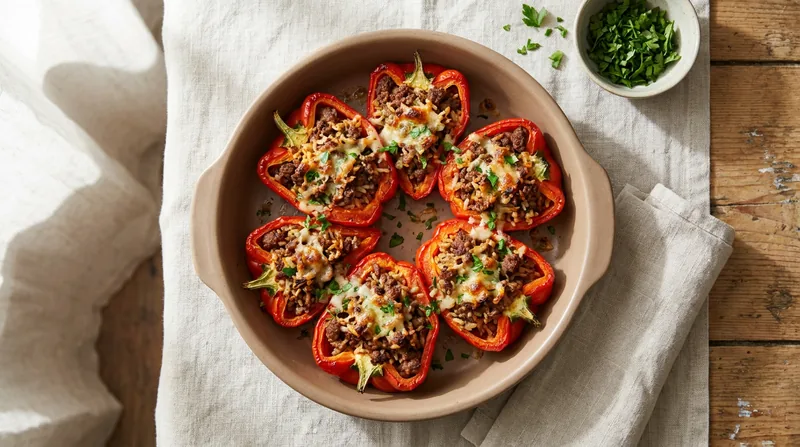
Dinner · British
Beef Stuffed Peppers
Halved bell peppers filled with seasoned minced beef and rice, then baked.
Ingredients
- Red bell peppers 300 g
- Lean minced beef 200 g
- Cooked white rice 100 g
- Olive oil 10 g
- Brown onion 80 g
- Salt 3 g
- Cheddar cheese 40 g
Method
- Cut the bell peppers in half lengthways and remove the seeds.
- Heat the olive oil in a pan over medium heat and fry the chopped onion and minced beef for 8 minutes.
- Stir the cooked rice and salt into the beef mixture.
- Fill the pepper halves with the beef mixture and place them in a baking dish.
- Sprinkle the cheddar cheese over the top of the stuffed peppers.
- Bake at 190 degrees Celsius for 25 minutes until the peppers are soft.
7 USDA records went into this total. It describes the ingredients as weighed, not the dish after cooking losses.
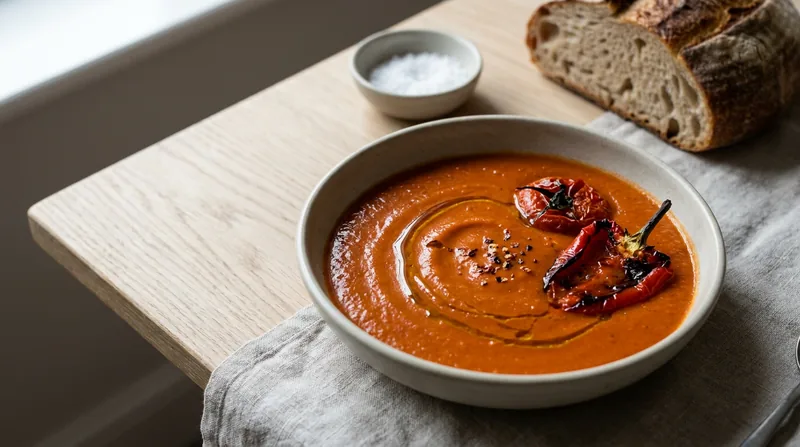
Lunch · Mediterranean
Roasted Pepper and Tomato Soup
A smooth soup made from roasted red peppers, tomatoes, and garlic blended together.
Ingredients
- Red bell peppers 400 g
- Plum tomatoes 300 g
- Garlic cloves 15 g
- Olive oil 20 g
- Vegetable stock 400 g
- Salt 4 g
Method
- Cut the red bell peppers and tomatoes into quarters and peel the garlic.
- Toss the vegetables in the olive oil and spread them on a baking tray.
- Roast the vegetables at 200 degrees Celsius for 25 minutes.
- Transfer the roasted vegetables to a saucepan and add the vegetable stock and salt.
- Simmer the mixture over low heat for 10 minutes.
- Blend the soup using a hand blender until it is completely smooth.
Built from 6 USDA ingredient records. A cooked dish never matches its raw sum exactly, but it stays close.
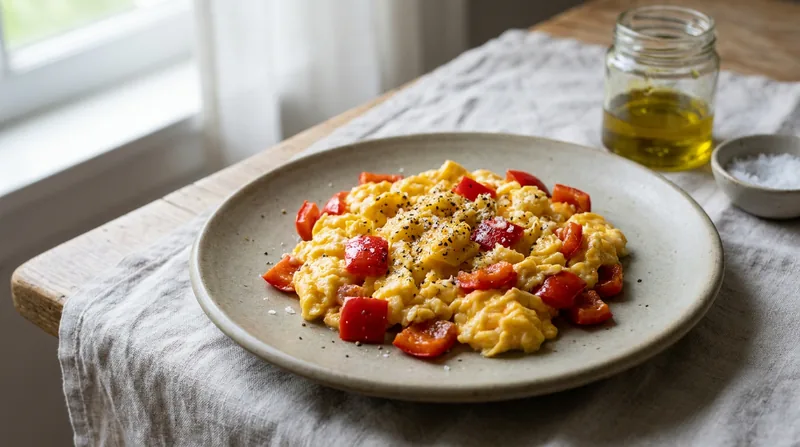
Breakfast · Basque
Red Pepper Scrambled Eggs
Scrambled eggs cooked with softened red bell pepper.
Ingredients
- 1 large red bell pepper, diced 150 g
- Olive oil 10 g
- 2 large eggs 120 g
- Salt 2 g
- Black pepper 1 g
Method
- Dice the red bell pepper into 1-centimetre pieces.
- Heat the olive oil in a frying pan over medium heat.
- Fry the pepper pieces for 8 minutes until soft.
- Whisk the eggs with the salt and black pepper in a bowl.
- Pour the eggs into the pan and stir slowly until set.
5 USDA records went into this total. It describes the ingredients as weighed, not the dish after cooking losses.

Calorie Counter Team, food critic
Bell pepper as part of a meal
To see how bell pepper adds up in a meal, here it is beside two ordinary companions, all three from USDA figures.
| Item | Serving | Calories | Protein (g) |
|---|---|---|---|
| Bell pepper | 1 medium | 31 | 1.2 |
| Ground beef, grilled | 3 oz | 213 | 22 |
| Oats, cooked | 3/4 cup | 124 | 4.4 |
| Together | 368 | 28 |
How bell pepper compares with similar foods
Per 100 g, each in the form its own page leads with; the second column says which.
| Food | Form | Calories | Protein (g) | Carbs (g) | Fat (g) |
|---|---|---|---|---|---|
| Broccoli | Raw | 31 | 2.6 | 6.3 | 0.3 |
| Bell pepper | Raw | 26 | 1 | 6 | 0.3 |
| Pumpkin | Raw | 26 | 1 | 6.5 | 0.1 |
| Cabbage | Raw | 25 | 1.3 | 5.8 | 0.1 |
| Cauliflower | Raw | 25 | 1.9 | 5 | 0.3 |
| Spinach | Raw | 23 | 2.9 | 3.6 | 0.4 |
| Tomato | Raw | 18 | 0.9 | 3.9 | 0.2 |
Questions about bell pepper
What is the calorie count for 1 medium bell pepper?
Count 31 calories. The source is the USDA record “Peppers, sweet, red, raw” (FDC 170108), which lists 26 calories per 100 g.
How much protein is in bell pepper?
You get 1.2 g from 1 medium bell pepper, equal to 2 percent of the daily reference amount; 100 g holds 1 g.
Does cooking change the calories in bell pepper?
Yes, by a measurable amount: 119 g goes from 21 calories (canned) to 33 (boiled), depending on preparation.
Does bell pepper fit a calorie deficit?
It can fit any calorie target; no single food decides the outcome. What matters here is that 1 medium bell pepper costs 31 calories and returns 1.2 g of protein, so 15 percent of its energy is protein — so pair it with something that carries more protein.
Can you eat the seeds and inner white membrane of a bell pepper?
Yes, they are edible but generally discarded. The white ribs have a bitter taste and a spongy texture that ruins the dish. The small seeds are tough and often stick to the roof of your mouth, so removing them improves your meal.
Why do green bell peppers taste different from red ones?
Green peppers are harvested before they are fully ripe. This early harvest gives them a sharp, slightly bitter, grassy flavour. If left on the vine, they ripen into red, yellow, or orange fruits, which lose their bitterness and become much sweeter.
Sources
- Peppers, sweet, red, raw — USDA FoodData Central, FDC ID 170108
- Peppers, sweet, red, cooked, boiled, drained, without salt — USDA FoodData Central, FDC ID 170110
- Peppers, sweet, red, canned, solids and liquids — USDA FoodData Central, FDC ID 168546
- Peppers, sweet, red, freeze-dried — USDA FoodData Central, FDC ID 169373
- Daily Values for nutrition labelling, 21 CFR 101.9
Stop doing this by hand.
You just looked up one food. CalorieCounter reads a whole plate from a photo, serving and preparation included. It is coming to the App Store for iPhone — leave your email and you get the link the day it is live.