Fruit
Olives nutrition, down to the gram.
1 large olive is 5 calories and 0 g of protein. The source is the USDA entry “Olives, ripe, canned (small-extra large)”. Set the serving below and the panel works it out, with the full nutrient table following your choice.
Source data is USDA FoodData Central (169094). The sums run on your device and nothing leaves it.
Calories in olives, serving by serving
USDA puts 1 large olive at 5 calories and 100 g at 116. Other household measures follow, each with its weighed gram figure.
| Serving | Weight (g) | Calories | Protein (g) | Carbs (g) | Fat (g) |
|---|---|---|---|---|---|
| 1 small | 3.2 | 4 | 0 | 0.2 | 0.3 |
| 1 large | 4.4 | 5 | 0 | 0.3 | 0.5 |
| 1 tbsp | 8.4 | 10 | 0.1 | 0.5 | 0.9 |
| 100 g | 100 | 116 | 0.8 | 6 | 11 |
Protein in olives, measured
For protein, 1 large olive gives you 0 g, which fills 0 percent of the daily 50 g benchmark. Olives carries almost no protein. It earns its place in a day through fat, not through protein.
The calorie breakdown runs 3 percent protein to 78 percent fat to 19 percent carbohydrate. Functionally, that is mostly a fat.
Kitchen notes on olives
Green olives are harvested unripe, whilst black olives ripen on the tree. Look for plump specimens with smooth skins, sold in brine rather than oil to preserve their firm texture. Avoid those with soft spots or dull, mushy flesh. Stone-in olives retain more of their natural flavour and resist drying out.
Heating olives intensifies their saltiness and softens their texture. Raw olives added to hot sauces should go in at the very end of cooking. A common mistake is boiling them, which destroys their delicate aromatics and leaves them rubbery. Gently warm them in olive oil with citrus peel to release their fragrance.
These fruits suit Mediterranean and North African dishes. Pair them with rich meats like duck, or stir them into tomato-based pasta sauces. They balance salty cheeses like feta and cut through the richness of mackerel. Always tear or crush them rather than slicing them to catch more sauce.
Vitamins and minerals in olives
No single nutrient dominates here. The complete USDA breakdown is below, scaled to whatever serving you set.
| Nutrient | Amount | % Daily Value |
|---|
Watch the sodium: 735 mg in 100 g, or 32 percent of the recommended maximum for a day.
Putting olives into a day of eating
If you eat 2,000 calories a day, 1 large olive accounts for 0 percent of them, and for 0 percent of the 50 g protein benchmark. To replace 2,000 with your real number, use the TDEE calculator; to turn that into targets, the macro calculator.
Three recipes built around olives
The Calorie Counter Team wrote these. Under every recipe the numbers are added up from the USDA record for each ingredient and split across the servings.
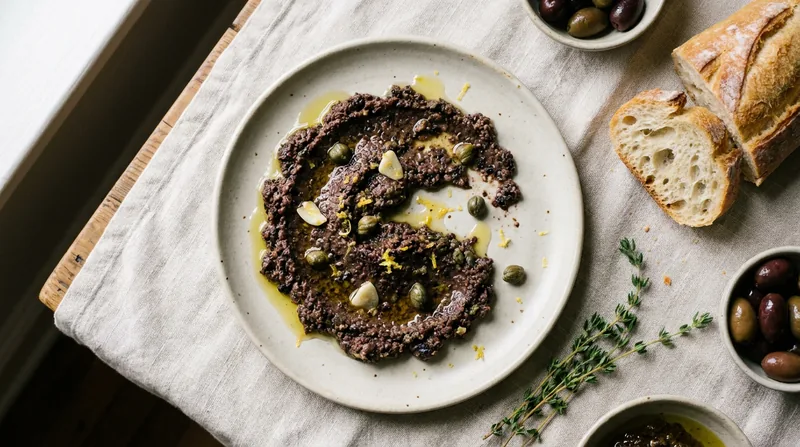
Snack · French
Black Olive Tapenade
A thick Mediterranean spread made from blended black olives, capers, and olive oil.
Ingredients
- Pitted black olives 200 g
- Canned capers 30 g
- Olive oil 45 g
- Garlic clove 6 g
- Lemon juice 15 g
- Canned anchovy fillets 15 g
Method
- Rinse the olives and capers in cold water to remove excess brine.
- Place the olives, capers, garlic, and anchovies into a food processor.
- Pulse the mixture until it forms a coarse paste.
- Pour in the olive oil and lemon juice while pulsing.
- Transfer the mixture to a small serving bowl.
Summed from 6 USDA records and divided by servings. Heat alters weight and a few nutrients, so read it as a close figure.
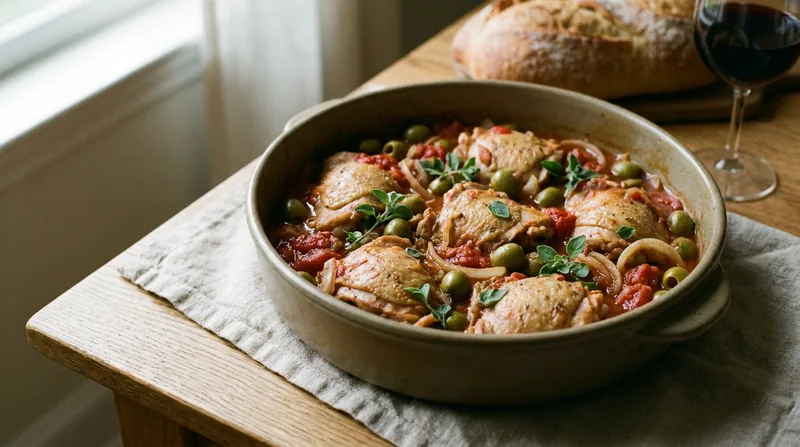
Dinner · Mediterranean
Olive and Tomato Braised Chicken
Chicken thighs simmered with green olives, chopped tomatoes, and oregano in a shallow pan.
Ingredients
- Boneless skinless chicken thighs 400 g
- Pitted green olives 150 g
- Canned chopped tomatoes 400 g
- Olive oil 15 g
- Onion 110 g
- Dried oregano 2 g
- Table salt 3 g
Method
- Heat the olive oil in a wide frying pan over medium heat.
- Brown the chicken thighs for four minutes on each side, then remove them from the pan.
- Fry the chopped onion in the remaining oil for five minutes until soft.
- Add the tomatoes, green olives, oregano, salt, and chicken thighs back to the pan.
- Simmer gently over low heat for twenty minutes until the chicken is cooked through.
Summed from 7 USDA records and divided by servings. Heat alters weight and a few nutrients, so read it as a close figure.
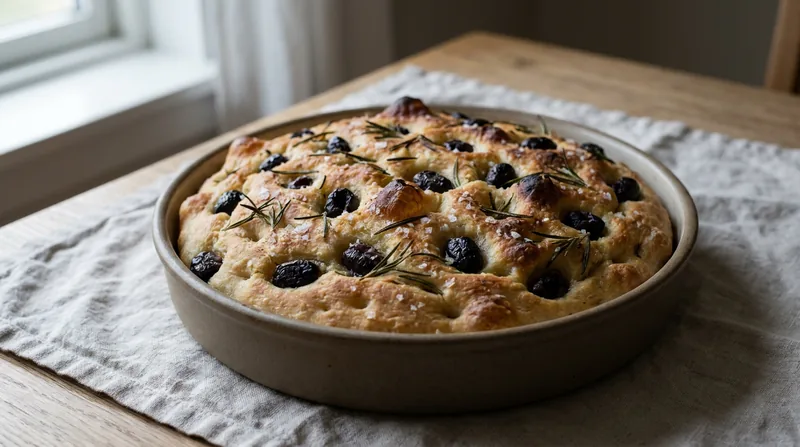
Side · Italian
Olive and Rosemary Focaccia
A yeast flatbread topped with black olives, fresh rosemary, and coarse sea salt.
Ingredients
- Strong white bread flour 250 g
- Instant active yeast 7 g
- Warm water 175 g
- Olive oil 30 g
- Pitted black olives 100 g
- Fresh rosemary 5 g
- Sea salt 5 g
Method
- Mix the flour, yeast, warm water, and fifteen grams of olive oil in a bowl to form a dough.
- Knead the dough on a floured surface for ten minutes until smooth.
- Stretch the dough into an oiled baking tin and leave to rise for forty-five minutes.
- Press dimples into the dough, then press the olives and rosemary into the surface.
- Drizzle with the remaining olive oil, sprinkle with sea salt, and bake at 200C for twenty minutes.
7 USDA records went into this total. It describes the ingredients as weighed, not the dish after cooking losses.

Calorie Counter Team, food critic
One meal, costed: olives
A sample plate, not a prescription: olives plus two sides, each line sourced and the sum shown.
| Item | Serving | Calories | Protein (g) |
|---|---|---|---|
| Olives | 1 large | 5 | 0 |
| Feta cheese | 1 oz | 75 | 4 |
| Peanut butter | 2 tbsp | 191 | 7.1 |
| Together | 271 | 11 |
Olives beside its neighbours
Same weight for every row, 100 g, so differences are not portion effects. The form column shows whether a row is raw, cooked or as sold.
| Food | Form | Calories | Protein (g) | Carbs (g) | Fat (g) |
|---|---|---|---|---|---|
| Coconut | Raw | 354 | 3.3 | 15 | 33 |
| Olives | Canned | 116 | 0.8 | 6 | 11 |
| Banana | Raw | 89 | 1.1 | 23 | 0.3 |
| Pomegranate | Raw | 83 | 1.7 | 19 | 1.2 |
| Fig | Raw | 74 | 0.8 | 19 | 0.3 |
| Cantaloupe | Raw | 34 | 0.8 | 8.2 | 0.2 |
| Grapefruit | Raw | 30 | 0.6 | 7.5 | 0.1 |
Olives, asked and answered
How many calories does 1 large olive have?
5 calories, according to USDA FoodData Central: the record is “Olives, ripe, canned (small-extra large)”, FDC 169094. That works out at 116 per 100 g.
How much protein does olives have?
Per 100 g, olives contains 0.8 g of protein. 1 large olive therefore gives 0 g, which is 0 percent of a 50 g day.
Is olives good for weight loss?
No food causes or prevents weight loss on its own. The useful facts are that 1 large olive is 5 calories with 0 g of protein, which makes 3 percent of its calories protein; so pair it with something that carries more protein.
Is olives high in carbs?
Expect 0.3 g of carbs from 1 large olive, including 0.1 g of fibre and 0 g of sugar.
How should you store opened olives to keep them fresh?
Keep them submerged in their original brine in a sealed container in the fridge. If you discarded the liquid, make a fresh salt water solution. This prevents the skins from shrivelling and stops mould from growing on the surface.
Why do some recipes call for soaking olives in water?
Soaking removes excess salt from heavily cured varieties. Submerge them in cold water before using them in your recipe. This softens their harshness, allowing the fruit flavour to come through without overwhelming the other ingredients in your finished dish.
Sources
- Olives, ripe, canned (small-extra large) — USDA FoodData Central, FDC ID 169094
- Daily Values for nutrition labelling, 21 CFR 101.9
Stop doing this by hand.
You just looked up one food. CalorieCounter reads a whole plate from a photo, serving and preparation included. It is coming to the App Store for iPhone — leave your email and you get the link the day it is live.