Fruit
Coconut nutrition, down to the gram.
On USDA figures, 1 piece of coconut works out at 159 calories and carries 1.5 g of protein. Those numbers describe “Nuts, coconut meat, raw” in USDA FoodData Central. Pick a portion in the panel and it recalculates on the spot; the nutrient table further down moves with it.
Source data is USDA FoodData Central (170169, 170170). The sums run on your device and nothing leaves it.
The calorie count for coconut
The short answer is 159 calories for 1 piece of coconut. By weight that is 354 per 100 g, and the table gives the other common portions.
| Serving | Weight (g) | Calories | Protein (g) | Carbs (g) | Fat (g) |
|---|---|---|---|---|---|
| 1 piece | 45 | 159 | 1.5 | 6.9 | 15 |
| 1 cup, shredded | 80 | 283 | 2.7 | 12 | 27 |
| 1 medium | 397 | 1,405 | 13 | 60 | 133 |
| 100 g | 100 | 354 | 3.3 | 15 | 33 |
Coconut and its protein content
There are 1.5 g of protein in 1 piece of coconut, or 3 percent of the 50 g the FDA uses as a daily reference. You would not choose coconut for protein: just 4 percent of its calories come from it.
The calorie breakdown runs 4 percent protein to 80 percent fat to 16 percent carbohydrate. Functionally, that is mostly a fat.
Coconut calories by preparation
Each line compares 45 g of coconut, prepared a different way.
| Preparation | Calories | Protein (g) | Fat (g) | What it involves |
|---|---|---|---|---|
| Raw coconut | 159 | 1.5 | 15 | Nothing added |
| Dried coconut | 297 | 3.1 | 29 | Water removed, sugar added |
Coconut in the kitchen
Whole fresh coconuts should feel heavy with liquid sloshing inside when shaken. Avoid specimens with damp, mouldy eyes or cracked shells. Desiccated, shredded, and flaked varieties offer different textures for baking. Ensure packaged coconut is unsweetened to maintain control over the sugar levels in your savoury and sweet dishes.
High heat easily scorches desiccated coconut when toasting it dry in a pan. Stir the flakes constantly, removing them from the hot pan the moment they turn pale golden. Coconut milk curdles if boiled rapidly. Simmer it gently to prevent the fat from separating and ruining the smooth texture of your sauces.
This ingredient anchors rich Thai curries and balances fiery Caribbean stews. Toasted flakes add texture to South Indian rice dishes, while freshly grated flesh softens the heat of green chillies. In baking, its rich fat replaces butter, lending a distinct, nutty aroma to cakes, puddings, and tarts across many traditions.
Vitamins and minerals in coconut
Coconut spreads its micronutrients thinly. Every value USDA reports is listed, tied to your chosen portion.
| Nutrient | Amount | % Daily Value |
|---|
Coconut packs 9 g of fibre into 100 g, covering 32 percent of what the label rules call a day’s worth.
Coconut against a daily budget
Budget-wise, 1 piece of coconut costs 8 percent of a 2,000 calorie day and pays back 3 percent of the day’s protein. The TDEE calculator and macro calculator will tell you what those percentages look like against your own targets.
Three ways to use coconut
Each of these comes from the Calorie Counter Team, and each carries nutrition worked out from its ingredients’ USDA entries rather than estimated from the finished dish.
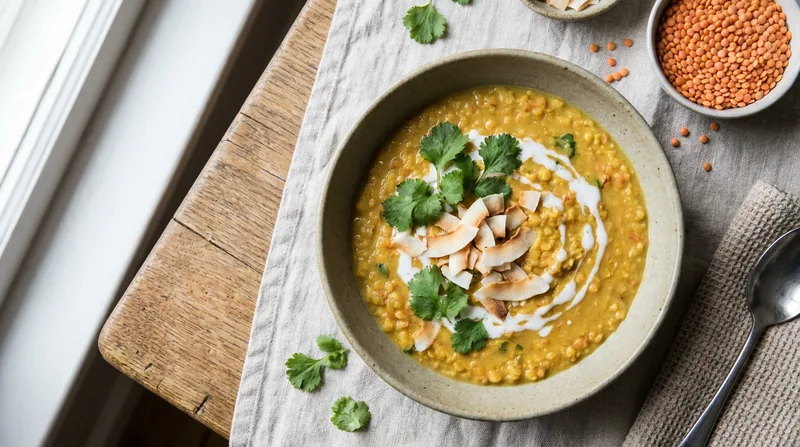
Dinner · Indian
Coconut and Lentil Dhal
A warm red lentil stew simmered with coconut milk and ground turmeric.
Ingredients
- Dry red lentils 200 g
- Canned coconut milk 400 g
- Water 300 g
- Yellow onion, chopped 150 g
- Coconut oil 15 g
- Garlic cloves, minced 9 g
- Fresh ginger, grated 10 g
- Ground turmeric 3 g
- Fine sea salt 4 g
Method
- Melt the coconut oil in a large saucepan over medium heat.
- Cook the onion, garlic, and ginger for five minutes until soft.
- Add the turmeric, salt, red lentils, coconut milk, and water to the pan.
- Bring the mixture to a boil, then reduce the heat to low.
- Simmer uncovered for twenty minutes, stirring occasionally, until the lentils are tender.
9 USDA records went into this total. It describes the ingredients as weighed, not the dish after cooking losses.
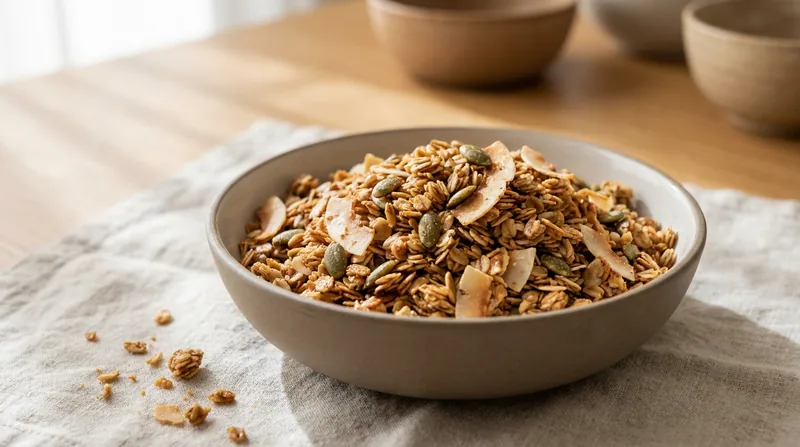
Breakfast · British
Toasted Coconut Granola
A baked breakfast mixture of rolled oats, pumpkin seeds, and dried coconut flakes.
Ingredients
- Rolled oats 150 g
- Unsweetened dried coconut flakes 75 g
- Raw pumpkin seeds 50 g
- Melted coconut oil 30 g
- Maple syrup 50 g
- Fine sea salt 2 g
Method
- Heat the oven to 160 degrees Celsius and line a baking sheet with parchment paper.
- Combine the rolled oats, dried coconut flakes, pumpkin seeds, coconut oil, maple syrup, and salt in a bowl.
- Spread the mixture in a single layer on the prepared baking sheet.
- Bake for fifteen minutes, stirring once halfway through, until the coconut is golden brown.
- Cool completely on the baking sheet to allow the mixture to become crisp.
Nutrition per serving, calculated across 6 USDA ingredient records. Expect small differences once cooked.
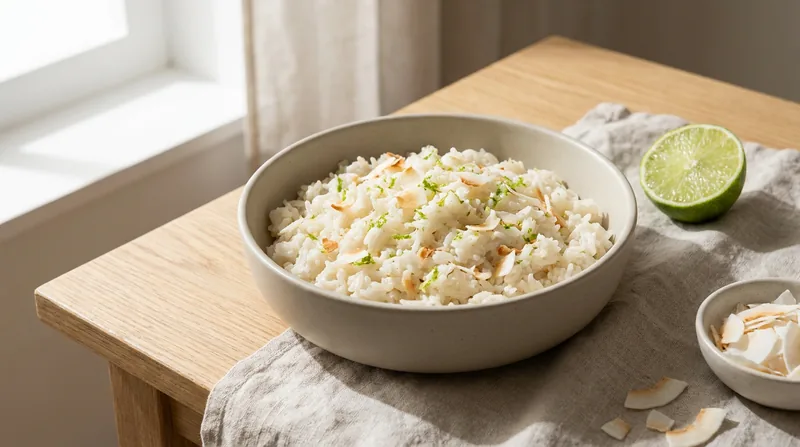
Side · Thai
Coconut and Lime Rice
Jasmine rice cooked in coconut milk and finished with fresh lime juice and raw coconut.
Ingredients
- Raw jasmine rice 200 g
- Canned coconut milk 200 g
- Water 150 g
- Fine sea salt 3 g
- Fresh lime juice 15 g
- Raw grated coconut meat 50 g
Method
- Rinse the jasmine rice in a fine mesh sieve under cold water until the water runs clear.
- Combine the rinsed rice, coconut milk, water, and salt in a medium saucepan.
- Bring to a boil over high heat, then cover with a tight-fitting lid and reduce the heat to low.
- Simmer for fifteen minutes without lifting the lid.
- Remove from the heat and let the pan sit covered for ten minutes.
- Stir in the lime juice and raw grated coconut meat with a fork before serving.
Nutrition per serving, calculated across 6 USDA ingredient records. Expect small differences once cooked.

Calorie Counter Team, food critic
Coconut as part of a meal
A worked example, every line from the same USDA data as the table above. Swap any of it; the arithmetic is the point, not the menu.
| Item | Serving | Calories | Protein (g) |
|---|---|---|---|
| Coconut | 1 piece | 159 | 1.5 |
| Feta cheese | 1 oz | 75 | 4 |
| Peanut butter | 2 tbsp | 191 | 7.1 |
| Together | 425 | 13 |
How coconut compares with similar foods
Here is how coconut sits among its neighbours per 100 g; the form column keeps raw and cooked apart.
| Food | Form | Calories | Protein (g) | Carbs (g) | Fat (g) |
|---|---|---|---|---|---|
| Coconut | Raw | 354 | 3.3 | 15 | 33 |
| Raisins | As sold | 299 | 3.3 | 79 | 0.3 |
| Dates | As sold | 277 | 1.8 | 75 | 0.2 |
| Prunes | Dried | 240 | 2.2 | 64 | 0.4 |
| Raspberries | Raw | 52 | 1.2 | 12 | 0.7 |
| Cranberries | Raw | 46 | 0.5 | 12 | 0.1 |
| Cantaloupe | Raw | 34 | 0.8 | 8.2 | 0.2 |
Common questions on coconut
What is the calorie count for 1 piece of coconut?
1 piece of coconut is 159 calories. That comes from the USDA record “Nuts, coconut meat, raw” (FDC 170169), which is 354 calories per 100 g.
How much protein does coconut have?
3.3 g per 100 g, so 1 piece of coconut supplies 1.5 g. Against the Daily Value that is 3 percent.
Is coconut good for weight loss?
No food causes or prevents weight loss on its own. The useful facts are that 1 piece of coconut is 159 calories with 1.5 g of protein, which makes 4 percent of its calories protein; which means it needs a protein-rich partner on the plate.
Is coconut high in carbs?
1 piece of coconut contains 6.9 g of carbohydrate. Fibre makes up 4.1 g of that and sugar 2.8 g.
How do you open a fresh coconut without special tools?
Pierce the softest eye with metal skewers and drain the water. Wrap the shell in a clean towel, then strike it firmly against a hard surface like concrete until it cracks apart.
How should you store leftover fresh coconut flesh?
Submerge the raw pieces in fresh water inside a sealed container and refrigerate. Change the water daily to keep the flesh moist and sweet, or freeze the grated meat for longer storage.
Sources
- Nuts, coconut meat, raw — USDA FoodData Central, FDC ID 170169
- Nuts, coconut meat, dried (desiccated), not sweetened — USDA FoodData Central, FDC ID 170170
- Daily Values for nutrition labelling, 21 CFR 101.9
Stop doing this by hand.
You just looked up one food. CalorieCounter reads a whole plate from a photo, serving and preparation included. It is coming to the App Store for iPhone — leave your email and you get the link the day it is live.