Dairy
Milk nutrition, the complete picture.
1 cup of milk is 149 calories and 7.7 g of protein. Specifically, this is the USDA record “Milk, whole, 3.25% milkfat, without added vitamin A and vitamin D”. Its real contribution is vitamin B12 and riboflavin. The selector beneath handles other portions, and the nutrient table responds to it.
Drawn from USDA FoodData Central, FDC 172217. No account, no upload, percentages against FDA Daily Values.
How many calories does milk have?
149 calories is the figure for 1 cup of milk; 61 is the figure per 100 g. Below are the remaining portions USDA measured.
| Serving | Weight (g) | Calories | Protein (g) | Carbs (g) | Fat (g) |
|---|---|---|---|---|---|
| 1 tbsp | 15 | 9 | 0.5 | 0.7 | 0.5 |
| 1 fl oz | 31 | 19 | 1 | 1.5 | 1 |
| 1 cup | 244 | 149 | 7.7 | 12 | 8 |
| 1 quart | 976 | 595 | 31 | 47 | 32 |
| 100 g | 100 | 61 | 3.2 | 4.8 | 3.3 |
How much protein does milk provide?
1 cup of milk provides 7.7 g of protein. Set beside the 50 g reference intake, that is 15 percent. Protein supplies 21 percent of the energy in milk, which helps a day’s total without carrying it.
The calorie breakdown runs 21 percent protein to 48 percent fat to 31 percent carbohydrate. Functionally, that is mostly a fat.
Milk in the kitchen
Fresh milk from dairy cows is sold pasteurised to keep it fresh. Look for whole, semi-skimmed, or skimmed varieties depending on how much cream you want. Homogenised milk has the fat dispersed so cream does not rise to the top. Check the date on the bottle. Choose organic or unhomogenised milk for traditional layers of cream.
Heating milk too quickly causes scorching on the bottom of the pan. Milk solids easily catch and burn, ruining the flavour. Gentle heat is essential. Another risk is skin formation, caused by evaporation at the surface. To prevent this, stir constantly or cover the pan. Avoid adding highly acidic ingredients directly to hot milk to prevent curdling.
In British kitchens, milk softens the heat of strong tea and forms the base of white sauces like Béchamel. Indian cooks simmer milk for long periods to create rich desserts like kheer. It also softens the texture of yeast doughs and binds ingredients in batters, puddings, and custards.
Everything USDA measures in milk
Against the Daily Value, 1 cup of milk stands out for vitamin B12 at 46 percent of a day, riboflavin at 32 percent of a day, calcium at 21 percent of a day. The table follows the selector above, so change the serving or the method and it updates.
| Nutrient | Amount | % Daily Value |
|---|
Milk and your daily targets
1 cup of milk uses 7 percent of a 2,000 calorie day and returns 15 percent of the protein reference. Your own budget is probably not 2,000; the TDEE calculator works it out, and the macro calculator splits it into protein, carbs and fat.
Using milk: three recipes
These are the Calorie Counter Team’s recipes for milk. Their nutrition panels are arithmetic: ingredient weights multiplied through USDA records, divided by servings.
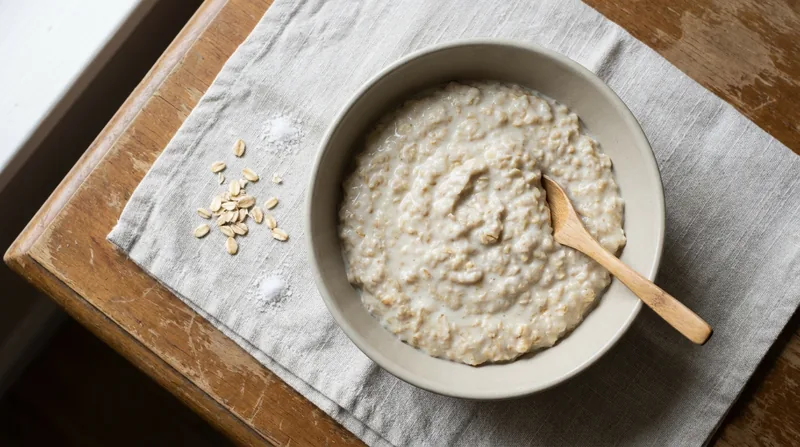
Breakfast · British
Milk Porridge
A traditional breakfast porridge made by simmering rolled oats in whole milk.
Ingredients
- Whole milk 300 g
- Rolled oats 50 g
- Salt 1 g
Method
- Pour the milk into a saucepan.
- Stir in the oats and salt.
- Bring the mixture to a simmer over medium heat.
- Cook for five minutes while stirring to prevent sticking.
- Remove from the heat and let stand for two minutes before serving.
Figures are per serving and come from 3 USDA FoodData Central entries; cooking will shift them slightly.
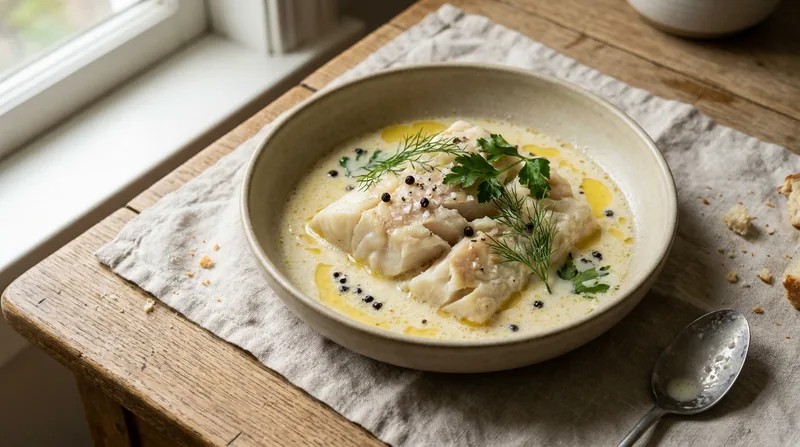
Dinner · British
Milk-Poached Cod
Cod fillets gently simmered in seasoned whole milk until tender.
Ingredients
- Cod fillet 300 g
- Whole milk 400 g
- Unsalted butter 15 g
- Black peppercorns 2 g
- Salt 2 g
Method
- Place the cod fillet into a shallow saucepan in a single layer.
- Pour the milk over the fish and add the butter, peppercorns and salt.
- Bring the liquid to a gentle simmer over medium-low heat.
- Poach the fish for eight minutes until the flesh flakes with a fork.
- Remove the fish with a slotted spoon to serve.
Summed from 5 USDA records and divided by servings. Heat alters weight and a few nutrients, so read it as a close figure.
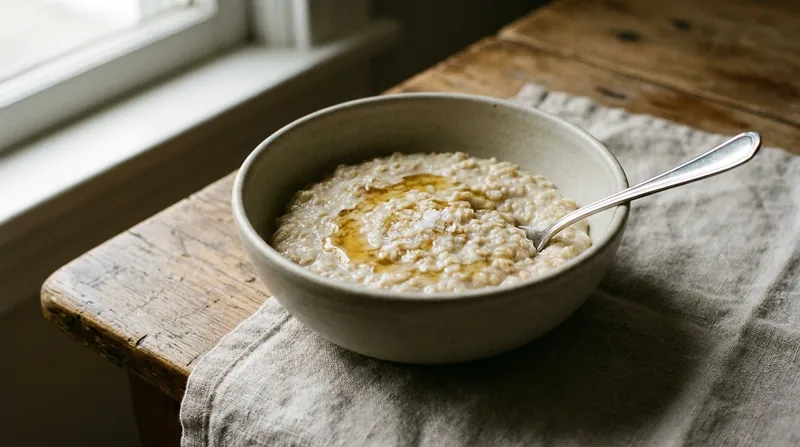
Breakfast · British
Creamy Porridge
A traditional warm breakfast oats dish cooked entirely in whole milk.
Ingredients
- whole milk 500 g
- rolled oats 100 g
- table salt 2 g
- honey 30 g
Method
- Combine the oats, salt, and whole milk in a medium saucepan.
- Place the saucepan over medium heat and bring the mixture to a steady simmer.
- Cook for 10 minutes, stirring constantly with a wooden spoon to prevent sticking.
- Remove the saucepan from the heat once the oats are thick.
- Divide the porridge into two bowls and drizzle 15 grams of honey over each portion.
Nutrition per serving, calculated across 4 USDA ingredient records. Expect small differences once cooked.

Calorie Counter Team, food critic
Milk as part of a meal
A worked example, every line from the same USDA data as the table above. Swap any of it; the arithmetic is the point, not the menu.
| Item | Serving | Calories | Protein (g) |
|---|---|---|---|
| Milk | 1 cup | 149 | 7.7 |
| Cherries | 1 cup, with pits | 87 | 1.5 |
| Chia seeds | 1 oz | 138 | 4.7 |
| Together | 374 | 14 |
Milk beside its neighbours
Per 100 g, each in the form its own page leads with; the second column says which.
| Food | Form | Calories | Protein (g) | Carbs (g) | Fat (g) |
|---|---|---|---|---|---|
| Parmesan | As sold | 420 | 28 | 14 | 28 |
| Mozzarella | As sold | 299 | 22 | 2.4 | 22 |
| Ice cream | As sold | 207 | 3.5 | 24 | 11 |
| Cottage cheese | As sold | 84 | 11 | 4.3 | 2.3 |
| Yogurt | As sold | 63 | 5.3 | 7 | 1.6 |
| Milk | As sold | 61 | 3.2 | 4.8 | 3.3 |
| Greek yogurt | As sold | 61 | 10 | 3.6 | 0.4 |
Milk, asked and answered
What is the calorie count for 1 cup of milk?
Count 149 calories. The source is the USDA record “Milk, whole, 3.25% milkfat, without added vitamin A and vitamin D” (FDC 172217), which lists 61 calories per 100 g.
How much protein does milk have?
You get 7.7 g from 1 cup of milk, equal to 15 percent of the daily reference amount; 100 g holds 3.2 g.
Can you eat milk when trying to lose weight?
It can fit any calorie target; no single food decides the outcome. What matters here is that 1 cup of milk costs 149 calories and returns 7.7 g of protein, so 21 percent of its energy is protein — which means it needs a protein-rich partner on the plate.
What is milk a good source of?
Chiefly vitamin B12 at 46 percent, riboflavin at 32 percent, calcium at 21 percent, for 1 cup of milk. See the full profile above for the remaining values.
Why does milk boil over so suddenly?
When milk heats, surface skin forms. Steam builds up underneath this barrier and cannot escape. The trapped steam expands rapidly, lifting the liquid and causing it to spill over the edge of the pot.
Can you freeze fresh milk?
Yes, you can freeze milk, but the cream may separate during the process. Thawed milk often looks grainy. Shaking the bottle vigorously after thawing will help recombine the liquid, making it suitable for baking and cooking again.
Sources
- Milk, whole, 3.25% milkfat, without added vitamin A and vitamin D — USDA FoodData Central, FDC ID 172217
- Daily Values for nutrition labelling, 21 CFR 101.9
Stop doing this by hand.
You just looked up one food. CalorieCounter reads a whole plate from a photo, serving and preparation included. It is coming to the App Store for iPhone — leave your email and you get the link the day it is live.