Grains and starches
Grits nutrition, raw, cooked and everything between.
182 calories and 4.4 g of protein: that is 1 cup of cooked grits. The record behind it is USDA’s “Cereals, corn grits, white, regular and quick, enriched, cooked with water, with salt”. Change the way it is prepared and an identical weight swings from 71 up to 370 calories per 100 g. Set the serving below and the panel works it out, with the full nutrient table following your choice.
Drawn from USDA FoodData Central, FDC 171671, 171654. No account, no upload, percentages against FDA Daily Values.
How many calories does grits have?
At 71 calories per 100 g, 1 cup of cooked grits comes to 182. The weights shown for each portion come straight from the USDA record.
| Serving | Weight (g) | Calories | Protein (g) | Carbs (g) | Fat (g) |
|---|---|---|---|---|---|
| 1 tablespoon | 16 | 11 | 0.3 | 2.4 | 0.1 |
| 1 cup | 257 | 182 | 4.4 | 38 | 1.2 |
| 100 g | 100 | 71 | 1.7 | 15 | 0.5 |
How much protein is in grits?
For protein, 1 cup of cooked grits gives you 4.4 g, which fills 9 percent of the daily 50 g benchmark. Protein is close to absent in grits. Its calories come from carbohydrate instead.
The calorie breakdown runs 10 percent protein to 6 percent fat to 84 percent carbohydrate. Functionally, that is mostly a carbohydrate.
Grits, method by method
There is a 421 percent spread between cooked grits (71 calories per 100 g) and as sold (370). The cause is the water it takes up as it cooks, so each gram holds less of the food itself.
The table holds the weight constant at 257 g, which leaves the preparation as the single variable.
| Preparation | Calories | Protein (g) | Fat (g) | What it involves |
|---|---|---|---|---|
| Cooked grits | 182 | 4.4 | 1.2 | Prepared |
| Grits, as sold | 951 | 20 | 4.5 | As purchased |
Kitchen notes on grits
Grits are dried corn kernels ground into a coarse meal. Traditional stoneground grits retain the germ, offering superior corn flavour and a robust texture. Quick and instant varieties are steamed and rolled, which reduces cooking time but sacrifices the rich depth. Seek out stoneground packages with visible flecks of the dark corn germ.
This starch requires patient simmering and constant stirring to prevent lumps. The starch granules must absorb hot liquid gradually to soften fully. Rushing the process results in a gritty, sandy texture. The most common error is removing them from the heat before the hard core of the grind has completely softened into a smooth porridge.
Grits are traditionally eaten hot with butter, sharp cheese, or gravy. They pair naturally with shellfish, particularly shrimp, in coastal American cooking. In other culinary traditions, they serve as a base for braised meats or stewed vegetables, absorbing savoury pan juices and providing a comforting, textured foundation for rich sauces.
Vitamins and minerals in grits
Top of the list for 1 cup of cooked grits: thiamin at 18 percent of a day, folate at 18 percent of a day. The remaining nutrients are tabulated underneath and update live.
| Nutrient | Amount | % Daily Value |
|---|
Grits against a daily budget
Budget-wise, 1 cup of cooked grits costs 9 percent of a 2,000 calorie day and pays back 9 percent of the day’s protein. The TDEE calculator and macro calculator will tell you what those percentages look like against your own targets.
Three recipes built around grits
These are the Calorie Counter Team’s recipes for grits. Their nutrition panels are arithmetic: ingredient weights multiplied through USDA records, divided by servings.
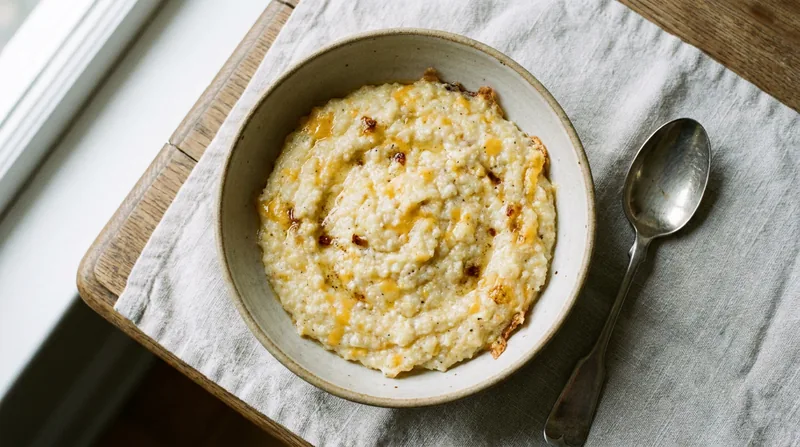
Breakfast · American
Savoury Cheese Grits
A traditional warm breakfast porridge made with stone-ground corn grits and mature cheddar cheese.
Ingredients
- stone-ground white grits 100 g
- water 350 g
- whole milk 150 g
- salted butter 20 g
- cheddar cheese 60 g
- fine salt 3 g
Method
- Bring the water, milk and salt to a boil in a heavy saucepan over medium-high heat.
- Whisk in the grits slowly to prevent lumps from forming.
- Reduce the heat to low, cover the pan and simmer for 20 minutes, stirring every 5 minutes.
- Remove the pan from the heat and stir in the butter and cheddar cheese until melted.
Summed from 6 USDA records and divided by servings. Heat alters weight and a few nutrients, so read it as a close figure.
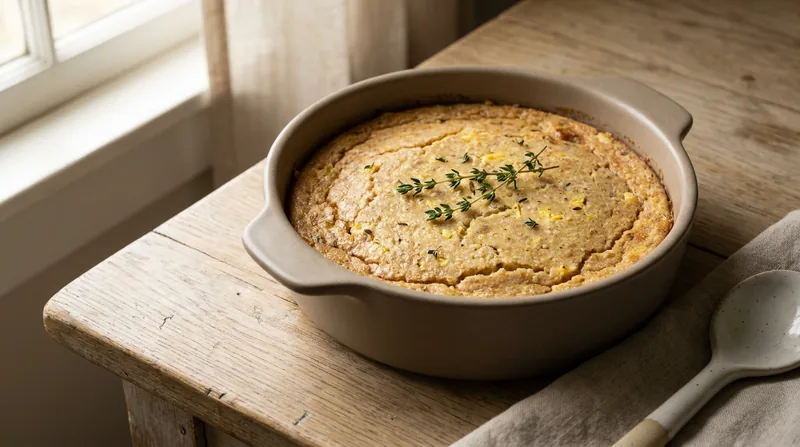
Side · American
Baked Grits Casserole
A baked side dish combining cooked corn grits, whisked egg and garlic, finished in the oven.
Ingredients
- quick-cooking corn grits 150 g
- water 600 g
- unsalted butter 30 g
- whole eggs 100 g
- garlic clove 6 g
- cheddar cheese 80 g
- fine salt 4 g
Method
- Preheat the oven to 180 degrees Celsius and grease a baking dish with 5 grams of the butter.
- Boil the water and salt in a saucepan, then whisk in the grits and cook for 5 minutes.
- Stir in the remaining butter, minced garlic, cheddar cheese and beaten eggs until combined.
- Pour the mixture into the prepared baking dish.
- Bake for 35 minutes until the top is golden brown and the centre is set.
Summed from 7 USDA records and divided by servings. Heat alters weight and a few nutrients, so read it as a close figure.
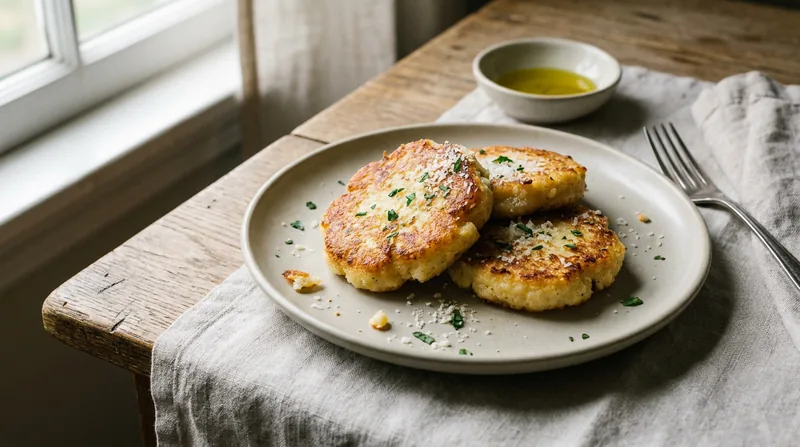
Lunch · American
Pan-Fried Grits Cakes
Chilled corn grits sliced into cakes and pan-fried until they form a golden crust.
Ingredients
- corn grits 120 g
- water 500 g
- parmesan cheese 30 g
- olive oil 20 g
- fine salt 3 g
- black pepper 1 g
Method
- Boil the water and salt, stir in the grits, and simmer for 20 minutes while stirring frequently.
- Stir the parmesan cheese and black pepper into the hot cooked grits.
- Pour the mixture into a greased loaf tin to a depth of 2 centimetres and chill for 2 hours.
- Slice the chilled, firm grits into 4 equal rectangular cakes.
- Heat the olive oil in a frying pan over medium-high heat.
- Fry the cakes for 5 minutes on each side until a crisp crust forms.
Figures are per serving and come from 6 USDA FoodData Central entries; cooking will shift them slightly.

Calorie Counter Team, food critic
A plate built around grits
To see how grits adds up in a meal, here it is beside two ordinary companions, all three from USDA figures.
| Item | Serving | Calories | Protein (g) |
|---|---|---|---|
| Grits, cooked | 1 cup | 182 | 4.4 |
| Ham, roasted | 3 oz | 140 | 19 |
| Broccoli | 1 cup, chopped | 24 | 2 |
| Together | 346 | 25 |
Grits or something else?
Compared gram for gram, with the form of each food stated. Follow any link for that food’s full page.
| Food | Form | Calories | Protein (g) | Carbs (g) | Fat (g) |
|---|---|---|---|---|---|
| Popcorn | As sold | 387 | 13 | 78 | 4.5 |
| Oats | As sold | 379 | 13 | 68 | 6.5 |
| Tortilla | As sold | 306 | 8.2 | 49 | 8 |
| Quinoa | Cooked | 120 | 4.4 | 21 | 1.9 |
| Couscous | Cooked | 112 | 3.8 | 23 | 0.2 |
| Grits | Cooked | 71 | 1.7 | 15 | 0.5 |
| Oatmeal | Cooked | 71 | 2.5 | 12 | 1.5 |
Questions about grits
How many calories are in 1 cup of cooked grits?
The USDA figure is 182 calories, or 71 per 100 g. It is taken from the record “Cereals, corn grits, white, regular and quick, enriched, cooked with water, with salt”, FDC 171671.
How much protein is in grits?
You get 4.4 g from 1 cup of cooked grits, equal to 9 percent of the daily reference amount; 100 g holds 1.7 g.
Is grits higher in calories once it is prepared?
The weight stays the same but the number moves. 257 g of grits is 182 calories cooked, rising to 951 as sold.
Does grits fit a calorie deficit?
It can fit any calorie target; no single food decides the outcome. What matters here is that 1 cup of cooked grits costs 182 calories and returns 4.4 g of protein, so 10 percent of its energy is protein — so pair it with something that carries more protein.
Can you use polenta instead of grits?
Yes, but the texture will differ. Polenta is made from yellow flint corn, which remains firmer. Grits usually come from dent corn, which yields a softer, creamier porridge when cooked.
Why do grits sometimes taste bitter?
Bitter notes mean the corn oils have spoiled. Because stoneground grits retain the germ, the natural oils go rancid quickly. Always store your packages in the freezer to keep the oils fresh and sweet.
Sources
- Cereals, corn grits, white, regular and quick, enriched, dry — USDA FoodData Central, FDC ID 171654
- Cereals, corn grits, white, regular and quick, enriched, cooked with water, with salt — USDA FoodData Central, FDC ID 171671
- Daily Values for nutrition labelling, 21 CFR 101.9
Stop doing this by hand.
You just looked up one food. CalorieCounter reads a whole plate from a photo, serving and preparation included. It is coming to the App Store for iPhone — leave your email and you get the link the day it is live.