Nuts and seeds
Peanuts nutrition, and why the portion matters.
On USDA figures, 1 oz of peanuts works out at 161 calories and carries 7.3 g of protein. Those numbers describe “Peanuts, all types, raw” in USDA FoodData Central. Cook it differently and that moves: the spread across the forms below is 318 to 587 calories per 100 g. Choose how much you are eating and the panel does the arithmetic from there.
Numbers come from USDA FoodData Central records 172430, 174260, 173806 and are worked out locally, with no sign-up.
Calories in peanuts, serving by serving
1 oz of peanuts supplies 161 calories, which scales to 567 per 100 g. Each serving listed underneath was weighed by USDA rather than estimated.
| Serving | Weight (g) | Calories | Protein (g) | Carbs (g) | Fat (g) |
|---|---|---|---|---|---|
| 1 oz | 28 | 161 | 7.3 | 4.6 | 14 |
| 1 cup | 146 | 828 | 38 | 24 | 72 |
| 100 g | 100 | 567 | 26 | 16 | 49 |
How much protein does peanuts provide?
1 oz of peanuts provides 7.3 g of protein. Set beside the 50 g reference intake, that is 15 percent. Protein is a minor part of peanuts, at 18 percent of its calories. The case for eating it lies elsewhere.
Looked at as a share of calories: carbohydrate 11 percent, fat 73 percent, protein 17 percent.
Peanuts, method by method
Boiled, peanuts is 318 calories per 100 g; roasted, it is 587. The extra 85 percent comes from evaporation, which packs more of the food into each gram.
Every row below is the same 28 g of peanuts, so the only thing that differs is the method.
| Preparation | Calories | Protein (g) | Fat (g) | What it involves |
|---|---|---|---|---|
| Boiled peanuts | 90 | 3.8 | 6.3 | Water only |
| Raw peanuts | 161 | 7.3 | 14 | Nothing added |
| Roasted peanuts | 167 | 6.9 | 14 | Dry heat, no added fat |
What to know before you buy peanuts
Peanuts are underground legumes sold raw, roasted, shelled, or in their fibrous pods. Look for runner varieties for uniform roasting, or larger Virginia types for snacking. Avoid pods with dark mould spots or a rattling sound when shaken, which suggests the kernels have shrivelled. Raw kernels should have paper skins intact.
Gentle dry-roasting releases their natural oils, turning the pale flesh golden and crisp. The most common error is leaving them unattended; their high oil content causes them to scorch rapidly from the inside out. Stir raw kernels constantly in a heavy pan until they smell fragrant and their skins papery and loose.
In West African cookery, ground peanuts thicken rich chicken stews. Across Southeast Asia, they are crushed to form the base of spicy dipping sauces or sprinkled over noodle dishes. Combine them with chilli, lime, and coriander to balance their heavy, buttery texture in savoury salads.
Everything USDA measures in peanuts
Measured against FDA Daily Values, the strongest lines for 1 oz of peanuts are 21 percent of a day’s niacin, 17 percent of a day’s folate, 16 percent of a day’s vitamin E. Adjust the panel at the top and these rows recalculate.
| Nutrient | Amount | % Daily Value |
|---|
Fibre is a genuine strength: 8.5 g in every 100 g, which is 30 percent of the Daily Value.
Peanuts and your daily targets
1 oz of peanuts uses 8 percent of a 2,000 calorie day and returns 15 percent of the protein reference. Your own budget is probably not 2,000; the TDEE calculator works it out, and the macro calculator splits it into protein, carbs and fat.
Three recipes built around peanuts
These are the Calorie Counter Team’s recipes for peanuts. Their nutrition panels are arithmetic: ingredient weights multiplied through USDA records, divided by servings.
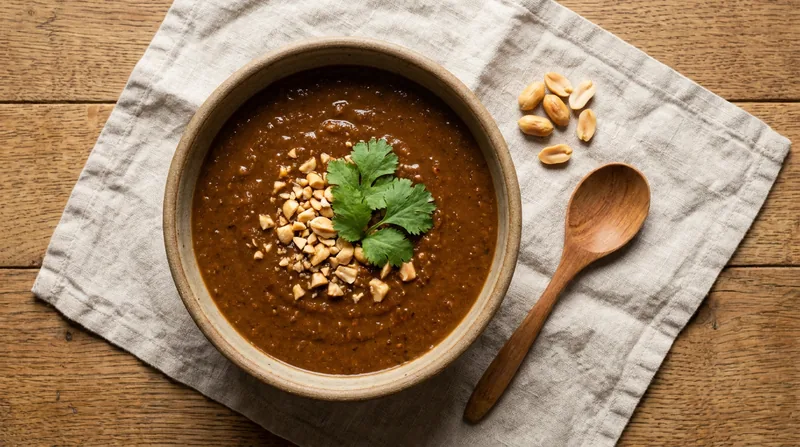
Dinner · West African
West African Style Peanut Soup
A thick soup made with ground peanuts, tomato paste, and chicken stock.
Ingredients
- Dry roasted unsalted peanuts 150 g
- Chicken stock 500 g
- Tomato paste 50 g
- Spanish onion 100 g
- Vegetable oil 15 g
- Salt 4 g
- Cayenne pepper 2 g
Method
- Grind the peanuts in a food processor until they form a fine paste.
- Heat the vegetable oil in a saucepan over medium heat and fry the chopped onion for five minutes.
- Stir in the tomato paste, cayenne pepper, and ground peanuts.
- Pour in the chicken stock slowly, whisking to prevent lumps.
- Simmer the soup on low heat for fifteen minutes, stirring frequently to prevent sticking.
- Season with the salt before serving.
Per serving, from 7 USDA FoodData Central records. Cooking changes weight and some nutrients; treat these as close rather than exact.
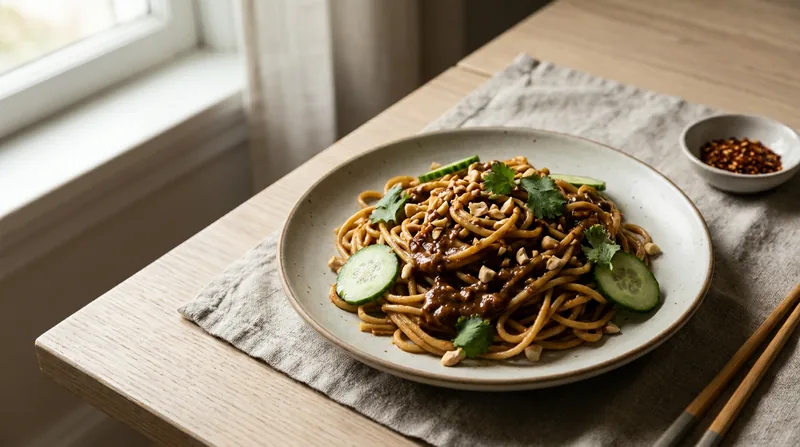
Lunch · Asian
Spicy Peanut Noodles
Cold wheat noodles tossed in a thick sauce made from smooth peanut butter and soy sauce.
Ingredients
- Dry wheat noodles 150 g
- Smooth unsalted peanut butter 80 g
- Soy sauce 30 g
- Sesame oil 15 g
- Rice vinegar 15 g
- Warm water 50 g
Method
- Boil the dry wheat noodles in salted water for eight minutes, then drain and rinse with cold water.
- Whisk the peanut butter, soy sauce, sesame oil, rice vinegar, and warm water in a bowl until smooth.
- Pour the peanut sauce over the cold noodles in a large mixing bowl.
- Toss the noodles thoroughly until they are completely coated in the sauce.
- Divide the noodles into two bowls and serve immediately.
Summed from 6 USDA records and divided by servings. Heat alters weight and a few nutrients, so read it as a close figure.
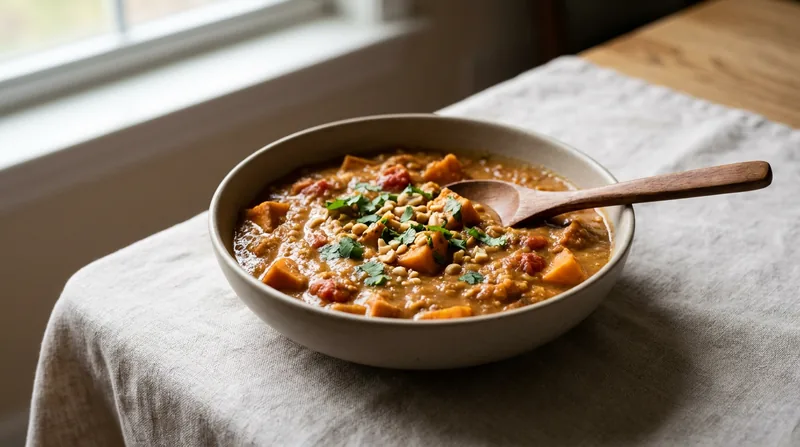
Dinner · West African
Peanut and Tomato Stew
A thick, savoury stew of sweet potato and peanut butter.
Ingredients
- sweet potato 300 g
- smooth peanut butter 120 g
- canned chopped tomatoes 400 g
- water 250 g
- onion 100 g
- peanut oil 15 g
- salt 4 g
- fresh ginger 10 g
Method
- Peel and dice the onion, ginger, and sweet potato.
- Heat the peanut oil in a large saucepan over medium heat and cook the onion and ginger for five minutes.
- Add the sweet potato, canned tomatoes, water, and salt to the pan.
- Simmer the mixture for fifteen minutes until the sweet potato is soft.
- Whisk in the peanut butter until the sauce is smooth and thick.
- Simmer for a final five minutes before serving.
Nutrition per serving, calculated across 8 USDA ingredient records. Expect small differences once cooked.

Calorie Counter Team, food critic
One meal, costed: peanuts
A sample plate, not a prescription: peanuts plus two sides, each line sourced and the sum shown.
| Item | Serving | Calories | Protein (g) |
|---|---|---|---|
| Peanuts | 1 oz | 161 | 7.3 |
| Cherries | 1 cup, with pits | 87 | 1.5 |
| Parmesan | 1 oz | 119 | 8.1 |
| Together | 367 | 17 |
Nuts and seeds: where peanuts sits
Here is how peanuts sits among its neighbours per 100 g; the form column keeps raw and cooked apart.
| Food | Form | Calories | Protein (g) | Carbs (g) | Fat (g) |
|---|---|---|---|---|---|
| Peanut butter | As sold | 598 | 22 | 22 | 51 |
| Sunflower seeds | Roasted | 582 | 19 | 24 | 50 |
| Pumpkin seeds | Roasted | 574 | 30 | 15 | 49 |
| Sesame seeds | Dried | 573 | 18 | 23 | 50 |
| Peanuts | Raw | 567 | 26 | 16 | 49 |
| Pistachios | Raw | 560 | 20 | 27 | 45 |
| Cashews | Raw | 553 | 18 | 30 | 44 |
What people ask about peanuts
What is the calorie count for 1 oz of peanuts?
USDA measures 1 oz of peanuts at 161 calories, or 567 calories for each 100 g. The record used is “Peanuts, all types, raw” (FDC 172430).
Is there much protein in peanuts?
You get 7.3 g from 1 oz of peanuts, equal to 15 percent of the daily reference amount; 100 g holds 26 g.
Does cooking change the calories in peanuts?
Yes, by a measurable amount: 28 g goes from 90 calories (boiled) to 167 (roasted), depending on preparation.
Is peanuts good for weight loss?
Weight change comes from the whole week’s intake. 1 oz of peanuts contributes 161 calories and 7.3 g of protein (18 percent of its energy), so pair it with something that carries more protein.
How do you remove the papery skins from raw peanuts?
Roast the raw kernels dry in a pan. Once cooled slightly, rub them vigorously between your palms or inside a clean tea towel. The skins will crumble off easily, leaving clean, pale nuts behind.
Why do my homemade peanut butter batches separate into layers?
Natural oils separate from the solids because there are no commercial emulsifiers. Stir the oil back in with a knife before using, then store the jar upside down in the larder to slow down future separation.
Sources
- Peanuts, all types, raw — USDA FoodData Central, FDC ID 172430
- Peanuts, all types, cooked, boiled, with salt — USDA FoodData Central, FDC ID 174260
- Peanuts, all types, dry-roasted, without salt — USDA FoodData Central, FDC ID 173806
- Daily Values for nutrition labelling, 21 CFR 101.9
Stop doing this by hand.
You just looked up one food. CalorieCounter reads a whole plate from a photo, serving and preparation included. It is coming to the App Store for iPhone — leave your email and you get the link the day it is live.