Nuts and seeds
Peanut butter nutrition, and why the portion matters.
2 tbsp of peanut butter comes to 191 calories. Protein accounts for 7.1 g of what is there. That is USDA’s figure for “Peanut butter, smooth style, without salt”. Where it earns its place is niacin and vitamin E. The panel underneath takes any serving and any amount, and the vitamin and mineral table tracks what you pick.
Drawn from USDA FoodData Central, FDC 172470. No account, no upload, percentages against FDA Daily Values.
How many calories are in peanut butter?
191 calories is the figure for 2 tbsp of peanut butter; 598 is the figure per 100 g. Below are the remaining portions USDA measured.
| Serving | Weight (g) | Calories | Protein (g) | Carbs (g) | Fat (g) |
|---|---|---|---|---|---|
| 2 tbsp | 32 | 191 | 7.1 | 7.1 | 16 |
| 1 cup | 258 | 1,543 | 57 | 58 | 133 |
| 100 g | 100 | 598 | 22 | 22 | 51 |
Peanut butter and its protein content
The protein count for 2 tbsp of peanut butter is 7.1 g, equal to 14 percent of the Daily Value. Only 15 percent of its calories come from protein, so treat peanut butter as something you eat for other reasons and count the protein as a bonus.
By calories rather than by weight the split is 14 percent protein, 72 percent fat and 14 percent carbohydrate, so in practice it is mostly a fat rather than anything else.
What to know before you buy peanut butter
Peanut butter is a paste made from roasted peanuts. Commercial jars often contain hydrogenated vegetable oil and sugar to prevent separation. Natural varieties contain only peanuts and salt, leaving a layer of oil at the top. Choose crunchy or smooth textures. Check the ingredient list to ensure there are no unwanted fats.
When heated, peanut butter thins and flows easily, but direct high heat burns it quickly. Stir it constantly when warming. The most frequent error is adding cold liquid directly to the paste, which causes it to seize into a dry clump. Whisk warm liquids in gradually to maintain a smooth emulsion.
This paste suits sweet and savoury contexts. In West African cooking, cooks dissolve it into chicken stews. In Southeast Asian cuisines, it forms the base for dipping sauces. It pairs naturally with apples, bananas, soy sauce, ginger, and chilli, or spread onto toast.
Vitamins and minerals in peanut butter
Measured against FDA Daily Values, the strongest lines for 2 tbsp of peanut butter are 26 percent of a day’s niacin, 19 percent of a day’s vitamin E. Adjust the panel at the top and these rows recalculate.
| Nutrient | Amount | % Daily Value |
|---|
There are 5 g of fibre in 100 g, roughly 18 percent of the daily figure.
Sugar accounts for 10 g in every 100 g.
How far peanut butter goes in a day
Budget-wise, 2 tbsp of peanut butter costs 10 percent of a 2,000 calorie day and pays back 14 percent of the day’s protein. The TDEE calculator and macro calculator will tell you what those percentages look like against your own targets.
Peanut butter recipes, with the numbers
Written by the Calorie Counter Team. The nutrition under each one is not an estimate: every ingredient is matched to its USDA FoodData Central record and the totals are summed from those, then divided by the servings.
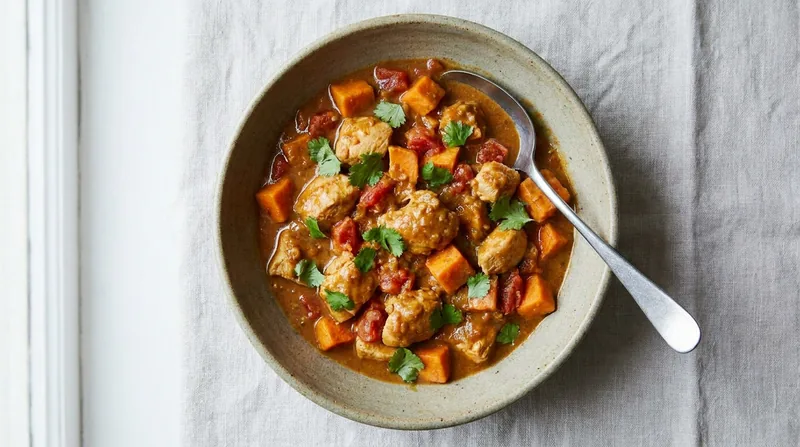
Dinner · African
Peanut and Chicken Stew
A one-pot chicken and sweet potato stew thickened with peanut butter.
Ingredients
- chicken breast 400 g
- peanut butter 150 g
- sweet potato 300 g
- canned chopped tomatoes 400 g
- onion 150 g
- ginger root 15 g
- vegetable oil 15 g
- water 250 g
- table salt 4 g
Method
- Heat the vegetable oil in a large saucepan over medium heat and fry the chopped onion and minced ginger for five minutes.
- Add the diced chicken breast and cook for five minutes until the surface is no longer pink.
- Stir in the diced sweet potato, chopped tomatoes, water, and salt, then bring the mixture to a simmer.
- Reduce the heat to low, cover the pan, and simmer for 15 minutes.
- Whisk the peanut butter with 50 grams of hot water in a small bowl until smooth, then stir it into the stew.
- Simmer uncovered for five minutes until the sauce thickens and the sweet potato is tender.
9 USDA records went into this total. It describes the ingredients as weighed, not the dish after cooking losses.
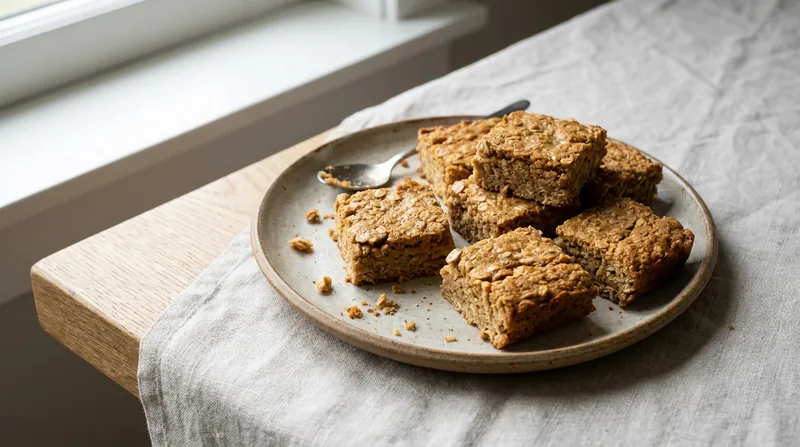
Snack · British
Peanut Butter Oat Bars
Baked snack bars made with oats, mashed banana, and peanut butter.
Ingredients
- peanut butter 200 g
- rolled oats 150 g
- banana 200 g
- honey 85 g
- table salt 2 g
Method
- Heat the oven to 180 degrees Celsius and line a 20-centimetre square baking tin with baking paper.
- Mash the banana in a large bowl using a fork until smooth.
- Stir the peanut butter, honey, rolled oats, and salt into the mashed banana until fully combined.
- Press the mixture firmly into the prepared tin in an even layer.
- Bake for 20 minutes until the edges are golden brown.
- Allow to cool completely in the tin before cutting into eight bars.
Summed from 5 USDA records and divided by servings. Heat alters weight and a few nutrients, so read it as a close figure.
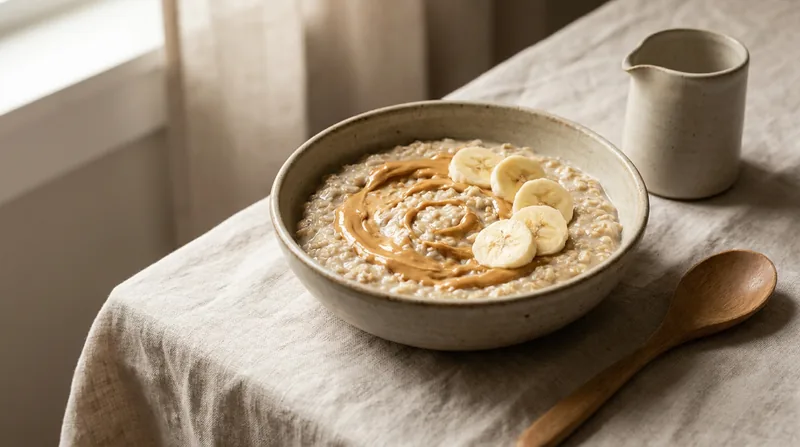
Breakfast · British
Peanut Butter Oatmeal
A warm breakfast porridge made with rolled oats, milk and smooth peanut butter.
Ingredients
- rolled oats 80 g
- water 240 g
- whole milk 240 g
- smooth peanut butter 64 g
- banana 120 g
- salt 2 g
Method
- Combine the oats, water, milk and salt in a saucepan.
- Bring the liquid to a boil over medium heat.
- Reduce the heat and simmer for five minutes, stirring constantly.
- Remove the pan from the heat and stir in the peanut butter until integrated.
- Divide the porridge into two bowls and top with sliced banana.
Figures are per serving and come from 6 USDA FoodData Central entries; cooking will shift them slightly.

Calorie Counter Team, food critic
What a meal with peanut butter adds up to
A sample plate, not a prescription: peanut butter plus two sides, each line sourced and the sum shown.
| Item | Serving | Calories | Protein (g) |
|---|---|---|---|
| Peanut butter | 2 tbsp | 191 | 7.1 |
| Banana | 1 medium | 105 | 1.3 |
| Yogurt | 1 container (6 oz) | 107 | 8.9 |
| Together | 403 | 17 |
Nuts and seeds: where peanut butter sits
Compared gram for gram, with the form of each food stated. Follow any link for that food’s full page.
| Food | Form | Calories | Protein (g) | Carbs (g) | Fat (g) |
|---|---|---|---|---|---|
| Pecans | As sold | 691 | 9.2 | 14 | 72 |
| Peanut butter | As sold | 598 | 22 | 22 | 51 |
| Sunflower seeds | Roasted | 582 | 19 | 24 | 50 |
| Almonds | As sold | 579 | 21 | 22 | 50 |
| Pumpkin seeds | Roasted | 574 | 30 | 15 | 49 |
| Pistachios | Raw | 560 | 20 | 27 | 45 |
| Hemp seeds | As sold | 553 | 32 | 8.7 | 49 |
What people ask about peanut butter
How many calories does 2 tbsp of peanut butter have?
Count 191 calories. The source is the USDA record “Peanut butter, smooth style, without salt” (FDC 172470), which lists 598 calories per 100 g.
How much protein does peanut butter have?
22 g per 100 g, so 2 tbsp of peanut butter supplies 7.1 g. Against the Daily Value that is 14 percent.
Is peanut butter good for weight loss?
It can fit any calorie target; no single food decides the outcome. What matters here is that 2 tbsp of peanut butter costs 191 calories and returns 7.1 g of protein, so 15 percent of its energy is protein — which means it needs a protein-rich partner on the plate.
Which nutrients is peanut butter highest in?
The notable ones are niacin at 26 percent, vitamin E at 19 percent, measured per 2 tbsp of peanut butter. Everything else in the USDA record appears in the table on this page.
Why does natural peanut butter separate and how do you mix it?
Natural peanut butter lacks emulsifiers, so peanut oil rises to the top. To recombine them, turn the jar upside down before opening it. Use a sturdy knife or a small whisk to blend the oil back into the paste.
How should you store peanut butter to keep it fresh?
Store highly processed peanut butter in a dark cupboard. Natural varieties should go into the fridge after stirring to prevent the oil from separating again and to stop the peanut oils from becoming rancid over time.
Sources
- Peanut butter, smooth style, without salt — USDA FoodData Central, FDC ID 172470
- Daily Values for nutrition labelling, 21 CFR 101.9
Stop doing this by hand.
You just looked up one food. CalorieCounter reads a whole plate from a photo, serving and preparation included. It is coming to the App Store for iPhone — leave your email and you get the link the day it is live.