Nuts and seeds
Almonds nutrition, small servings, real numbers.
Weigh out 1 oz (23 whole kernels) of almonds and you are looking at 164 calories, with 6 g of protein inside them. Specifically, this is the USDA record “Nuts, almonds”. Between the lightest and heaviest preparation listed here, 100 g differs by 19 calories. The selector beneath handles other portions, and the nutrient table responds to it.
Drawn from USDA FoodData Central, FDC 170567, 170158. No account, no upload, percentages against FDA Daily Values.
How many calories are in almonds?
1 oz (23 whole kernels) of almonds is 164 calories. Per 100 g it is 579. USDA publishes the serving weights below, so these are measured portions rather than rounded guesses.
| Serving | Weight (g) | Calories | Protein (g) | Carbs (g) | Fat (g) |
|---|---|---|---|---|---|
| 1 almond | 1.2 | 7 | 0.3 | 0.3 | 0.6 |
| 1 oz (23 whole kernels) | 28 | 164 | 6 | 6.1 | 14 |
| 1 cup, sliced | 92 | 533 | 19 | 20 | 46 |
| 1 cup, ground | 95 | 550 | 20 | 20 | 47 |
| 1 cup, slivered | 108 | 625 | 23 | 23 | 54 |
| 1 cup, whole | 143 | 828 | 30 | 31 | 71 |
| 100 g | 100 | 579 | 21 | 22 | 50 |
What almonds offers in protein
1 oz (23 whole kernels) of almonds provides 6 g of protein. Set beside the 50 g reference intake, that is 12 percent. Protein is a minor part of almonds, at 15 percent of its calories. The case for eating it lies elsewhere.
Of every 100 calories, 14 come from protein, 72 from fat and 14 from carbohydrate.
Almonds, method by method
Per 100 g, roasted almonds carries 3 percent more calories than as sold — 598 against 579. The difference is water leaving, which concentrates everything that remains.
To keep it fair, all figures are for 28 g.
| Preparation | Calories | Protein (g) | Fat (g) | What it involves |
|---|---|---|---|---|
| Almonds, as sold | 164 | 6 | 14 | As purchased |
| Roasted almonds | 170 | 6 | 15 | Dry heat, no added fat |
Buying, keeping and using almonds
Almonds are stone fruit kernels sold whole, flaked, slivered, or ground into flour. Choose pale, plump kernels. Avoid any with a dusty coating or a shrivelled appearance. If buying whole nuts with their skins intact, shake the packet. If the kernels rattle loudly, they have dried out too much and lost their fresh oil.
Dry roasting coaxes out the natural oils, which intensifies the nutty aroma. Ground almonds act as a thickener in sauces or replace wheat flour in baking, adding dense moisture. The common mistake is leaving them unattended in a hot pan. They burn quickly because of their oil content, turning bitter and unusable in moments.
Slivered almonds are scattered over North African tagines and Middle Eastern rice dishes for texture. In European baking, they form the base of frangipane tart fillings and macaroons. They pair naturally with stone fruits like apricots and plums, as these plants belong to the same botanical family.
Vitamins and minerals in almonds
The figures worth noticing in 1 oz (23 whole kernels) of almonds are vitamin E (49 percent of the Daily Value), riboflavin (25 percent of the Daily Value), magnesium (18 percent of the Daily Value). The full list follows and tracks your selected portion.
| Nutrient | Amount | % Daily Value |
|---|
Fibre is a genuine strength: 13 g in every 100 g, which is 45 percent of the Daily Value.
Putting almonds into a day of eating
On a 2,000 calorie day, 1 oz (23 whole kernels) of almonds is 8 percent of the budget and 12 percent of the protein Daily Value. Whether that is a lot depends on your own numbers rather than on 2,000: the TDEE calculator gives you what you burn, and the macro calculator turns a target into grams.
Almonds recipes, with the numbers
Three recipes from the Calorie Counter Team, each costed ingredient by ingredient against USDA records, so the per-serving figures are sums, not guesses.
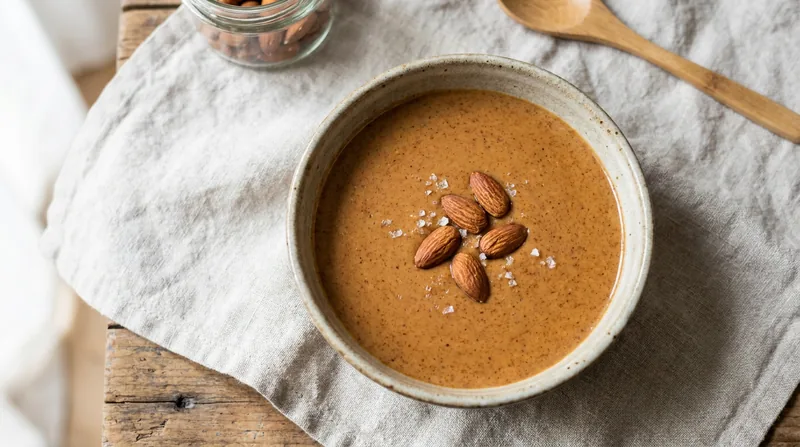
Snack · British
Roasted Almond Butter
A smooth spread made from roasted almonds and salt.
Ingredients
- whole raw almonds 300 g
- fine salt 3 g
- rapeseed oil 10 g
Method
- Heat the oven to 180C.
- Spread the almonds on a baking sheet and roast for 10 minutes until they change colour.
- Cool the almonds for 10 minutes.
- Transfer the almonds, salt, and rapeseed oil to a food processor.
- Process the mixture for 10 minutes, scraping down the sides, until a smooth paste forms.
Figures are per serving and come from 3 USDA FoodData Central entries; cooking will shift them slightly.
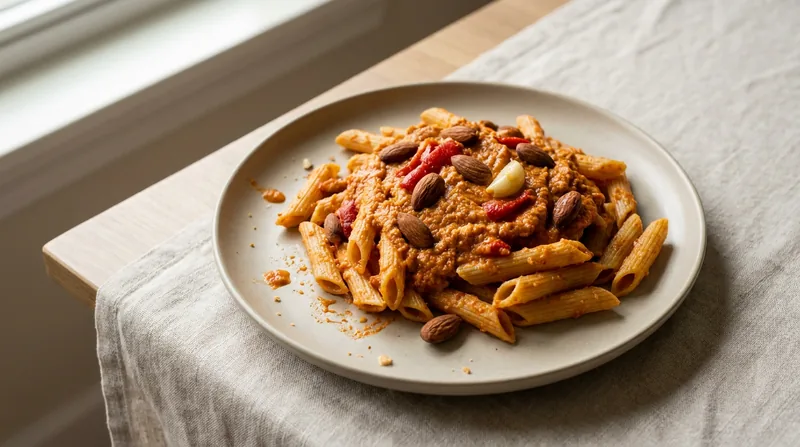
Dinner · Spanish
Almond Romesco Pasta
A thick sauce of blended almonds and red peppers tossed with pasta.
Ingredients
- dry penne pasta 150 g
- whole roasted almonds 50 g
- drained canned red peppers 150 g
- peeled garlic clove 6 g
- olive oil 30 g
- red wine vinegar 15 g
- fine salt 3 g
Method
- Boil the pasta in salted water for 10 minutes.
- Drain the pasta and reserve 50 millilitres of the cooking water.
- Place the almonds, red peppers, garlic, olive oil, vinegar, and salt into a blender.
- Blend the mixture for 2 minutes until it forms a thick paste.
- Combine the pasta, sauce, and reserved cooking water in a warm pan and stir to coat.
7 USDA records went into this total. It describes the ingredients as weighed, not the dish after cooking losses.
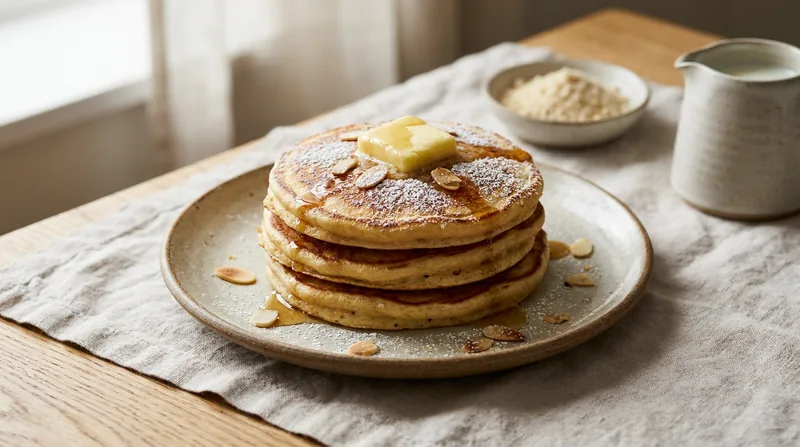
Breakfast · British
Almond Pancakes
Thick breakfast pancakes made with ground almonds and eggs.
Ingredients
- ground almonds 100 g
- medium eggs 100 g
- whole milk 50 g
- unsalted butter 15 g
- fine salt 1 g
Method
- Whisk the ground almonds, eggs, milk, and salt in a bowl to make a uniform batter.
- Melt the butter in a frying pan over medium heat.
- Pour the batter into the pan in four equal portions.
- Cook the portions for 3 minutes on each side until they turn golden brown.
Nutrition per serving, calculated across 5 USDA ingredient records. Expect small differences once cooked.

Calorie Counter Team, food critic
Almonds as part of a meal
Here is almonds as part of a plate, with each component taken from its own USDA record and the total added up.
| Item | Serving | Calories | Protein (g) |
|---|---|---|---|
| Almonds | 1 oz (23 whole kernels) | 164 | 6 |
| Grapefruit | 1/2 fruit | 37 | 0.7 |
| Parmesan | 1 oz | 119 | 8.1 |
| Together | 320 | 15 |
Almonds or something else?
Each food is shown per 100 g, in the form named beside it.
| Food | Form | Calories | Protein (g) | Carbs (g) | Fat (g) |
|---|---|---|---|---|---|
| Macadamia nuts | Raw | 718 | 7.9 | 14 | 76 |
| Sunflower seeds | Roasted | 582 | 19 | 24 | 50 |
| Almonds | As sold | 579 | 21 | 22 | 50 |
| Pumpkin seeds | Roasted | 574 | 30 | 15 | 49 |
| Sesame seeds | Dried | 573 | 18 | 23 | 50 |
| Peanuts | Raw | 567 | 26 | 16 | 49 |
| Flaxseed | As sold | 534 | 18 | 29 | 42 |
Almonds: common questions
What is the calorie count for 1 oz (23 whole kernels) of almonds?
Count 164 calories. The source is the USDA record “Nuts, almonds” (FDC 170567), which lists 579 calories per 100 g.
Is there much protein in almonds?
1 oz (23 whole kernels) of almonds has 6 g of protein. By weight that is 21 g per 100 g, and the serving covers 12 percent of the Daily Value.
Is almonds higher in calories once it is prepared?
Yes. At 28 g, as sold is 164 calories and roasted is 170. The table above compares each preparation of almonds covered on this page.
Can you eat almonds when trying to lose weight?
Weight change comes from the whole week’s intake. 1 oz (23 whole kernels) of almonds contributes 164 calories and 6 g of protein (15 percent of its energy), so pair it with something that carries more protein.
How do you remove the skins from whole almonds?
Submerge them in boiling water briefly, then drain and rinse with cold water. The skins will pinch off easily between your thumb and finger. Ensure they dry completely on clean tea towels before using them in your recipe.
Why do my ground almonds smell musty?
They have gone rancid because the natural oils have oxidised. Ground nuts spoil faster than whole nuts when exposed to air. Store any remaining flour in an airtight container inside the freezer to keep the oils stable.
Sources
- Nuts, almonds — USDA FoodData Central, FDC ID 170567
- Nuts, almonds, dry roasted, without salt added — USDA FoodData Central, FDC ID 170158
- Daily Values for nutrition labelling, 21 CFR 101.9
Stop doing this by hand.
You just looked up one food. CalorieCounter reads a whole plate from a photo, serving and preparation included. It is coming to the App Store for iPhone — leave your email and you get the link the day it is live.