Grains and starches
Pasta nutrition, every number, sourced.
On USDA figures, 1 cup of cooked spaghetti works out at 196 calories and carries 7.2 g of protein. Specifically, this is the USDA record “Pasta, cooked, enriched, without added salt”. Where it earns its place is selenium and thiamin. Pick a portion in the panel and it recalculates on the spot; the nutrient table further down moves with it.
Every value traces to USDA FoodData Central (169737); Daily Values follow the FDA label rules.
The calorie count for pasta
The short answer is 196 calories for 1 cup of cooked spaghetti. By weight that is 158 per 100 g, and the table gives the other common portions.
| Serving | Weight (g) | Calories | Protein (g) | Carbs (g) | Fat (g) |
|---|---|---|---|---|---|
| 1 cup shells | 105 | 166 | 6.1 | 32 | 1 |
| 1 cup farfalle | 107 | 169 | 6.2 | 33 | 1 |
| 1 cup rotini | 107 | 169 | 6.2 | 33 | 1 |
| 1 cup penne | 107 | 169 | 6.2 | 33 | 1 |
| 1 cup lasagne | 116 | 183 | 6.7 | 36 | 1.1 |
| 1 cup elbows not packed | 120 | 190 | 7 | 37 | 1.1 |
| 1 cup spaghetti not packed | 124 | 196 | 7.2 | 38 | 1.2 |
| 1 cup elbows packed | 132 | 209 | 7.7 | 41 | 1.2 |
| 1 cup spaghetti packed | 151 | 239 | 8.8 | 47 | 1.4 |
| 100 g | 100 | 158 | 5.8 | 31 | 0.9 |
How much protein does pasta provide?
The protein count for 1 cup of cooked spaghetti is 7.2 g, equal to 14 percent of the Daily Value. You would not choose pasta for protein: just 15 percent of its calories come from it.
The calorie breakdown runs 15 percent protein to 5 percent fat to 80 percent carbohydrate. Functionally, that is mostly a carbohydrate.
Choosing and cooking pasta
Dried pasta is made from durum wheat semolina and water, while fresh pasta often includes egg. It comes in shapes ranging from long strands to hollow tubes and twisted shapes. Look for dried pasta with a rough, matte texture, which shows it was extruded through bronze dies. Avoid packets with lots of broken pieces or pale, dusty shards.
Boiling water gelatinises the starches, causing the pasta to swell and soften. The most common error is using too little water, which results in a gummy, starchy pot and clumped strands. Keep the water at a rolling boil and stir immediately after adding the pasta to prevent sticking. Drain, but do not rinse.
Toss hot pasta with emulsified sauces, using some starchy cooking water to bind them. Long strands suit smooth, oil-based sauces or rich tomato mixtures, while ribbed shapes hold chunky vegetable ragouts. Asian wheat noodles work well in hot broths or cold sesame dressings, while Italian shapes suit baked dishes under cheese.
Micronutrients in pasta
1 cup of cooked spaghetti delivers selenium (60 percent of the Daily Value), thiamin (28 percent of the Daily Value), folate (23 percent of the Daily Value). Everything else USDA reports for it is in the table, scaled to your serving.
| Nutrient | Amount | % Daily Value |
|---|
Pasta and your daily targets
Against the standard 2,000 calorie reference, 1 cup of cooked spaghetti takes up 10 percent of the energy and supplies 14 percent of the protein. For a figure that fits you, start with the TDEE calculator, then set grams with the macro calculator.
Pasta recipes, with the numbers
From the Calorie Counter Team: three dishes built around pasta, with per-serving nutrition calculated from the USDA data for every ingredient that goes in.
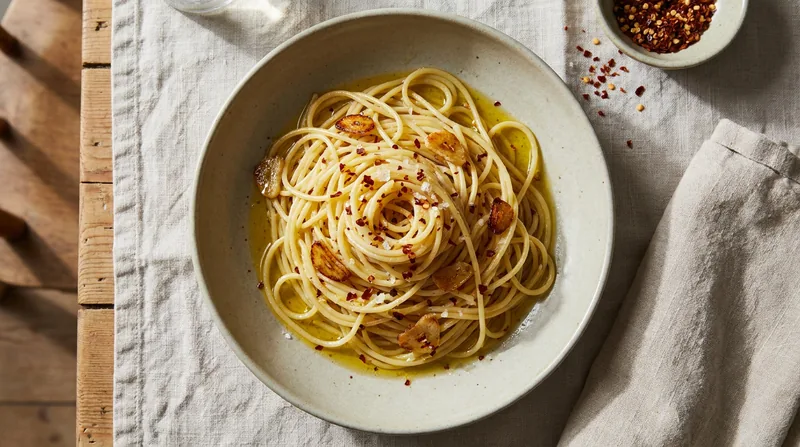
Dinner · Italian
Spaghetti with Garlic and Chilli
A quick, hot pasta dish seasoned with garlic, dried chilli flakes, and olive oil.
Ingredients
- Dry spaghetti 200 g
- Olive oil 30 g
- Raw garlic 10 g
- Dried red chilli flakes 2 g
- Table salt 5 g
- Fresh flat-leaf parsley 10 g
Method
- Boil the spaghetti in 2 litres of salted water for 9 minutes.
- Peel and thinly slice the garlic, and finely chop the parsley.
- Heat the olive oil in a pan over low heat, then add the garlic and chilli flakes.
- Cook the garlic for 2 minutes until pale golden, then remove the pan from the heat.
- Drain the pasta, reserving 50 millilitres of the cooking water.
- Toss the pasta and parsley in the garlic oil, adding the reserved water to emulsify the sauce.
Per serving, from 6 USDA FoodData Central records. Cooking changes weight and some nutrients; treat these as close rather than exact.
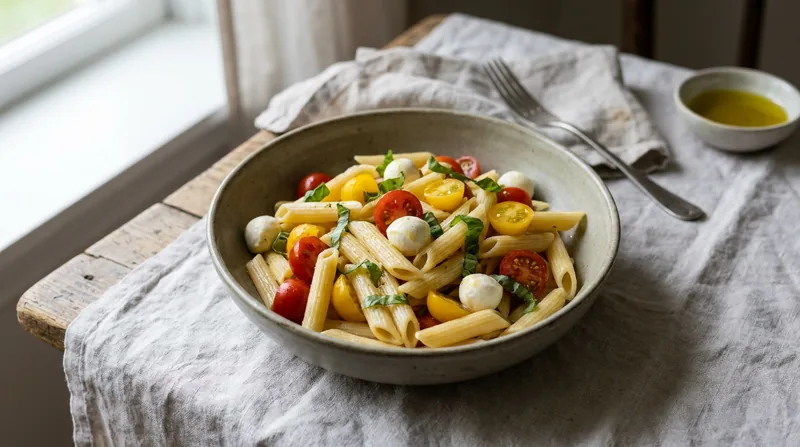
Lunch · Mediterranean
Cold Tomato and Mozzarella Pasta Salad
A cold pasta salad tossed with fresh tomatoes, mozzarella cheese, and basil leaves.
Ingredients
- Dry penne pasta 150 g
- Cherry tomatoes 150 g
- Mozzarella cheese 125 g
- Olive oil 20 g
- Fresh basil 10 g
- Table salt 3 g
Method
- Cook the penne in boiling salted water for 11 minutes until tender.
- Drain the pasta and rinse it under cold running water to cool it completely.
- Halve the cherry tomatoes and cut the mozzarella into 1-centimetre cubes.
- Combine the cooled pasta, tomatoes, mozzarella, and olive oil in a large bowl.
- Tear the basil leaves into the bowl, add the salt, and mix gently before serving.
Per serving, from 6 USDA FoodData Central records. Cooking changes weight and some nutrients; treat these as close rather than exact.
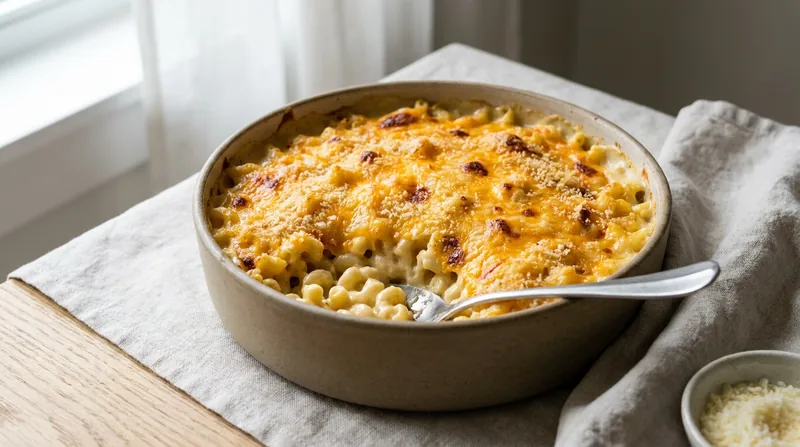
Dinner · British
Baked Macaroni and Cheese
Pasta baked in a cheese sauce made from cheddar, butter, flour, and milk.
Ingredients
- Dry macaroni 250 g
- Unsalted butter 40 g
- Wheat flour 40 g
- Whole milk 500 g
- Cheddar cheese 150 g
- Table salt 4 g
Method
- Boil the macaroni for 8 minutes, then drain and set aside.
- Melt the butter in a saucepan, stir in the flour, and cook for 1 minute.
- Gradually whisk in the milk over medium heat until the sauce thickens.
- Remove from the heat, then stir in 100 grams of grated cheddar cheese and the salt.
- Mix the macaroni into the sauce, transfer to a baking dish, and scatter the remaining cheese on top.
- Bake at 200 degrees Celsius for 15 minutes until the top is brown.
Per serving, from 6 USDA FoodData Central records. Cooking changes weight and some nutrients; treat these as close rather than exact.

Calorie Counter Team, food critic
Pasta as part of a meal
To see how pasta adds up in a meal, here it is beside two ordinary companions, all three from USDA figures.
| Item | Serving | Calories | Protein (g) |
|---|---|---|---|
| Pasta | 1 cup spaghetti not packed | 196 | 7.2 |
| Ground turkey, grilled | 3 oz | 176 | 22 |
| Radish | 1 cup slices | 19 | 0.8 |
| Together | 391 | 30 |
How pasta compares with similar foods
Compared gram for gram, with the form of each food stated. Follow any link for that food’s full page.
| Food | Form | Calories | Protein (g) | Carbs (g) | Fat (g) |
|---|---|---|---|---|---|
| Waffle | Cooked | 291 | 7.9 | 33 | 14 |
| Pasta | Cooked | 158 | 5.8 | 31 | 0.9 |
| Rice | Cooked | 130 | 2.7 | 28 | 0.3 |
| Barley | Cooked | 123 | 2.3 | 28 | 0.4 |
| Brown rice | Cooked | 123 | 2.7 | 26 | 1 |
| Quinoa | Cooked | 120 | 4.4 | 21 | 1.9 |
| Oatmeal | Cooked | 71 | 2.5 | 12 | 1.5 |
Pasta: common questions
What is the calorie count for 1 cup of cooked spaghetti?
1 cup of cooked spaghetti is 196 calories. That comes from the USDA record “Pasta, cooked, enriched, without added salt” (FDC 169737), which is 158 calories per 100 g.
Is there much protein in pasta?
1 cup of cooked spaghetti has 7.2 g of protein. By weight that is 5.8 g per 100 g, and the serving covers 14 percent of the Daily Value.
Is pasta good for weight loss?
Weight change comes from the whole week’s intake. 1 cup of cooked spaghetti contributes 196 calories and 7.2 g of protein (15 percent of its energy), useful alongside a protein source rather than as one.
How many carbs are in pasta?
38 g in 1 cup of cooked spaghetti, of which 2.2 g is fibre and 0.7 g is sugar.
Why does pasta water boil over?
Starch dissolves into the boiling water, creating a soapy foam that traps steam. This foam rises rapidly. To prevent this, use a much larger pot, fill it less, or leave the lid off entirely.
Should you put oil in the boiling pasta water?
No, do not add oil to the water. Oil floats on top and then coats the drained pasta, which prevents the sauce from clinging to the shapes. Stirring the pot is the only way to stop sticking.
Sources
- Pasta, cooked, enriched, without added salt — USDA FoodData Central, FDC ID 169737
- Daily Values for nutrition labelling, 21 CFR 101.9
Stop doing this by hand.
You just looked up one food. CalorieCounter reads a whole plate from a photo, serving and preparation included. It is coming to the App Store for iPhone — leave your email and you get the link the day it is live.