Vegetables
Potato nutrition, before and after the heat.
The number most people want first: 1 medium potato holds 164 calories, alongside 4.4 g of protein. The record behind it is USDA’s “Potatoes, flesh and skin, raw”. Preparation shifts it more than most tables admit, from 77 calories per 100 g at the low end to 93 at the top. Set the serving below and the panel works it out, with the full nutrient table following your choice.
Source data is USDA FoodData Central (170026, 170438, 170093). The sums run on your device and nothing leaves it.
How many calories are in potato?
Count 164 calories for 1 medium potato, or 77 for every 100 g. The portion weights in the table are USDA’s own measurements.
| Serving | Weight (g) | Calories | Protein (g) | Carbs (g) | Fat (g) |
|---|---|---|---|---|---|
| 1/2 cup, diced | 75 | 58 | 1.5 | 13 | 0.1 |
| 1 potato, small | 170 | 131 | 3.5 | 30 | 0.2 |
| 1 potato, medium | 213 | 164 | 4.4 | 37 | 0.2 |
| 1 potato, large | 369 | 284 | 7.6 | 65 | 0.3 |
| 100 g | 100 | 77 | 2.1 | 17 | 0.1 |
How much protein does potato provide?
1 medium potato carries 4.4 g of protein, which is 9 percent of the 50 g Daily Value. Only 11 percent of its calories come from protein, so treat potato as something you eat for other reasons and count the protein as a bonus.
Looked at as a share of calories: carbohydrate 89 percent, fat 1 percent, protein 10 percent.
What cooking does to potato
There is a 21 percent spread between raw potato (77 calories per 100 g) and baked (93). The cause is water leaving, which concentrates everything that remains.
Every row below is the same 213 g of potato, so the only thing that differs is the method.
| Preparation | Calories | Protein (g) | Fat (g) | What it involves |
|---|---|---|---|---|
| Raw potato | 164 | 4.4 | 0.2 | Nothing added |
| Boiled potato | 185 | 4 | 0.2 | Water only |
| Baked potato | 198 | 5.3 | 0.3 | Dry heat |
Choosing and cooking potato
This starchy tuber comes in floury varieties like King Edward and waxy types like Charlotte. Choose firm specimens with smooth skins. Avoid any with green patches or sprouting eyes. Floury types suit mashing, whilst waxy kinds hold their shape during boiling. Reject tubers that feel soft or show damp patches of decay.
Heat swells the starch granules, softening the flesh. Boiling from cold water ensures even cooking. The most common error is rushing the process by boiling too vigorously, which breaks the outer flesh before the centre cooks through. Overworking cooked floury potatoes releases too much starch, turning the mash gluey and heavy.
This tuber absorbs fat and salt beautifully. In British kitchens, roast them in goose fat with rosemary. Indian cooks toss them with turmeric and cumin seeds. They pair naturally with butter, cream, strong cheeses, and chives. Always salt the cooking water early to draw the flavour deep into the flesh.
Micronutrients in potato
Against the Daily Value, 1 medium potato stands out for vitamin C at 47 percent of a day, vitamin B6 at 37 percent of a day, potassium at 19 percent of a day. The table follows the selector above, so change the serving or the method and it updates.
| Nutrient | Amount | % Daily Value |
|---|
It carries 2.1 g of fibre per 100 g, about 8 percent of a day.
Putting potato into a day of eating
On a 2,000 calorie day, 1 medium potato is 8 percent of the budget and 9 percent of the protein Daily Value. Whether that is a lot depends on your own numbers rather than on 2,000: the TDEE calculator gives you what you burn, and the macro calculator turns a target into grams.
Potato recipes, with the numbers
Three recipes from the Calorie Counter Team, each costed ingredient by ingredient against USDA records, so the per-serving figures are sums, not guesses.
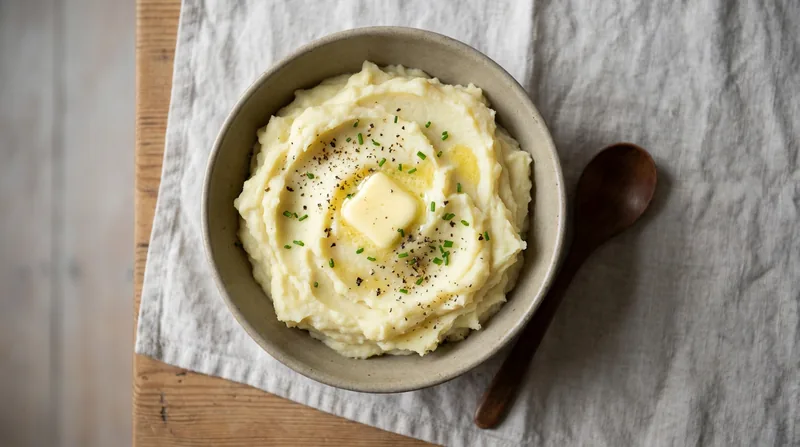
Side · British
Mashed Potato
Boiled potatoes mashed with butter and milk for a traditional side dish.
Ingredients
- Raw potatoes 1,000 g
- Unsalted butter 50 g
- Whole milk 100 g
- Table salt 6 g
Method
- Peel the potatoes and cut them into 40-millimetre chunks.
- Place the potato chunks in a large saucepan, cover with cold water, and add 4 grams of salt.
- Bring to a boil, then simmer on medium heat for 15 minutes until the potatoes are tender when pierced with a fork.
- Drain the water completely and return the potatoes to the warm pan for 1 minute to dry.
- Add the butter, milk, and remaining 2 grams of salt.
- Mash the mixture with a potato masher until no lumps remain.
Per serving, from 4 USDA FoodData Central records. Cooking changes weight and some nutrients; treat these as close rather than exact.
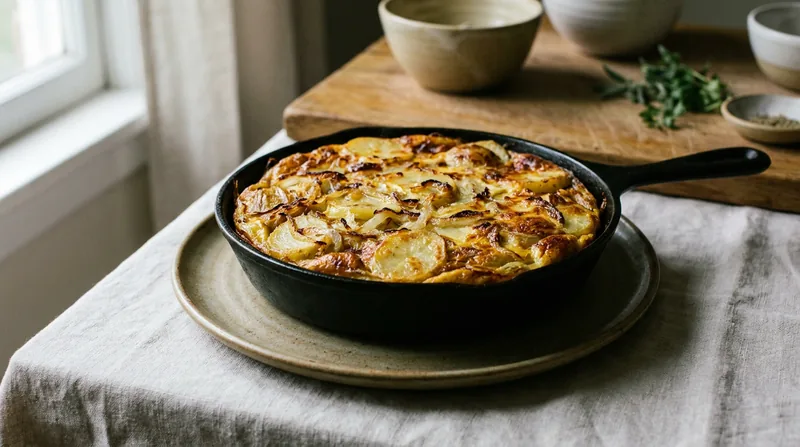
Lunch · Spanish
Potato and Onion Frittata
A thick egg omelette cooked in a pan with sliced potatoes and onions.
Ingredients
- Raw potatoes 300 g
- Raw onions 150 g
- Olive oil 30 g
- Whole eggs 200 g
- Table salt 4 g
Method
- Slice the peeled potatoes and onions into 3-millimetre rounds.
- Heat the olive oil in a 20-centimetre non-stick frying pan over medium heat.
- Add the potatoes, onions, and 2 grams of salt, then cook for 15 minutes until the vegetables soften.
- Beat the eggs with the remaining 2 grams of salt in a bowl, then pour over the vegetables in the pan.
- Cook on low heat for 10 minutes, then flip the frittata to cook the other side for 3 minutes.
Per serving, from 5 USDA FoodData Central records. Cooking changes weight and some nutrients; treat these as close rather than exact.
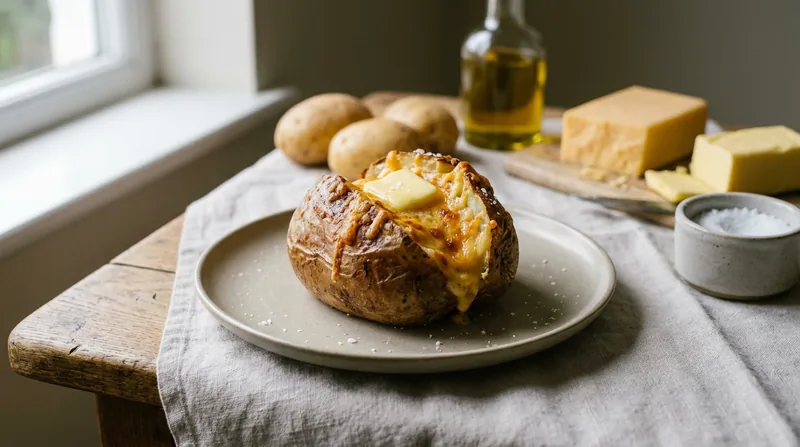
Dinner · British
Baked Jacket Potato with Cheese
Whole baked potato cooked until tender and topped with melted cheddar cheese.
Ingredients
- Raw potatoes 600 g
- Olive oil 10 g
- Cheddar cheese 80 g
- Unsalted butter 20 g
- Table salt 4 g
Method
- Heat the oven to 200 degrees Celsius.
- Prick the washed potatoes multiple times with a fork, rub with olive oil, and sprinkle with 2 grams of salt.
- Place the potatoes directly on the oven rack and bake for 60 minutes.
- Cut a cross in the top of each potato and push the sides to open them.
- Insert 10 grams of butter into each potato, sprinkle with the remaining salt, and top with the grated cheddar cheese.
Figures are per serving and come from 5 USDA FoodData Central entries; cooking will shift them slightly.

Calorie Counter Team, food critic
Potato as part of a meal
Here is potato as part of a plate, with each component taken from its own USDA record and the total added up.
| Item | Serving | Calories | Protein (g) |
|---|---|---|---|
| Potato | 1 potato, medium | 164 | 4.4 |
| Pork chop, grilled | 1 chop | 263 | 39 |
| Rice, cooked | 1 cup | 205 | 4.3 |
| Together | 632 | 48 |
How potato compares with similar foods
Per 100 g, each in the form its own page leads with; the second column says which.
| Food | Form | Calories | Protein (g) | Carbs (g) | Fat (g) |
|---|---|---|---|---|---|
| Corn | Raw | 86 | 3.3 | 19 | 1.4 |
| Sweet potato | Raw | 86 | 1.6 | 20 | 0.1 |
| Peas | Raw | 81 | 5.4 | 14 | 0.4 |
| Potato | Raw | 77 | 2.1 | 17 | 0.1 |
| Cabbage | Raw | 25 | 1.3 | 5.8 | 0.1 |
| Mushroom | Raw | 22 | 3.1 | 3.3 | 0.3 |
| Radish | Raw | 16 | 0.7 | 3.4 | 0.1 |
Questions about potato
How many calories are in 1 medium potato?
Count 164 calories. The source is the USDA record “Potatoes, flesh and skin, raw” (FDC 170026), which lists 77 calories per 100 g.
Is there much protein in potato?
1 medium potato has 4.4 g of protein. By weight that is 2.1 g per 100 g, and the serving covers 9 percent of the Daily Value.
Is potato higher in calories once it is prepared?
Yes. At 213 g, raw is 164 calories and baked is 198. The table above compares each preparation of potato covered on this page.
Is potato good for weight loss?
That depends on the rest of the day, not on potato. For planning: 1 medium potato is 164 calories and 4.4 g of protein, 11 percent protein by energy, so pair it with something that carries more protein.
Why do potatoes turn green?
Exposure to light triggers chlorophyll production, which coincides with the buildup of a bitter compound. Cut away small green areas before cooking, or discard the tuber entirely if the greening is widespread. Store them in a dark, cool cupboard to prevent this.
Should you peel potatoes before boiling them?
Leaving the skins on prevents waterlogging and preserves the natural flavour. The skins also peel away easily once cooked. If you choose to peel them beforehand, keep the raw pieces submerged in cold water to stop them discolouring.
Sources
- Potatoes, flesh and skin, raw — USDA FoodData Central, FDC ID 170026
- Potatoes, boiled, cooked in skin, flesh, without salt — USDA FoodData Central, FDC ID 170438
- Potatoes, baked, flesh and skin, without salt — USDA FoodData Central, FDC ID 170093
- Daily Values for nutrition labelling, 21 CFR 101.9
Stop doing this by hand.
You just looked up one food. CalorieCounter reads a whole plate from a photo, serving and preparation included. It is coming to the App Store for iPhone — leave your email and you get the link the day it is live.