Drinks
Orange juice nutrition, in full.
On USDA figures, 1 cup of orange juice works out at 112 calories and carries 1.7 g of protein. The record behind it is USDA’s “Orange juice, raw”. Beyond the headline number, it is notable for vitamin C and thiamin. The panel underneath takes any serving and any amount, and the vitamin and mineral table tracks what you pick.
Every value traces to USDA FoodData Central (169098, 169099); Daily Values follow the FDA label rules.
How many calories are in orange juice?
1 cup of orange juice supplies 112 calories, which scales to 45 per 100 g. Each serving listed underneath was weighed by USDA rather than estimated.
| Serving | Weight (g) | Calories | Protein (g) | Carbs (g) | Fat (g) |
|---|---|---|---|---|---|
| 1 fl oz | 31 | 14 | 0.2 | 3.2 | 0.1 |
| juice of 1 fruit | 86 | 39 | 0.6 | 8.9 | 0.2 |
| 1 cup | 248 | 112 | 1.7 | 26 | 0.5 |
| 100 g | 100 | 45 | 0.7 | 10 | 0.2 |
How much protein does orange juice provide?
1 cup of orange juice provides 1.7 g of protein. Set beside the 50 g reference intake, that is 3 percent. Orange juice carries almost no protein. It earns its place in a day through carbohydrate, not through protein.
Looked at as a share of calories: carbohydrate 90 percent, fat 4 percent, protein 6 percent.
What cooking does to orange juice
Same orange juice, same 248 g, different treatment:
| Preparation | Calories | Protein (g) | Fat (g) | What it involves |
|---|---|---|---|---|
| Raw orange juice | 112 | 1.7 | 0.5 | Nothing added |
| Canned orange juice | 117 | 1.7 | 0.4 | Packed |
Choosing and using orange juice
Orange juice is the liquid squeezed from sweet oranges. Shops sell it fresh, pasteurised, or as a frozen concentrate. Look for bottles labelled as freshly squeezed, containing only the juice. Avoid cartons with added sugars or water. If you prefer texture, choose juice with the pulp left in.
Heating orange juice reduces its bright acidity and turns the fresh flavour flat. When making sauces, simmer it gently to reduce the volume. High heat boils away the volatile aromas, leaving a bitter taste. The most common mistake is boiling it rapidly, which burns the natural sugars and ruins the glaze.
This juice brightens marinades for Latin American pork dishes, tenderising the meat with its natural acid. In French cooking, cooks whisk it with butter for classic crepe sauces or emulsify it into vinaigrettes. It pairs well with duck, fennel, ginger, and soy sauce in savoury cooking.
Orange juice: the full nutrient profile
The figures worth noticing in 1 cup of orange juice are vitamin C (138 percent of the Daily Value), thiamin (19 percent of the Daily Value), folate (19 percent of the Daily Value). The full list follows and tracks your selected portion.
| Nutrient | Amount | % Daily Value |
|---|
Per 100 g, 8.4 g is sugar.
Orange juice against a daily budget
Against the standard 2,000 calorie reference, 1 cup of orange juice takes up 6 percent of the energy and supplies 3 percent of the protein. For a figure that fits you, start with the TDEE calculator, then set grams with the macro calculator.
Using orange juice: three recipes
Three recipes from the Calorie Counter Team, each costed ingredient by ingredient against USDA records, so the per-serving figures are sums, not guesses.
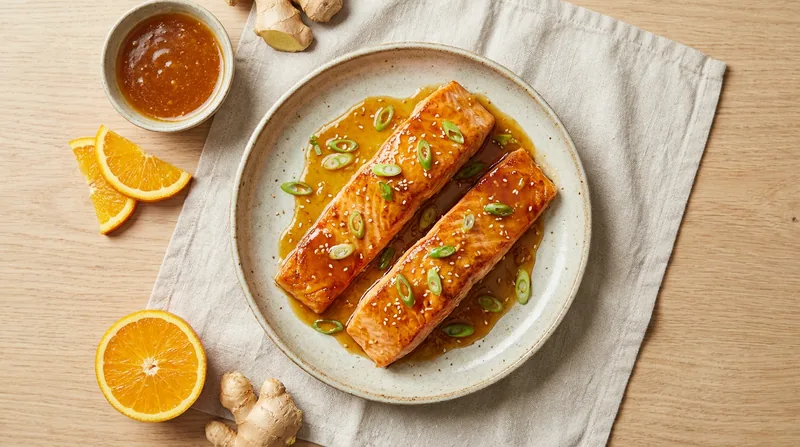
Dinner · British
Orange and Ginger Glazed Salmon
Salmon fillets pan-seared and glazed with a reduced orange juice and ginger sauce.
Ingredients
- salmon fillets 260 g
- orange juice 150 g
- ginger root 10 g
- soy sauce 15 g
- olive oil 14 g
- salt 2 g
Method
- Season the salmon fillets on both sides with the salt.
- Heat the olive oil in a frying pan over medium heat.
- Cook the salmon for four minutes on each side, then remove it from the pan.
- Pour the orange juice, soy sauce, and grated ginger into the same pan.
- Simmer the liquid for five minutes until it reduces to a thick syrup.
- Return the salmon to the pan and spoon the glaze over the fish before serving.
Summed from 6 USDA records and divided by servings. Heat alters weight and a few nutrients, so read it as a close figure.
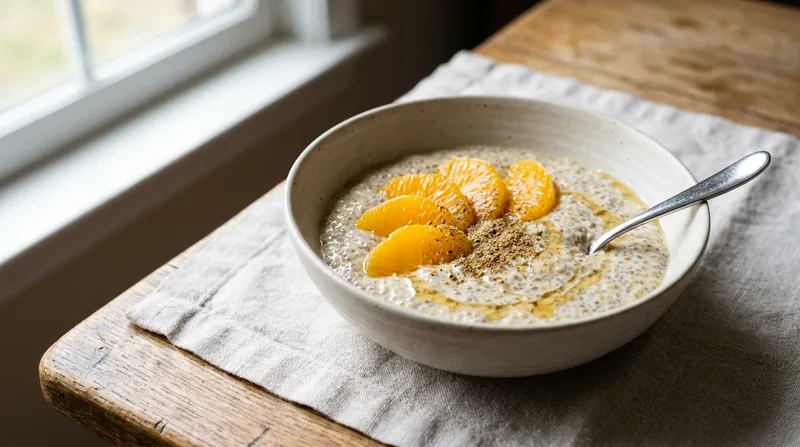
Breakfast · British
Orange and Cardamom Chia Pudding
A cold breakfast pudding made by soaking chia seeds in fresh orange juice and yoghurt.
Ingredients
- orange juice 240 g
- chia seeds 40 g
- Greek yoghurt 150 g
- honey 21 g
Method
- Whisk the orange juice, chia seeds, and honey together in a bowl.
- Leave the mixture at room temperature for ten minutes, then whisk again.
- Cover the bowl and place it in the refrigerator for four hours.
- Spoon the thickened chia mixture into two glasses, alternating layers with the Greek yoghurt.
Nutrition per serving, calculated across 4 USDA ingredient records. Expect small differences once cooked.
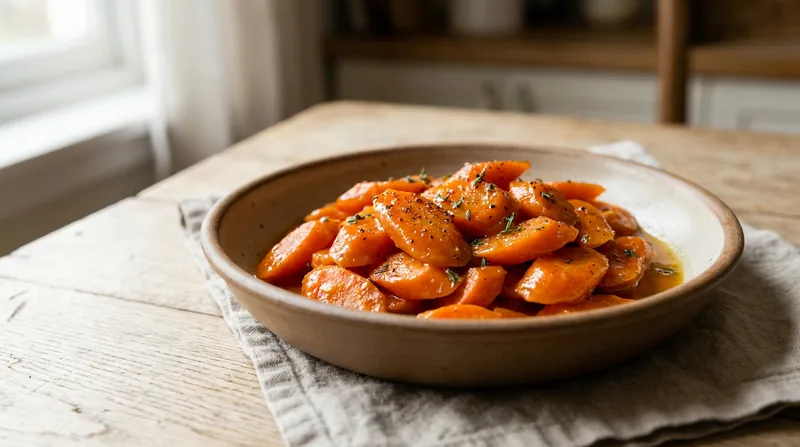
Side · British
Orange Glazed Carrots
Sliced carrots simmered in orange juice and butter until tender and glazed.
Ingredients
- carrots 500 g
- orange juice 200 g
- unsalted butter 30 g
- salt 3 g
- black pepper 1 g
Method
- Peel the carrots and slice them into five-millimetre rounds.
- Place the carrots, orange juice, butter, and salt into a saucepan.
- Bring the liquid to a simmer, cover the pan, and cook for ten minutes.
- Remove the lid and cook for eight minutes until the liquid reduces to a glaze.
- Stir in the black pepper and serve.
Figures are per serving and come from 5 USDA FoodData Central entries; cooking will shift them slightly.

Calorie Counter Team, food critic
One meal, costed: orange juice
What a meal containing orange juice comes to, using USDA numbers for every part of it.
| Item | Serving | Calories | Protein (g) |
|---|---|---|---|
| Orange juice | 1 cup | 112 | 1.7 |
| Oats, cooked | 3/4 cup | 124 | 4.4 |
| Cranberries | 1 cup, whole | 46 | 0.5 |
| Together | 282 | 6.6 |
Orange juice or something else?
Compared gram for gram, with the form of each food stated. Follow any link for that food’s full page.
| Food | Form | Calories | Protein (g) | Carbs (g) | Fat (g) |
|---|---|---|---|---|---|
| Orange juice | Raw | 45 | 0.7 | 10 | 0.2 |
| Coconut water | As sold | 19 | 0.7 | 3.7 | 0.2 |
| Coffee | As sold | 1 | 0.1 | 0 | 0 |
Orange juice, asked and answered
How many calories are in 1 cup of orange juice?
112 calories, according to USDA FoodData Central: the record is “Orange juice, raw”, FDC 169098. That works out at 45 per 100 g.
Is there much protein in orange juice?
1.7 g in 1 cup of orange juice, or 0.7 g per 100 g. That is 3 percent of the 50 g Daily Value.
Is orange juice good for weight loss?
That depends on the rest of the day, not on orange juice. For planning: 1 cup of orange juice is 112 calories and 1.7 g of protein, 6 percent protein by energy, useful alongside a protein source rather than as one.
Which nutrients is orange juice highest in?
Chiefly vitamin C at 138 percent, thiamin at 19 percent, folate at 19 percent, for 1 cup of orange juice. See the full profile above for the remaining values.
Why does orange juice curdle milk when they are mixed?
The citric acid in orange juice lowers the pH of milk, causing the milk proteins to clump together and curdle. To prevent this in recipes, whisk the cold juice gradually into thick cream rather than warm milk.
Can you freeze leftover orange juice for future cooking?
Yes, you can freeze it in ice cube trays for easy portioning. Freezing preserves the flavour well for several months. Thaw the cubes in the fridge before whisking them into dressings or sauces.
Sources
- Orange juice, raw (Includes foods for USDA's Food Distribution Program) — USDA FoodData Central, FDC ID 169098
- Orange juice, canned, unsweetened — USDA FoodData Central, FDC ID 169099
- Daily Values for nutrition labelling, 21 CFR 101.9
Stop doing this by hand.
You just looked up one food. CalorieCounter reads a whole plate from a photo, serving and preparation included. It is coming to the App Store for iPhone — leave your email and you get the link the day it is live.