Fats and oils
Olive oil nutrition, and why the portion matters.
119 calories and 0 g of protein: that is 1 tablespoon of olive oil. The source is the USDA entry “Oil, olive, salad or cooking”. Pick a portion in the panel and it recalculates on the spot; the nutrient table further down moves with it.
Figures: USDA FoodData Central, record 171413. Calculated in your browser; nothing is uploaded.
Calories in olive oil, serving by serving
1 tablespoon of olive oil supplies 119 calories, which scales to 884 per 100 g. Each serving listed underneath was weighed by USDA rather than estimated.
| Serving | Weight (g) | Calories | Protein (g) | Carbs (g) | Fat (g) |
|---|---|---|---|---|---|
| 1 tsp | 4.5 | 40 | 0 | 0 | 4.5 |
| 1 tablespoon | 14 | 119 | 0 | 0 | 14 |
| 1 cup | 216 | 1,909 | 0 | 0 | 216 |
| 100 g | 100 | 884 | 0 | 0 | 100 |
Protein in olive oil, measured
For protein, 1 tablespoon of olive oil gives you 0 g, which fills 0 percent of the daily 50 g benchmark. There is next to no protein in olive oil; nearly all of its energy is fat.
Of every 100 calories, 0 come from protein, 100 from fat and 0 from carbohydrate.
Olive oil in the kitchen
Olive oil is the fat pressed from fresh olives. It is graded by acidity and extraction method. Extra virgin olive oil is cold-pressed and has the strongest, most complex flavour. Refined oils are lighter in colour and much milder. Choose dark glass bottles that protect the oil from damaging light.
Olive oil responds sensitively to heat. High heat destroys the delicate flavours of extra virgin oils. The most common mistake is using expensive extra virgin oil for high-heat frying. Use refined olive oil for hot searing. Save your best cold-pressed oils to stir in at the end of cooking.
Dress raw salad greens with a splash of extra virgin olive oil and vinegar. In Mediterranean dishes, drizzle it over warm grilled fish or roasted vegetables just before serving. In Middle Eastern cookery, pool the oil on top of cold chickpea purees to keep them moist.
Vitamins and minerals in olive oil
Olive oil spreads its micronutrients thinly. Every value USDA reports is listed, tied to your chosen portion.
| Nutrient | Amount | % Daily Value |
|---|
How far olive oil goes in a day
Budget-wise, 1 tablespoon of olive oil costs 6 percent of a 2,000 calorie day and pays back 0 percent of the day’s protein. The TDEE calculator and macro calculator will tell you what those percentages look like against your own targets.
Using olive oil: three recipes
These are the Calorie Counter Team’s recipes for olive oil. Their nutrition panels are arithmetic: ingredient weights multiplied through USDA records, divided by servings.
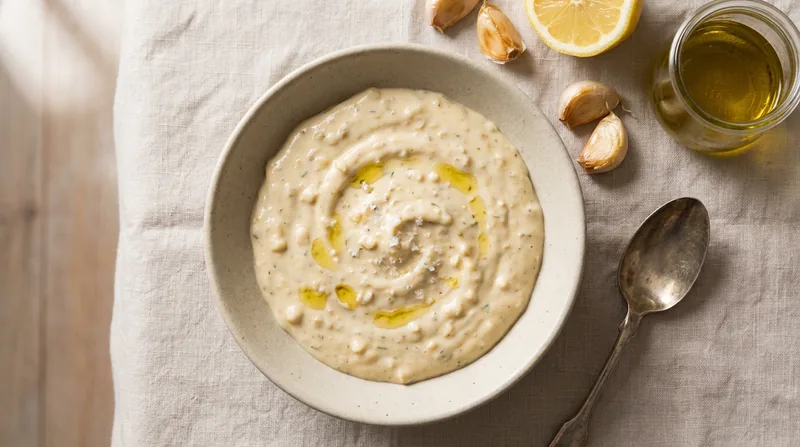
Snack · Mediterranean
Garlic Aioli
A thick emulsion of garlic, egg yolk, and olive oil.
Ingredients
- Garlic cloves 10 g
- Egg yolk 20 g
- Lemon juice 15 g
- Olive oil 150 g
- Salt 3 g
Method
- Crush the garlic and salt to a smooth paste in a mortar.
- Whisk the egg yolk and lemon juice into the garlic paste in a bowl.
- Add the olive oil slowly, drop by drop, while whisking constantly.
- Continue whisking until the mixture thickens and forms a stable emulsion.
Summed from 5 USDA records and divided by servings. Heat alters weight and a few nutrients, so read it as a close figure.
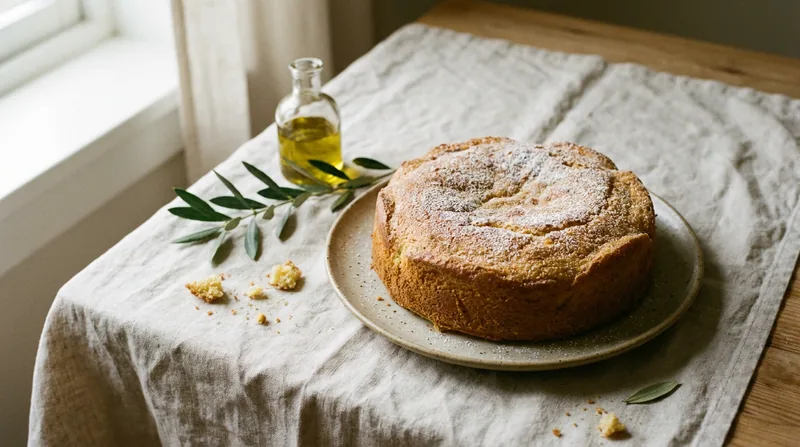
Snack · Italian
Olive Oil Sponge Cake
A baked sponge cake made with olive oil.
Ingredients
- Wheat flour 150 g
- Granulated sugar 150 g
- Olive oil 120 g
- Whole eggs 100 g
- Whole milk 60 g
- Baking powder 5 g
- Salt 2 g
Method
- Heat the oven to 180 degrees Celsius and grease a 20-centimetre cake tin.
- Whisk the eggs and sugar together in a large bowl for three minutes.
- Pour in the olive oil and milk, then whisk until combined.
- Sift the flour, baking powder, and salt into the wet ingredients and fold gently.
- Pour the batter into the tin and bake for 35 minutes.
Summed from 7 USDA records and divided by servings. Heat alters weight and a few nutrients, so read it as a close figure.
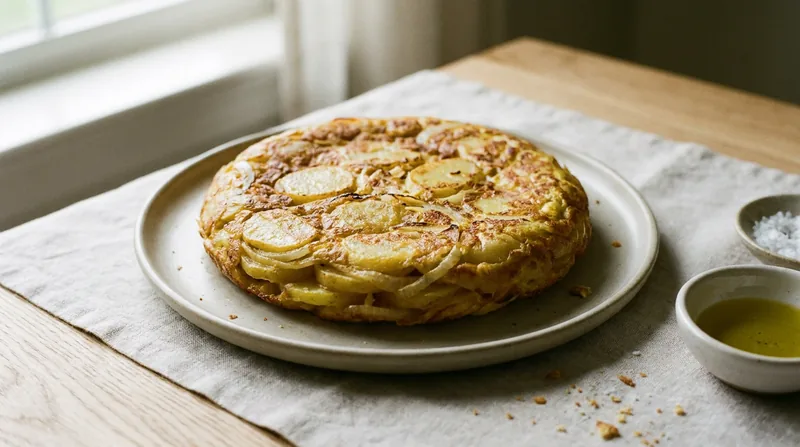
Dinner · Spanish
Spanish Tortilla
An omelette cooked with potatoes and onions in olive oil.
Ingredients
- Peeled and sliced potatoes 500 g
- Sliced onions 150 g
- Olive oil 200 g
- Whole eggs 300 g
- Salt 6 g
Method
- Heat the olive oil in a 20-centimetre frying pan over medium heat.
- Cook the potatoes and onions in the oil for 20 minutes until soft.
- Drain the vegetables, reserving 15 grams of the oil, and mix them with beaten eggs and salt.
- Heat the reserved oil in the pan and pour in the egg mixture.
- Cook on low heat for 10 minutes, flip, and cook the other side for 5 minutes.
5 USDA records went into this total. It describes the ingredients as weighed, not the dish after cooking losses.
This total counts every gram of the frying oil. Most of that oil stays in the pan, so what reaches the plate is lower.

Calorie Counter Team, food critic
Putting olive oil on a plate
One way to build a meal around olive oil, costed from the same records. Substitute freely; the method carries over.
| Item | Serving | Calories | Protein (g) |
|---|---|---|---|
| Olive oil | 1 tablespoon | 119 | 0 |
| Bell pepper | 1 medium | 31 | 1.2 |
| Couscous, cooked | 1 cup, cooked | 176 | 6 |
| Together | 326 | 7.1 |
How olive oil compares with similar foods
Per 100 g, each in the form its own page leads with; the second column says which.
| Food | Form | Calories | Protein (g) | Carbs (g) | Fat (g) |
|---|---|---|---|---|---|
| Coconut oil | As sold | 892 | 0 | 0 | 99 |
| Olive oil | As sold | 884 | 0 | 0 | 100 |
| Avocado oil | As sold | 884 | 0 | 0 | 100 |
| Butter | As sold | 717 | 0.9 | 0.1 | 81 |
| Mayonnaise | As sold | 680 | 1 | 0.6 | 75 |
Olive oil, asked and answered
What is the calorie count for 1 tablespoon of olive oil?
USDA measures 1 tablespoon of olive oil at 119 calories, or 884 calories for each 100 g. The record used is “Oil, olive, salad or cooking” (FDC 171413).
How much protein is in olive oil?
0 g in 1 tablespoon of olive oil, or 0 g per 100 g. That is 0 percent of the 50 g Daily Value.
Can you eat olive oil when trying to lose weight?
Weight change comes from the whole week’s intake. 1 tablespoon of olive oil contributes 119 calories and 0 g of protein (0 percent of its energy), which means it needs a protein-rich partner on the plate.
Where is the best place to store olive oil?
Keep olive oil in a cool, dark cupboard away from the cooker. Heat and light cause the oil to oxidise and go rancid quickly. Avoid keeping the bottle on the worktop or near windows.
Why does olive oil become cloudy in the fridge?
Cold temperatures cause the natural waxes in olive oil to solidify and become cloudy. This change does not ruin the quality. The liquid clears completely when the bottle warms back to room temperature.
Sources
- Oil, olive, salad or cooking — USDA FoodData Central, FDC ID 171413
- Daily Values for nutrition labelling, 21 CFR 101.9
Stop doing this by hand.
You just looked up one food. CalorieCounter reads a whole plate from a photo, serving and preparation included. It is coming to the App Store for iPhone — leave your email and you get the link the day it is live.