Vegetables
Kale nutrition, raw, cooked and everything between.
The number most people want first: 1 cup of kale holds 7 calories, alongside 0.6 g of protein. USDA files this under “Kale, raw”, and that is the record used here. Where it earns its place is vitamin K and vitamin C. The panel underneath takes any serving and any amount, and the vitamin and mineral table tracks what you pick.
Source data is USDA FoodData Central (168421, 169238). The sums run on your device and nothing leaves it.
Calories in kale, serving by serving
USDA puts 1 cup of kale at 7 calories and 100 g at 35. Other household measures follow, each with its weighed gram figure.
| Serving | Weight (g) | Calories | Protein (g) | Carbs (g) | Fat (g) |
|---|---|---|---|---|---|
| 1 cup | 21 | 7 | 0.6 | 0.9 | 0.3 |
| 100 g | 100 | 35 | 2.9 | 4.4 | 1.5 |
Kale and its protein content
There are 0.6 g of protein in 1 cup of kale, or 1 percent of the 50 g the FDA uses as a daily reference. About 33 percent of its calories are protein. That is a useful contribution rather than a protein source you would build a meal around.
Of every 100 calories, 27 come from protein, 31 from fat and 41 from carbohydrate.
Does the method change kale?
Same kale, same 21 g, different treatment:
| Preparation | Calories | Protein (g) | Fat (g) | What it involves |
|---|---|---|---|---|
| Raw kale | 7 | 0.6 | 0.3 | Nothing added |
| Boiled kale | 8 | 0.6 | 0.3 | Water only |
Kitchen notes on kale
Kale is a hardy brassica with tough, ruffled leaves. You will find curly kale, which is pale green, or Tuscan Cavolo Nero, which has dark, blistered fronds. Look for firm, springy bunches with a deep colour. Avoid limp leaves, dry, woody stems, or any yellowing at the edges.
Raw kale is tough and bitter. Massaging the leaves with salt and oil softens the rigid structure before eating. When cooked, it requires a long simmer to become tender. The most common error is leaving the woody central stems attached, which remain fibrous and unpleasant to chew even after boiling.
This brassica pairs well with rich meats, garlic, and vinegar. In Tuscan cooking, cooks stir it into thick bean soups or toss it with pasta. In Irish tradition, it is mashed into potatoes with butter for colcannon. Roast the leaves in the oven to make crisp, savoury chips.
Vitamins and minerals in kale
1 cup of kale delivers 68 percent of a day’s vitamin K, 22 percent of a day’s vitamin C. Everything else USDA reports for it is in the table, scaled to your serving.
| Nutrient | Amount | % Daily Value |
|---|
Fibre runs to 4.1 g per 100 g, or 15 percent of the Daily Value.
Where kale fits in a day
Budget-wise, 1 cup of kale costs 0 percent of a 2,000 calorie day and pays back 1 percent of the day’s protein. The TDEE calculator and macro calculator will tell you what those percentages look like against your own targets.
Recipes that start with kale
From the Calorie Counter Team: three dishes built around kale, with per-serving nutrition calculated from the USDA data for every ingredient that goes in.
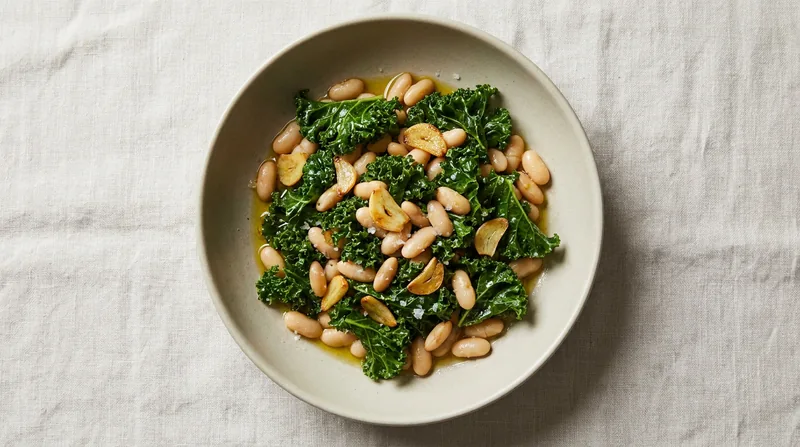
Lunch · Italian
Sautéed Kale and White Beans
A warm lunch of curly kale and cannellini beans cooked with garlic and olive oil.
Ingredients
- Curly kale, raw, stems removed 150 g
- Canned cannellini beans, drained 240 g
- Olive oil 15 g
- Garlic cloves, sliced 10 g
- Table salt 3 g
- Vegetable stock 100 g
Method
- Heat the olive oil in a large saucepan over medium heat.
- Add the sliced garlic and cook for one minute until pale golden.
- Stir in the kale and salt, then cook for three minutes until the leaves wilt.
- Add the drained beans and vegetable stock.
- Simmer for five minutes until the liquid reduces by half.
Summed from 6 USDA records and divided by servings. Heat alters weight and a few nutrients, so read it as a close figure.
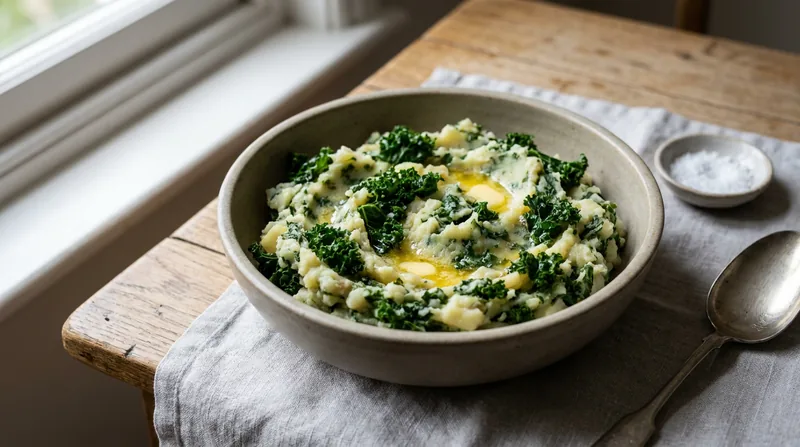
Side · British
Kale and Potato Mash
A traditional side dish of mashed potatoes mixed with steamed kale and butter.
Ingredients
- Potatoes, peeled 500 g
- Curly kale, stems removed 150 g
- Butter, unsalted 30 g
- Whole milk 60 g
- Table salt 4 g
- Black pepper 1 g
Method
- Boil the peeled potatoes in salted water for fifteen minutes until tender.
- Steam the chopped kale over boiling water for five minutes until soft.
- Drain the potatoes and mash them with the butter, milk, salt, and black pepper.
- Stir the steamed kale into the mashed potatoes until evenly distributed.
Figures are per serving and come from 6 USDA FoodData Central entries; cooking will shift them slightly.
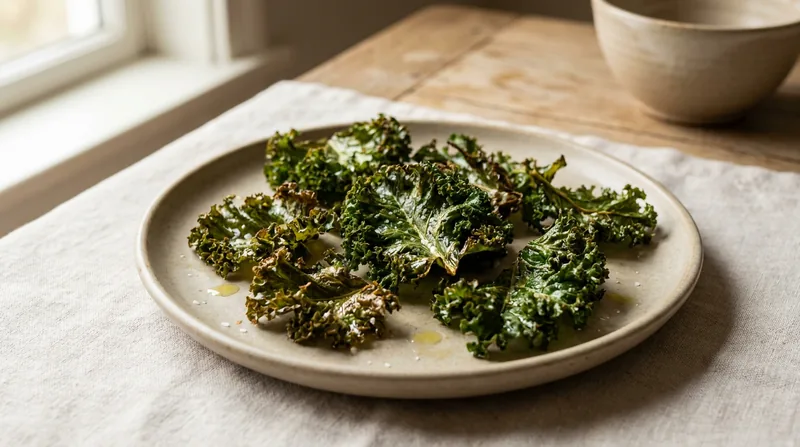
Snack · British
Baked Kale Crisps
Crisp kale leaves seasoned with olive oil and salt, baked in the oven.
Ingredients
- Curly kale, stems removed 100 g
- Olive oil 10 g
- Table salt 2 g
Method
- Preheat the oven to 150 degrees Celsius.
- Wash the kale leaves and dry them completely with a clean cloth.
- Toss the dry leaves with the olive oil and salt in a bowl.
- Spread the leaves in a single layer on a baking tray.
- Bake for fifteen minutes until the edges are crisp but not brown.
3 USDA records went into this total. It describes the ingredients as weighed, not the dish after cooking losses.

Calorie Counter Team, food critic
Putting kale on a plate
One way to build a meal around kale, costed from the same records. Substitute freely; the method carries over.
| Item | Serving | Calories | Protein (g) |
|---|---|---|---|
| Kale | 1 cup | 7 | 0.6 |
| Chicken breast, roasted | 1/2 breast | 142 | 27 |
| Barley, cooked | 1 cup | 193 | 3.5 |
| Together | 342 | 31 |
Kale or something else?
Here is how kale sits among its neighbours per 100 g; the form column keeps raw and cooked apart.
| Food | Form | Calories | Protein (g) | Carbs (g) | Fat (g) |
|---|---|---|---|---|---|
| Sweet potato | Raw | 86 | 1.6 | 20 | 0.1 |
| Kale | Raw | 35 | 2.9 | 4.4 | 1.5 |
| Okra | Raw | 33 | 1.9 | 7.5 | 0.2 |
| Broccoli | Raw | 31 | 2.6 | 6.3 | 0.3 |
| Green beans | Raw | 31 | 1.8 | 7 | 0.2 |
| Lettuce | Raw | 17 | 1.2 | 3.3 | 0.3 |
| Cucumber | Raw | 15 | 0.7 | 3.6 | 0.1 |
Kale, asked and answered
How many calories are in 1 cup of kale?
USDA measures 1 cup of kale at 7 calories, or 35 calories for each 100 g. The record used is “Kale, raw” (FDC 168421).
How much protein is in kale?
Per 100 g, kale contains 2.9 g of protein. 1 cup of kale therefore gives 0.6 g, which is 1 percent of a 50 g day.
Can you eat kale when trying to lose weight?
Weight change comes from the whole week’s intake. 1 cup of kale contributes 7 calories and 0.6 g of protein (33 percent of its energy), so pair it with something that carries more protein.
Is kale high in carbs?
0.9 g in 1 cup of kale, of which 0.9 g is fibre and 0.2 g is sugar.
How do you remove the tough central stems from kale?
Grip the thick base of the stalk, then slide your hand firmly along the stem to tear the foliage off. This action quickly separates the tender green leaves from the woody rib without needing a knife.
Why does kale sometimes taste extremely bitter?
Age and growing temperature cause this bitterness. Older leaves harvested during warm weather develop a strong, sharp flavour. Exposure to frost sweetens the plant, so buy kale harvested during winter for a milder taste.
Sources
- Kale, raw — USDA FoodData Central, FDC ID 168421
- Kale, cooked, boiled, drained, without salt — USDA FoodData Central, FDC ID 169238
- Daily Values for nutrition labelling, 21 CFR 101.9
Stop doing this by hand.
You just looked up one food. CalorieCounter reads a whole plate from a photo, serving and preparation included. It is coming to the App Store for iPhone — leave your email and you get the link the day it is live.