Eggs
Egg yolk nutrition, raw, cooked and everything between.
1 large egg yolk lands at 55 calories and brings 2.7 g of protein with it. In USDA’s database this is “Egg, yolk, raw, fresh”. Beyond the headline number, it is notable for choline and selenium. Use the selector that follows to match your own portion; the panel and the nutrient table track it.
Source data is USDA FoodData Central (172184, 173428). The sums run on your device and nothing leaves it.
How many calories are in egg yolk?
1 large egg yolk supplies 55 calories, which scales to 322 per 100 g. Each serving listed underneath was weighed by USDA rather than estimated.
| Serving | Weight (g) | Calories | Protein (g) | Carbs (g) | Fat (g) |
|---|---|---|---|---|---|
| 1 large | 17 | 55 | 2.7 | 0.6 | 4.5 |
| 1 cup | 243 | 782 | 39 | 8.7 | 64 |
| 100 g | 100 | 322 | 16 | 3.6 | 27 |
Protein in egg yolk, measured
The protein count for 1 large egg yolk is 2.7 g, equal to 5 percent of the Daily Value. Only 20 percent of its calories come from protein, so treat egg yolk as something you eat for other reasons and count the protein as a bonus.
Its energy is 75 percent fat, 5 percent carbohydrate and 20 percent protein, meaning it behaves as mostly a fat in a meal.
Egg yolk, method by method
Each line compares 17 g of egg yolk, prepared a different way.
| Preparation | Calories | Protein (g) | Fat (g) | What it involves |
|---|---|---|---|---|
| Raw egg yolk | 55 | 2.7 | 4.5 | Nothing added |
| Dried egg yolk | 114 | 5.7 | 10 | Water removed |
Buying, cooking and using egg yolk
Egg yolks are the yellow, fat-rich centres of avian eggs. You can buy them still housed in their shells, or pasteurised in cartons. Look for shells that are clean and undamaged. When cracked, a fresh yolk should stand tall and round in the bowl, not flatten out or break easily.
Gentle, indirect heat is essential. Yolks thicken and set when heated, but high heat turns them chalky and dry. The common error is adding hot liquid too quickly, which curdles the yolk. Tempering them by slowly whisking in warm liquid prevents this scrambling. Keep stirring constantly to ensure a smooth, velvety texture.
This ingredient enriches sauces like French mayonnaise and hollandaise. In Italian pasta dishes, raw yolks create a creamy coating for hot noodles. Japanese diners use them to coat grilled meats or raw fish. They pair naturally with sharp mustard, salty cheeses, and bitter spring greens.
Egg yolk: the full nutrient profile
Top of the list for 1 large egg yolk: choline at 25 percent of a day, selenium at 17 percent of a day. The remaining nutrients are tabulated underneath and update live.
| Nutrient | Amount | % Daily Value |
|---|
Egg yolk against a daily budget
Against the standard 2,000 calorie reference, 1 large egg yolk takes up 3 percent of the energy and supplies 5 percent of the protein. For a figure that fits you, start with the TDEE calculator, then set grams with the macro calculator.
Three ways to cook egg yolk
Each of these comes from the Calorie Counter Team, and each carries nutrition worked out from its ingredients’ USDA entries rather than estimated from the finished dish.
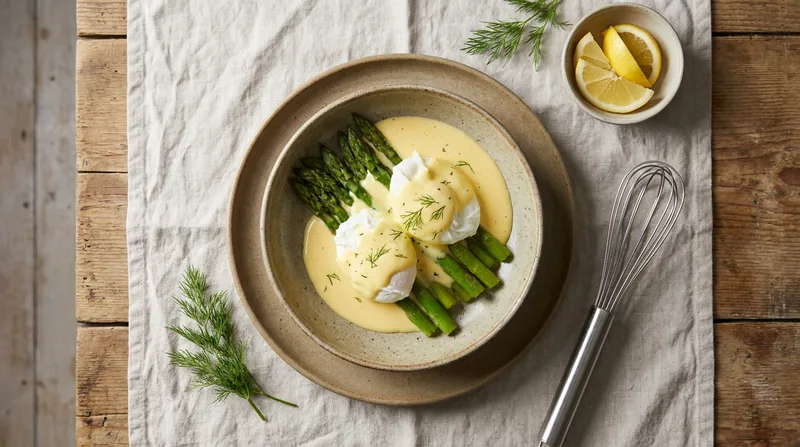
Side · French
Hollandaise Sauce
A warm emulsion sauce made from egg yolks and butter, suitable for serving with poached eggs or vegetables.
Ingredients
- 3 large egg yolks 60 g
- lemon juice 15 g
- water 15 g
- unsalted butter 110 g
- table salt 2 g
Method
- Melt the unsalted butter in a small saucepan over low heat.
- Whisk the egg yolks, lemon juice, water, and salt together in a heatproof bowl.
- Place the bowl over a pan of gently simmering water, ensuring the bowl does not touch the water.
- Whisk the mixture constantly until it thickens slightly.
- Pour the melted butter into the yolk mixture in a slow, steady stream while whisking rapidly.
- Remove from the heat and whisk for one additional minute until thick and smooth.
Nutrition per serving, calculated across 5 USDA ingredient records. Expect small differences once cooked.
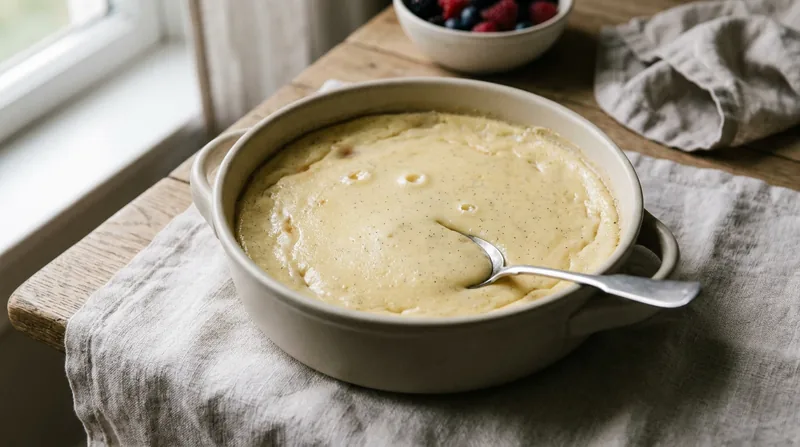
Snack · British
Vanilla Custard
A traditional cooked custard made with egg yolks, milk, and cream, served warm or cold.
Ingredients
- 4 large egg yolks 80 g
- whole milk 250 g
- double cream 150 g
- granulated sugar 50 g
- vanilla extract 5 g
Method
- Heat the whole milk and double cream in a saucepan over medium heat until steaming.
- Whisk the egg yolks, granulated sugar, and vanilla extract in a bowl until combined.
- Pour half of the hot milk mixture into the egg mixture while whisking constantly.
- Return the entire mixture to the saucepan over low heat.
- Stir the mixture constantly with a wooden spoon for five minutes until it coats the back of the spoon.
- Pour the custard through a sieve into a clean bowl to remove any lumps.
Summed from 5 USDA records and divided by servings. Heat alters weight and a few nutrients, so read it as a close figure.

Side · British
Classic Vanilla Custard
A traditional pourable custard cooked on the stovetop.
Ingredients
- Egg yolks 68 g
- Caster sugar 50 g
- Whole milk 300 g
- Vanilla extract 5 g
Method
- Whisk the egg yolks and caster sugar together in a bowl until pale.
- Heat the milk in a saucepan until it just begins to simmer.
- Pour the hot milk slowly into the yolk mixture while whisking constantly.
- Return the mixture to the saucepan over low heat.
- Stir continuously with a wooden spoon until the custard thickens enough to coat the back of the spoon.
- Remove from the heat and stir in the vanilla extract.
Per serving, from 4 USDA FoodData Central records. Cooking changes weight and some nutrients; treat these as close rather than exact.

Calorie Counter Team, food critic
Egg yolk as part of a meal
A sample plate, not a prescription: egg yolk plus two sides, each line sourced and the sum shown.
| Item | Serving | Calories | Protein (g) |
|---|---|---|---|
| Egg yolk | 1 large | 55 | 2.7 |
| Barley, cooked | 1 cup | 193 | 3.5 |
| Bell pepper | 1 medium | 31 | 1.2 |
| Together | 279 | 7.4 |
Eggs: where egg yolk sits
Each food is shown per 100 g, in the form named beside it.
| Food | Form | Calories | Protein (g) | Carbs (g) | Fat (g) |
|---|---|---|---|---|---|
| Egg yolk | Raw | 322 | 16 | 3.6 | 27 |
| Egg | Raw | 143 | 13 | 0.7 | 9.5 |
| Egg white | Raw | 52 | 11 | 0.7 | 0.2 |
Questions about egg yolk
How many calories are in 1 large egg yolk?
1 large egg yolk is 55 calories. That comes from the USDA record “Egg, yolk, raw, fresh” (FDC 172184), which is 322 calories per 100 g.
Is there much protein in egg yolk?
You get 2.7 g from 1 large egg yolk, equal to 5 percent of the daily reference amount; 100 g holds 16 g.
Is egg yolk good for weight loss?
That depends on the rest of the day, not on egg yolk. For planning: 1 large egg yolk is 55 calories and 2.7 g of protein, 20 percent protein by energy, so pair it with something that carries more protein.
Which nutrients is egg yolk highest in?
Per 1 large egg yolk, the standouts against the Daily Value are choline at 25 percent, selenium at 17 percent. The full table above lists every nutrient USDA reports for this record.
Why does a grey-green ring sometimes form around a hard-boiled yolk?
This happens because of a chemical reaction between iron and sulphur when the egg is cooked too long or at too high a temperature. To prevent this, cool the boiled eggs immediately in cold water.
Can you freeze raw egg yolks for later use?
Yes, but they become gelatinous and unusable if frozen plain. Whisk in a pinch of salt or sugar before freezing to protect their texture. Store them in sealed containers until needed.
Sources
- Egg, yolk, raw, fresh — USDA FoodData Central, FDC ID 172184
- Egg, yolk, dried — USDA FoodData Central, FDC ID 173428
- Daily Values for nutrition labelling, 21 CFR 101.9
Stop doing this by hand.
You just looked up one food. CalorieCounter reads a whole plate from a photo, serving and preparation included. It is coming to the App Store for iPhone — leave your email and you get the link the day it is live.