Grains and starches
Bread nutrition, and what the pan changes.
67 calories and 2.2 g of protein: that is 1 slice of bread. The record behind it is USDA’s “Bread, white, commercially prepared (includes soft bread crumbs)”. How it reaches the plate decides the rest, with 100 g measured at 266 calories one way and 290 another. Use the selector that follows to match your own portion; the panel and the nutrient table track it.
Every value traces to USDA FoodData Central (174924, 174925); Daily Values follow the FDA label rules.
How many calories does bread have?
The short answer is 67 calories for 1 slice of bread. By weight that is 266 per 100 g, and the table gives the other common portions.
| Serving | Weight (g) | Calories | Protein (g) | Carbs (g) | Fat (g) |
|---|---|---|---|---|---|
| 1 slice thin, crust not eaten | 9 | 24 | 0.8 | 4.4 | 0.3 |
| 1 slice crust not eaten | 12 | 32 | 1.1 | 5.9 | 0.4 |
| 1 slice, very thin | 15 | 40 | 1.3 | 7.4 | 0.5 |
| 1 slice, thin | 20 | 53 | 1.8 | 9.9 | 0.7 |
| 1 slice | 25 | 67 | 2.2 | 12 | 0.8 |
| 1 oz | 28 | 76 | 2.5 | 14 | 0.9 |
| 1 slice, large | 30 | 80 | 2.7 | 15 | 1 |
| 1 cup, cubes | 35 | 93 | 3.1 | 17 | 1.2 |
| 1 cup, crumbs | 45 | 120 | 4 | 22 | 1.5 |
| 100 g | 100 | 266 | 8.9 | 49 | 3.3 |
Protein in bread, measured
There are 2.2 g of protein in 1 slice of bread, or 4 percent of the 50 g the FDA uses as a daily reference. 13 percent of the energy in bread is protein, which is too little to plan around.
Divide its calories by source and you get 13 percent from protein, 11 percent from fat and 75 percent from carbohydrate.
Bread, method by method
The cheapest way to eat bread, in calorie terms, is as sold at 266 per 100 g. Toasted costs 290, which is 9 percent more, because of evaporation, which packs more of the food into each gram.
The table holds the weight constant at 25 g, which leaves the preparation as the single variable.
| Preparation | Calories | Protein (g) | Fat (g) | What it involves |
|---|---|---|---|---|
| Bread, as sold | 67 | 2.2 | 0.8 | As purchased |
| Toasted bread | 73 | 2.3 | 1 | Dry heat, water driven off |
Bread in the kitchen
Bread is baked dough made from flour, water, and yeast. You can buy sourdough loaves, flatbreads, rye blocks, or sandwich loaves. Look for a firm crust and a springy crumb. Avoid loaves with damp packaging, as this encourages mould. Check the crust colour; a deep golden brown indicates thorough baking and better flavour.
Heat coaxes moisture out of bread, turning the crumb dry and crisping the outer crust. Stale bread revives when splashed with water and warmed in a hot oven. The most common mistake is storing bread in the fridge. Cold air hastens staling by drying out the crumb, which ruins the texture.
Serve thick slices toasted with salted butter for breakfast. In Mediterranean kitchens, dry bread thickens cold tomato soups or catches olive oil in summery salads. French cuisine uses toasted rounds to hold melted cheese atop onion soup, whilst Indian meals use soft flatbreads to scoop up spiced lentil curries.
The complete bread breakdown
Bread spreads its micronutrients thinly. Every value USDA reports is listed, tied to your chosen portion.
| Nutrient | Amount | % Daily Value |
|---|
There are 2.7 g of fibre in 100 g, roughly 10 percent of the daily figure.
Watch the sodium: 490 mg in 100 g, or 21 percent of the recommended maximum for a day.
Putting bread into a day of eating
Budget-wise, 1 slice of bread costs 3 percent of a 2,000 calorie day and pays back 4 percent of the day’s protein. The TDEE calculator and macro calculator will tell you what those percentages look like against your own targets.
Cooking with bread: three recipes
The Calorie Counter Team wrote these. Under every recipe the numbers are added up from the USDA record for each ingredient and split across the servings.
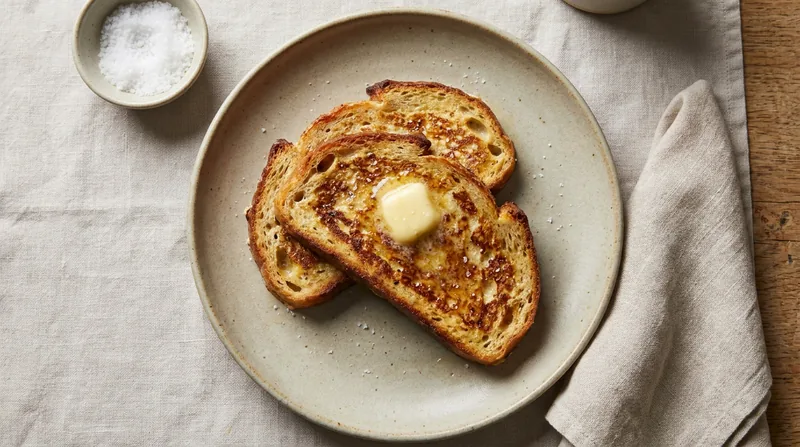
Breakfast · British
Eggy Bread
Slices of white bread soaked in beaten egg and fried in butter until golden brown.
Ingredients
- 2 slices of white bread 90 g
- 2 large eggs 100 g
- 30ml whole milk 30 g
- 10g unsalted butter 10 g
- 1g salt 1 g
Method
- Whisk the eggs, milk, and salt together in a shallow bowl.
- Place one slice of bread into the egg mixture for 30 seconds, then turn it over to coat the other side.
- Melt the butter in a frying pan over medium heat.
- Transfer the soaked bread to the pan and cook for 2 minutes on each side until golden brown.
- Repeat the soaking and cooking process for the second slice of bread.
Per serving, from 5 USDA FoodData Central records. Cooking changes weight and some nutrients; treat these as close rather than exact.
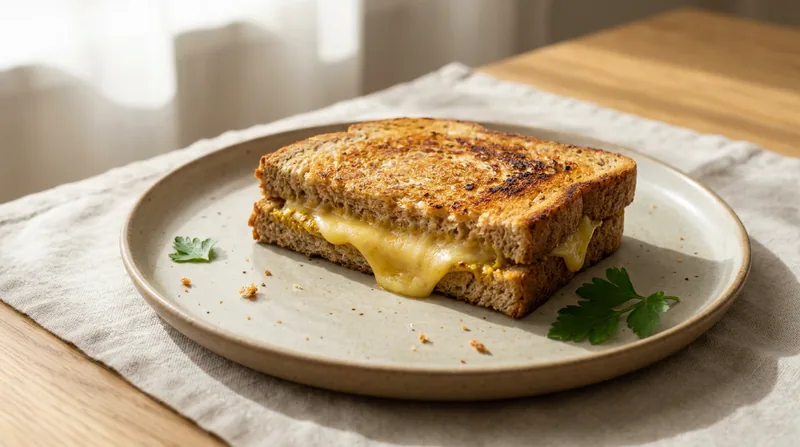
Lunch · British
Cheese Toastie
A toasted sandwich containing melted cheddar cheese and mustard, cooked in a frying pan.
Ingredients
- 2 slices of wholemeal bread 90 g
- 60g cheddar cheese, grated 60 g
- 10g salted butter 10 g
- 5g English mustard 5 g
Method
- Spread the mustard over one side of one bread slice.
- Scatter the grated cheese over the mustard, then top with the second bread slice.
- Spread the salted butter evenly over the outer sides of the sandwich.
- Place the sandwich in a cold frying pan and set the heat to medium-low.
- Cook for 4 minutes on each side, pressing down gently, until the cheese melts and the bread browns.
4 USDA records went into this total. It describes the ingredients as weighed, not the dish after cooking losses.
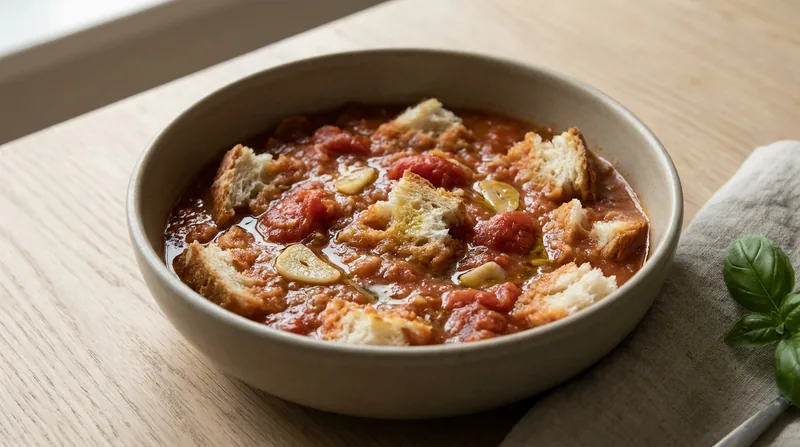
Dinner · Italian
Tomato and Bread Soup
A thick Italian soup made from stale crusty bread, canned tomatoes, garlic, and olive oil.
Ingredients
- 150g stale crusty white bread, torn into chunks 150 g
- 400g canned chopped tomatoes 400 g
- 20g olive oil 20 g
- 6g garlic cloves, sliced 6 g
- 200g water 200 g
- 2g salt 2 g
Method
- Heat the olive oil and garlic in a saucepan over low heat for 2 minutes.
- Add the canned tomatoes, water, and salt, then bring the mixture to a simmer.
- Stir the bread chunks into the saucepan.
- Cook over low heat for 20 minutes, stirring frequently to break down the bread.
- Remove from the heat and let the soup stand for 10 minutes before serving.
Built from 6 USDA ingredient records. A cooked dish never matches its raw sum exactly, but it stays close.

Calorie Counter Team, food critic
One meal, costed: bread
Here is bread as part of a plate, with each component taken from its own USDA record and the total added up.
| Item | Serving | Calories | Protein (g) |
|---|---|---|---|
| Bread | 1 slice | 67 | 2.2 |
| Pork chop, grilled | 1 chop | 263 | 39 |
| Sweet potato | 1 sweet potato, 5 in long | 112 | 2 |
| Together | 442 | 43 |
Bread against other grains and starches
Each food is shown per 100 g, in the form named beside it.
| Food | Form | Calories | Protein (g) | Carbs (g) | Fat (g) |
|---|---|---|---|---|---|
| Rice cake | As sold | 387 | 8.2 | 82 | 2.8 |
| Waffle | Cooked | 291 | 7.9 | 33 | 14 |
| Bagel | As sold | 275 | 11 | 53 | 1.6 |
| Bread | As sold | 266 | 8.9 | 49 | 3.3 |
| Whole wheat bread | As sold | 252 | 12 | 43 | 3.5 |
| Pancake | Cooked | 227 | 6.4 | 28 | 9.7 |
| Rice | Cooked | 130 | 2.7 | 28 | 0.3 |
Bread, asked and answered
What is the calorie count for 1 slice of bread?
67 calories, according to USDA FoodData Central: the record is “Bread, white, commercially prepared (includes soft bread crumbs)”, FDC 174924. That works out at 266 per 100 g.
How much protein is in bread?
1 slice of bread has 2.2 g of protein. By weight that is 8.9 g per 100 g, and the serving covers 4 percent of the Daily Value.
Do the calories in bread change with how it is prepared?
The weight stays the same but the number moves. 25 g of bread is 67 calories as sold, rising to 73 toasted.
Does bread fit a calorie deficit?
That depends on the rest of the day, not on bread. For planning: 1 slice of bread is 67 calories and 2.2 g of protein, 13 percent protein by energy, useful alongside a protein source rather than as one.
How do you keep bread fresh without a breadbox?
Wrap the loaf in a clean beeswax cloth or a paper bag. Store it in a dark cupboard. Plastic bags trap moisture, which softens the crust and encourages mould, so avoid them for crusty loaves.
Can you freeze bread successfully?
Yes, bread freezes exceptionally well. Slice the loaf before freezing so you can remove individual portions. Toast the frozen slices directly from the freezer to restore a crisp crust and a warm, soft crumb.
Sources
- Bread, white, commercially prepared (includes soft bread crumbs) — USDA FoodData Central, FDC ID 174924
- Bread, white, commercially prepared, toasted — USDA FoodData Central, FDC ID 174925
- Daily Values for nutrition labelling, 21 CFR 101.9
Stop doing this by hand.
You just looked up one food. CalorieCounter reads a whole plate from a photo, serving and preparation included. It is coming to the App Store for iPhone — leave your email and you get the link the day it is live.